
Organisers keeping an eye on sugar content
You’re looking for biscuits with a low stated sugar content per 100 g. Before choosing them for a group, also check the sweeteners used, allergens and any warnings on the packaging.


For an Easter egg hunt, first decide what matters most to you: the lowest possible stated sugar content, less sugar than a comparable biscuit, or no added sugar. These claims don’t mean the same thing, so compare the nutrition information per 100 g, as recommended by the Netherlands Nutrition Centre. If you’re choosing for a group, also check the current ingredients, allergens and any warnings about polyols.
You’re looking for biscuits with a low stated sugar content per 100 g. Before choosing them for a group, also check the sweeteners used, allergens and any warnings on the packaging.
You want a familiar biscuit with less sugar than the regular version, without assuming that its sugar content is therefore low. The nutrition information per 100 g helps you assess the difference.
You’re looking for a ‘no added sugar’ claim, but you also check the total sugar content, ingredients and allergens. On its own, this claim doesn’t mean a biscuit contains no sugars.
Decide which feature matters most for the egg hunt. Then check the packaging to make sure the biscuit is suitable for the people who’ll be eating it.
| What matters | What to check | Who it matters to |
|---|---|---|
| As little sugar as possible | Compare ‘of which sugars’ per 100 g and check whether the biscuit lists polyols and a warning about consumption. | If there are several treat breaks during the egg hunt, I want to choose a biscuit based on its stated sugar content without overlooking the other ingredients. Around 45% of consumers prioritise this sugar content. |
| A familiar treat to share | Check the sugar content per 100 g alongside the reduction claim, and compare it with the same type of biscuit. | For an Easter get-together, I want to be able to share a familiar biscuit, even if it isn’t virtually sugar-free. For around 33% of consumers, choosing a familiar treat matters most. |
| No added sugar | Check the exact claim, ‘of which sugars’ per 100 g and the ingredients list. | My main aim is to avoid added sugar, and I’m happy for a biscuit to still contain naturally occurring sugars. This label requirement is a priority for around 22% of consumers. |
A reduction compared with another biscuit doesn’t tell you how much sugar the product contains. Albert Heijn states that AH Roomboter stroopwafels with less sugar contain 32% less sugar than the regular AH version, but they still contain 23 g of sugars per 100 g.
Compare the ‘of which sugars’ line per 100 g across similar biscuits; don’t use the claim on the front of the pack as your only way to choose.
Some biscuits with a low stated sugar content use polyols as sweeteners. Products such as AH Digestive 0% sugar and Céréal Chocolate Chip Cookie zonder suikers carry a warning that excessive consumption may have a laxative effect.
Read the ingredients and warnings before buying, especially if participants may collect several biscuits during the egg hunt.
A sugar-conscious biscuit isn’t automatically suitable for everyone. The varieties described may contain different allergens or state that they may contain traces of them.
Before choosing one treat for the group, check the current allergen information on the packaging for all participants.
Two AH products illustrate different choices: a digestive biscuit with a low stated sugar content and a stroopwafel with less sugar than the regular AH version.
The Céréal varieties described include biscuits with no sugars and biscuits with less sugar; the ingredients vary by variety.
Verkade San Francisco Zero is an example for anyone focusing mainly on added sugar, rather than a ‘no sugars’ claim.
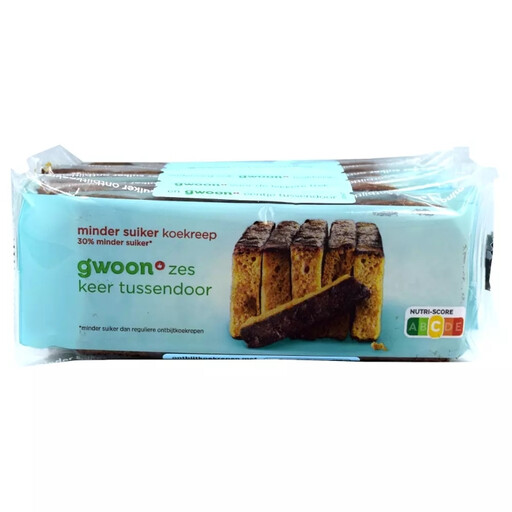
This Less Sugar cookie bar may be worth considering if you’re looking for an Easter egg hunt treat and want to assess the sugar information for yourself. Compare the nutrition information and check the ingredients on the current packaging before choosing it for a group.
 No image available
A cookie bar for anyone who wants to look for a Less Sugar claim when choosing treats. The pack contains 6 pieces; check the nutrition information per 100 g, the ingredients and the allergens before choosing these bars for the egg hunt. The claim alone doesn’t tell you how much less sugar they contain than a regular variety.
No. ‘Less sugar’ compares a product with a reference product, while ‘sugar-free’ is a different claim. For example, Albert Heijn states that AH Roomboter stroopwafels with less sugar contain 32% less sugar than the regular AH version, but they still contain 23 g of sugars per 100 g. So be sure to check the nutrition information per 100 g too.
That doesn’t follow from the claim. According to Albert Heijn’s product information, Verkade San Francisco Zero contains 0% added sugar, but it does contain naturally occurring sugars and has 1,7 g of sugars per 100 g. So check the ‘of which sugars’ line too.
Some sugar-conscious biscuits use polyols as sweeteners and carry a warning that excessive consumption may have a laxative effect. Read the warning on the packaging, especially if participants might eat several treats they find one after another.
First, check the current ingredients and allergen information on the packaging for all participants, then look at the nutrition information and any warnings about consumption. Compare similar products per 100 g; this is also the basis for comparison recommended by the Netherlands Nutrition Centre.