When shopping for the week, start by deciding what matters most to you: as little sugar as possible per 100 g, no added sugars, or a familiar type of biscuit with a stated sugar reduction. Then compare the nutritional information per 100 g and per serving, and check the ingredients, allergens and any warnings about sweeteners. A claim on the front of the pack doesn’t tell you everything about the biscuits you’re bringing home.
Who is this choice relevant to?
Sugar-conscious shoppers stocking the cupboard
You want to compare biscuits for your weekly shop by their sugar content per 100 g, without assuming that ‘zero’ and ‘less sugar’ mean the same thing. Product information from Albert Heijn and Jumbo shows why it’s important to check the exact variant.
Families looking for a familiar snack
You might be looking for biscuits, syrup waffles or spiced breakfast cake to enjoy at set times during the week. As well as checking the sugar claim, you want to know the serving size and which ingredients and allergens are listed on the pack.
Shoppers checking sweeteners and ingredients
You want to check whether a particular biscuit contains maltitol, isomalt or xylitol, and whether it carries a warning about excessive consumption. The allergen declaration may also affect your choice between variants.
What should you look for when choosing?
First decide what type of biscuit you actually want for the week, then compare the sugar content using the same unit and check the rest of the label.
| What to consider |
What to look for |
Who it’s for |
| Sugar content |
Compare ‘of which sugars’ per 100 g, then check the amount per serving. Treat ‘less sugar’ as a comparison with another product, not as an absolute sugar content. |
When I’m choosing biscuits to keep in the cupboard, I want to know how much sugar they actually contain, regardless of what the front of the pack says. For around 33% of consumers, sugar content is the top priority. |
| Type of biscuit and serving size |
Check whether biscuits, syrup waffles, biscuit bars or slices of spiced breakfast cake suit the occasion; check the weight and number of servings on the pack. |
For a coffee break, a snack on the go or a lunchbox, I want a type of biscuit that’s easy to enjoy at that moment. This practical consideration matters most to around 27% of consumers. |
| Ingredients and allergens |
Read the ingredients and allergen declaration for the exact variant. If it contains polyols, check for a warning about excessive consumption. |
If I want to avoid certain ingredients, I need to check the contents before buying a week’s supply. This is the top priority for around 20% of consumers. |
| Overall nutritional value |
As well as sugars, check energy, fat, fibre and salt, both per 100 g and per serving. |
I don’t want to choose based on sugar alone; I also want to see what else a typical serving contains. Overall nutritional value matters most to around 20% of consumers. |
Common mistakes
-
Assuming ‘less sugar’ means ‘low in sugar’
A comparative claim tells you how a product differs from a reference product, not how much sugar it contains. Albert Heijn says its Roomboter Less Sugar syrup waffles have 32% less sugar than its standard butter syrup waffles, but they still contain 23 g of sugars per 100 g.
Compare the claim with the ‘of which sugars’ figure per 100 g, then use the stated serving size to work out how much you’d have in one sitting.
-
Confusing ‘no added sugars’ with sugar-free
A product with no added sugars can still contain sugars. Jumbo lists 4.9 g of sugars per 100 g for Peijnenburg Wholegrain with no added sugars.
If you’re looking for a low absolute sugar content, check the nutrition table. Assess the claim and the figure separately.
-
Overlooking sweeteners when stocking up for the week
Sugar-conscious variants may contain polyols. According to the Netherlands Nutrition Centre, a high intake of polyols can cause flatulence and diarrhoea; also check for any warnings on the product itself.
Read the ingredients for the exact biscuit and consider how many servings you plan to eat when making your choice.
-
Assuming the sugar claim tells you about allergens
Information about sugars doesn’t tell you anything about a biscuit’s allergens. Ingredients may also vary between flavours and pack variants.
Before buying, check the allergen declaration on the pack you’re actually choosing.
Brands and product ranges to consider
Albert Heijn
The own-brand range includes Digestive 0% Sugar and Roomboter Less Sugar syrup waffles.
- Albert Heijn lists 0.3 g of sugars per 100 g for Digestive 0% Sugar; the product information also mentions sweeteners.
- The Less Sugar syrup waffles contain 23 g of sugars per 100 g. Compare these variants separately and check the current label.
Céréal
Choco Delight Dark is one of the sugar-conscious biscuits in Jumbo’s range.
- Jumbo lists 0.5 g of sugars and 24 g of polyols per 100 g for this variant.
- The claim that it contains 96% less sugar than a standard biscuit applies to this product, not to all Céréal biscuits. Check the allergens for this variant too.
Verkade
San Francisco Zero is an option if you’re looking for a tea biscuit with no added sugars.
- Albert Heijn lists 1.7 g of sugars per 100 g for San Francisco Zero.
- San Francisco Zero isn’t the same product as San Francisco Wheat Biscuits. Check the full product name; the Zero variant contains maltitols.
Peijnenburg
Wholegrain with no added sugars is sliced spiced breakfast cake, not a biscuit or biscuit bar.
- Jumbo lists 4.9 g of sugars, 24 g of polyols and 17 g of fibre per 100 g for this variant.
- The product information lists xylitol and a warning about excessive consumption; keep products containing xylitol out of reach of animals.
Snelle Jelle
Kruidkoek Less Sugar is a familiar option if you’re looking for spiced cake.
- According to the product information on Jumbo, this variant contains 30% less sugar than Snelle Jelle Kruidkoek Naturel.
- Jumbo also lists 24 g of sugars per 100 g. So don’t rely on the comparative claim instead of checking the nutrition table.
Biscuits on Joybuy
This selection includes biscuits, spiced cake and biscuit bars for different moments during the week. Check the nutrition table and pack information for each variant: similar wording about sugar doesn’t necessarily mean the products have the same ingredients.
 No image available
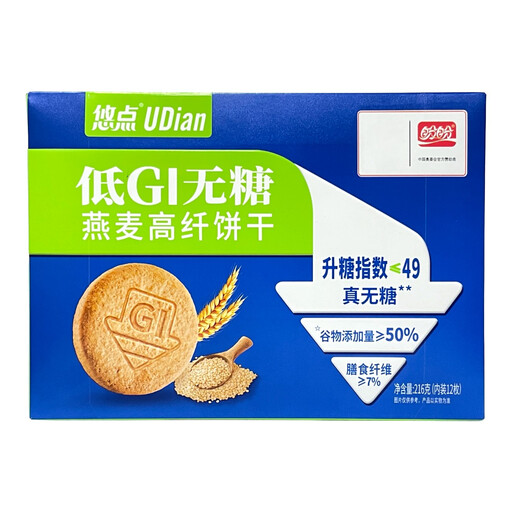
Panpan oat biscuits 216 g
If you’re comparing biscuits by sugar content, the nutrition table matters more here than the ‘Sugar-Free’ wording, which doesn’t match the stated sugar content. Check the amount per 100 g on the pack before comparing these biscuits with other options.
View on Joybuy
 No image available
Snelle Jelle Less Sugar spiced cake 250 g
This spiced cake is a familiar choice if you’re looking to stock up for the week. Check the exact pack for sugar content per 100 g and per serving; a comparative sugar claim doesn’t tell you how much sugar you’ll have in one sitting.
View on Joybuy
 No image available
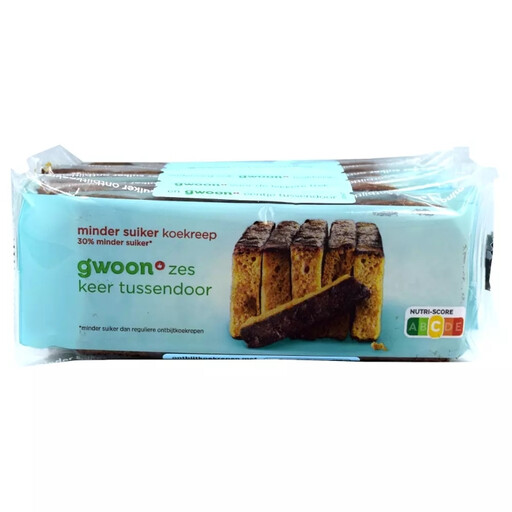
g'woon Less Sugar Cookie Bars, 6 bars
The pack of six biscuit bars may suit you if you’re looking for individual snacks for the week. Check the ‘Less Sugar’ claim against the nutrition table and, if you want to compare the reduction, the packaging of a relevant standard variant.
View on Joybuy
 No image available
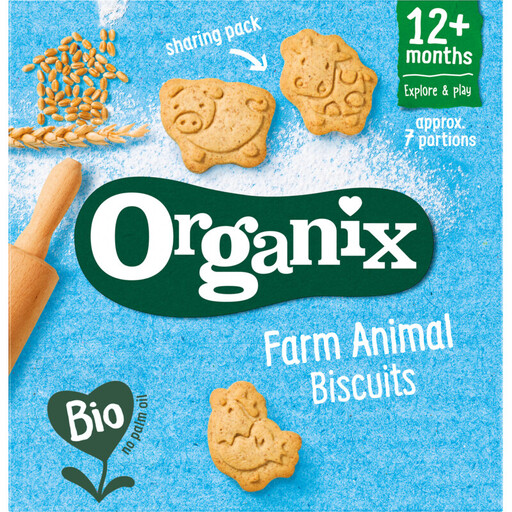
Organix Bio Farm Animal Biscuits 100 g
Consider these biscuits only for the stated use for children aged 12 months and over, rather than as a general biscuit option for the whole household. ‘No added sugars’ doesn’t mean sugar-free; check the pack for the sugar content and stated serving size.
View on Joybuy
Frequently asked questions
Does ‘no added sugars’ mean a biscuit is sugar-free?
No, the product may still contain sugars. For example, Jumbo lists 4.9 g of sugars per 100 g for Peijnenburg Wholegrain with no added sugars. To check the amount in your chosen variant, look for ‘of which sugars’ on the pack.
Is ‘less sugar’ enough to compare biscuits for the week?
No. Also compare serving sizes and the rest of the nutrition table, including energy, fat, fibre and salt. The Netherlands Food and Consumer Product Safety Authority points out that a nutrition claim isn’t an assessment of a product’s overall composition.
What should I look for if a biscuit contains maltitol, isomalt or xylitol?
Before buying several servings, read the ingredients and check for any warnings about excessive consumption. The Netherlands Nutrition Centre says that a high intake of polyols can cause flatulence and diarrhoea. Keep products containing xylitol out of reach of animals; contact a vet if an animal has eaten any.
How should I store biscuits bought for the week?
Follow the storage instructions and use-by date on the exact pack. For the Digestive biscuits and syrup waffles mentioned, Albert Heijn recommends storing them in a cool, dry, dark place and keeping them in a sealed tin after opening.


