
People using an existing tablet
You want to check first whether a pen is suitable for the exact device used in your office.


Start by checking the exact tablet or drawing tablet model: a pen that works with another device won’t necessarily be compatible with yours. For accurate tracing, your drawing app needs to import scans and work with separate layers; pressure sensitivity matters mainly if you need it for your line style. In a shared workspace, also check how the pen is charged and stored, and restrict access to files containing personal data.
You want to check first whether a pen is suitable for the exact device used in your office.
You want to use a scan as an underlay, adjust its visibility and draw lines on a separate layer. If you want to vary line thickness, pressure sensitivity may be worth considering.
You’re looking for a setup that’s quick to get started with, easy to charge and store, and has restricted access if drawing files contain personal data.
First, check that the pen works with your existing tablet and that the drawing app can handle scans and separate layers. Then consider how much line control you need and how practical it will be to share the pen.
| What to consider | What to check before buying | Who might prioritise this? |
|---|---|---|
| Compatibility | Note down the full tablet or Surface model and compare it with the pen manufacturer’s compatibility list. | I want to be sure the pen works with the tablet already in the office. Around 36% of consumers put compatibility first. |
| Using a scan as an underlay | Test a representative scan to check whether the app can import the file and supports layers, transparency and your preferred export format. For example, Procreate describes how to import PNG and JPEG files and adjust layer opacity. | I want to import my scan and draw the sketch over it on a separate layer. Around 29% of consumers prioritise a reliable scan-and-layer workflow. |
| Line control | Decide whether you need a consistent line thickness or one that varies with pressure. Apple lists pressure sensitivity for Pencil Pro, but not for Pencil (USB-C); Logitech says Crayon is not pressure-sensitive. | I want to know whether my lines will stay consistent or respond to pressure. Around 21% of consumers prioritise line control. |
| Shared use | Agree where the pen and any charger should be kept, and who can access saved scans. The Dutch Data Protection Authority stresses that unauthorised people must not be able to access personal data processed by an organisation. | I want to be able to find the pen after use and make sure files aren’t accessible to unauthorised people. Around 14% of consumers prioritise handover, charging, storage or access management. |
Support and available pen features can vary between device models.
Before buying, compare the full model name with the manufacturer’s compatibility information.
These features aren’t the same. Apple doesn’t list pressure sensitivity for Pencil (USB-C), and Logitech says Crayon isn’t pressure-sensitive.
Choose pressure sensitivity only if your drawing style and app use pressure-responsive lines.
A stylus on its own won’t make a drawing app able to import a scan or work with separate layers.
Test a representative office file in the app you plan to use, and check how you’ll save or export the finished work.
Wacom describes a Wacom One S configuration intended for people who already have a compatible pen and USB-C cable.
Check what’s included in the exact configuration. If the bundle doesn’t include a pen and cable, you’ll need to arrange suitable ones separately.
Apple Pencil models are designed for specific iPads. Check Apple’s compatibility information for your exact iPad model.
Samsung lists S Pen models for specific Galaxy Tab devices, including the EJ-PX510BUEGEU for the Tab S9 FE and S9 FE+, among others.
Logitech Crayon (USB-C) is an option for a compatible iPad if you want to write or draw straight away without pairing via Bluetooth.
Surface Slim Pen 2 is designed for Surface devices that support pen input.
Wacom One is a separate drawing surface for a computer-based workflow, not a universal replacement pen for an existing tablet.
This selection includes stylus pens for the iPad models listed and a Surface Slim Pen 2. Before buying, check that the pen is compatible with your exact device.
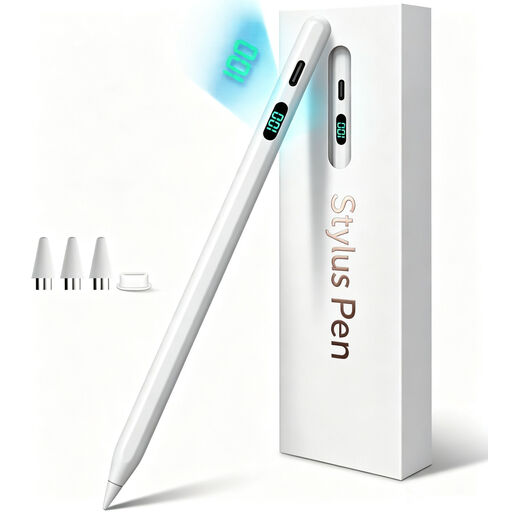 Image unavailable
An option if you’re looking for a USB-C rechargeable pen for an iPad; check compatibility with your exact model.
The product name lists iPad models from 2018–2026. According to the product information, the pen isn’t pressure-sensitive.
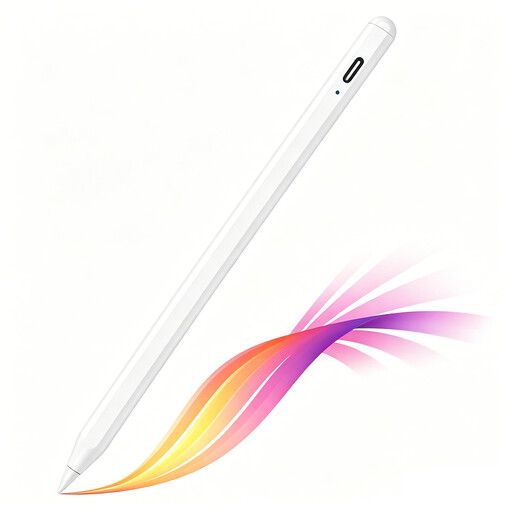 Image unavailable
Worth considering if you’re looking for a stylus for one of the listed iPad models; check compatibility with your own tablet.
The product name lists tilt detection and palm rejection. The magnetic attachment is for storage; wireless charging isn’t supported.
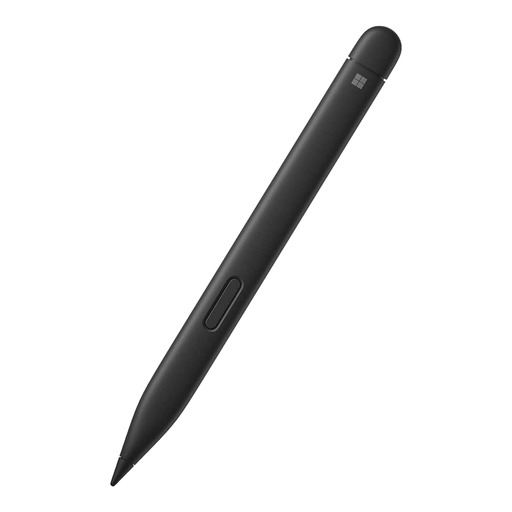 Image unavailable
An option if you want to draw directly on a Surface; check that your exact Surface model supports pen input.
Microsoft lists compatibility and features for each Surface model. You may need a separate charger.
 Image unavailable
A good fit if you want to use pressure-sensitive brush strokes on an iPad that supports this model.
Apple lists pressure sensitivity for Pencil Pro. Check compatibility with your exact iPad model.
 Image unavailable
An option for consistent lines or annotations on an iPad that supports this model.
Apple says pairing and charging are done via a USB-C cable and that this model isn’t pressure-sensitive. It charges via the USB-C port beneath the cap.
No, the drawing app needs to be suitable too. Check whether it can import the scan’s file format and provides a separate drawing layer. Procreate for iPad describes how to import PNG and JPEG files and adjust layer opacity. Also test the files and export method used in your office.
That depends on the model. Apple says Apple Pencil (USB-C) pairs and charges via a USB-C cable. Logitech says Crayon works straight away without Bluetooth pairing. Microsoft lists model-dependent support for Surface Slim Pen 2 and says a separate charger is available if required.
Check whether replacement tips are available for your exact model. According to ACM ConsuWijzer, as a consumer you can claim your statutory guarantee from the seller if a product is faulty. If you’re buying on behalf of a business, check the applicable business terms separately.
No, it depends on the circumstances of the purchase and any exceptions that apply. ACM ConsuWijzer says that consumers generally have a statutory 14-day cooling-off period for online purchases, starting from delivery. Don’t assume this also applies when buying on behalf of your office.
No, unauthorised people must not be able to access personal data processed by an organisation. The Dutch Data Protection Authority says the organisation must decide on appropriate security measures; what’s needed depends on the processing and the risks involved. A stylus doesn’t, in itself, give anyone permission to open files.