
Vandaag of morgen in huis

Kwaliteit gegarandeerd

Welkomstaanbiedingen ontgrendelen: GRATIS bezorging | Tot 80% korting | Gratis 30 dagen JoyPlus-proefperiode
Download de app
A styling brush can replace several appliances: a hot air brush dries and styles at the same time, a straightening brush smooths hair, and a curling brush creates shape or volume. Even so, the range often looks simpler than it really is. An appliance with lots of attachments is not automatically practical for your hair or daily routine.
Focus mainly on features you will actually use. A styling brush for fine hair has different requirements from a hot air brush for thick, long or frizzy hair.
Terms such as “salon results”, “less damage” and “suitable for all hair types” sound appealing, but mean little without technical details. Check, for example, the number of temperature settings, power, brush diameter and included accessories.
Claims about ionic technology or hair protection come from the brand’s product information. According to a brand’s own research, results may vary depending on hair structure, technique and duration of use. Do not treat such claims as a guarantee.
A 5-in-1 hair styler can be useful if you want to alternate between drying, straightening, curling and creating volume. However, every attachment takes up space and swapping them during styling can be awkward. If you usually just blow-dry your hair smooth, a simple hot air brush or straightening brush may be more suitable.
Also check exactly what is included in the box. “Five functions” does not always mean five separate brushes. Sometimes a concentrator nozzle, cool air setting or different directions are counted as separate functions.
An electric styling brush without sufficient temperature control can feel uncomfortable on fine, bleached or fragile hair. A higher temperature does not automatically make styling faster. Ideally, use a low or medium setting, apply a heat protectant and style only as instructed: some appliances are suitable for towel-dried hair, while others are designed exclusively for dry hair.
For wet or towel-dried hair, you need a hot air brush or blow-dry brush. Power is measured in watts. A higher wattage can deliver more air, but on its own says nothing about the styling result. Also look at the air settings and whether a separate concentrator nozzle is included.
A model rated at 800 to 1,000 watts is often suitable for everyday drying and styling. For thick or long hair, a more powerful airflow may be more practical, provided the temperature remains adjustable.
At least two heat settings give you more control than one fixed temperature. A cool air setting or cool shot can help the style cool down after styling. This does not guarantee that the style will last all day; the result also depends on hair length, products used and technique.
For a classic volumising brush, diameter is important. A brush of around 38 mm creates a different curl and shape from a 50 mm brush. Larger diameters are particularly useful for a soft wave and volume in medium-length to long hair.
Ceramic heating or a ceramic coating is often used to distribute heat evenly. On some models, the coating is combined with argan oil or tourmaline. These are material specifications, not a definite promise about the effect on every hair type.
According to product descriptions, a hair brush with ionic technology is designed to help reduce static electricity and frizz. The effect may vary depending on the condition of your hair. Also check that the bristles hold your hair securely without pulling.
Finally, pay attention to practical details:
Do not use electric hair-styling appliances near water. Allow a hot attachment to cool completely before storing it, and keep the cord, air inlet and accessories free from hair and dust.
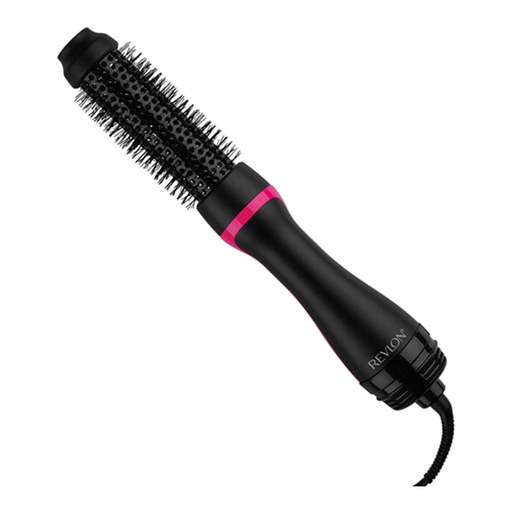
Why it suits this profile: This blow-dry brush combines drying and styling in one appliance and has a 38 mm round brush for everyday styling.
The product information lists three heat settings, a cool air setting and an EU plug, so you are not limited to one fixed temperature.
800 W, ceramic heating, ionic technology and a 1.5-metre swivel cord.
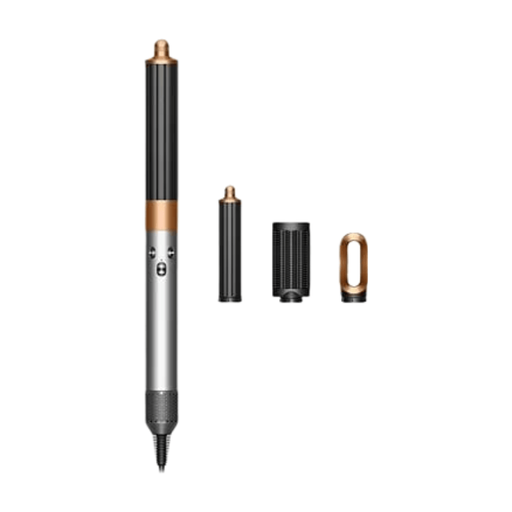
Why it suits this profile: A great option if you want to combine drying, smoothing and curling with airflow in one system.
The specifications list three heat settings, three speeds, a cool air setting and temperature measurement up to 40 times per second, according to Dyson.
1300 W, 0,58 kg, a drying attachment, soft styling brush and 40 mm Airwrap barrel.

Why it suits this profile: This cordless model is designed for everyday smoothing and quick styling on the go.
Six temperature settings from 130 to 200 °C offer more choice than an appliance with only low and high settings.
3000mAh battery, around 30 minutes of use according to the product information, PTC heating and an anti-scald comb.
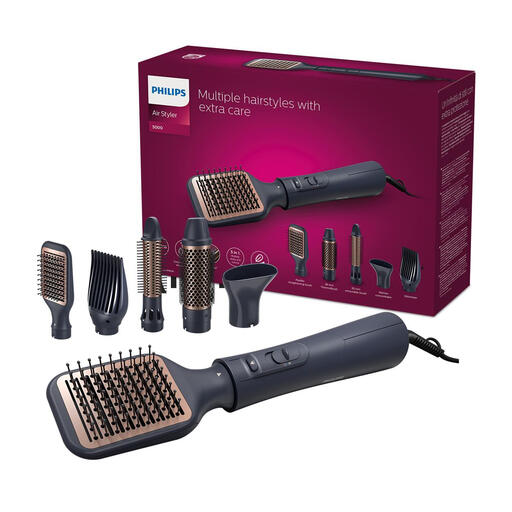
Why it suits this profile: The five attachments are ideal if you regularly switch between smoothing, adding volume and creating waves.
The product details list three heat settings, a Care setting and a cool shot, allowing you to control the heat more precisely.
1000 W, ceramic coating, ionic function, five accessories and a 2-metre cord.
We have put together a complete, up-to-date list of products that fully meet these strict selection criteria and the applicable European safety regulations.
That depends on the model. A hot air brush or blow-dry brush is often intended for towel-dried hair. A thermal curling brush or straightening brush is usually designed for dry hair. Always check the instructions and product page before you begin.
Its lifespan depends on how often it is used, how it is stored and how well it is maintained. Remove hair from the brush after use, keep the air inlets clean and only store the appliance once it has cooled completely. Stop using it if the cord, plug or casing is damaged.
Consumption mainly depends on the power rating and how long the appliance is used. A 1,000-watt appliance running for ten minutes uses around 0,167 kWh. A lower-wattage thermal brush generally uses less energy while heating up, but it does not work as a hairdryer. So do not compare wattage alone; also consider what you want to use the appliance for.
