
Vandaag of morgen in huis

Kwaliteit gegarandeerd

Welkomstaanbiedingen ontgrendelen: GRATIS bezorging | Tot 80% korting | Gratis 30 dagen JoyPlus-proefperiode
Download de app
By: Joybuy Product Recommendation Officer
Choosing a stunt scooter can be a challenge. Your child wants a cool scooter for doing tricks at the skatepark, while you, as a parent, are focused on safety and durability. How do you find a model that meets both needs without breaking the bank?
As a Joybuy Product Recommendation Officer, I'm here to help you navigate the options. In this article, I'll give you practical tips for buying a stunt scooter and share some popular choices based on their specifications. This will help you make an informed decision.
A stunt scooter, also known as a freestyle or trick scooter, is specifically designed to withstand the impact of jumps and tricks. Its construction is therefore different from that of a regular scooter. Here are three key points to consider.
The dimensions of the scooter are crucial for control and safety. A good rule of thumb is that the handlebars should be around the rider's hip or waist height. Handlebars that are too high make tricks difficult, while handlebars that are too low cause an uncomfortable posture. The deck (the platform you stand on) should be wide enough for stability but not so large that it gets in the way. Pay attention to the material: many frames are made of 6061 aircraft-grade aluminum, a lightweight yet very strong alloy that is ideal for a beginner stunt scooter.
The wheels largely determine the ride experience. Most stunt scooters have 100 mm or 110 mm wheels.
The quality of the bearings is indicated by an ABEC rating. A higher number, such as ABEC-9, generally means the wheels spin smoother and faster.
Unlike a regular scooter, a stunt scooter cannot be folded. It has a one-piece construction for maximum strength. A key component is the clamp that secures the handlebars to the fork. A triple clamp provides extra rigidity and safety, which is essential when landing after a jump. A deck with a good anti-slip layer and a reliable rear-wheel brake are also indispensable.
Based on the criteria above, we have selected a few Vokul stunt scooter models that are popular with beginner and intermediate riders.
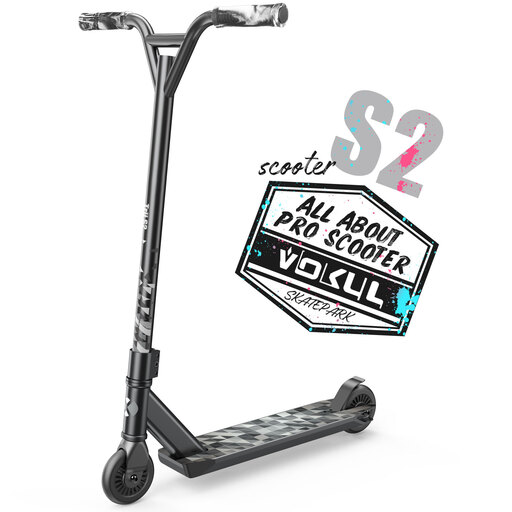
Why It Stands Out: The VOKUL S2 is designed as an entry-level model for young riders. The combination of a lightweight aluminum frame and a reinforced deck makes it strong enough for learning basic tricks, while still being easy to handle.
Key Features:
Who is it for? This kids' stunt scooter is an excellent choice for the 7-14 age range who are just starting with freestyle and need a reliable first trick scooter.

Why It Stands Out: The VOKUL K1 takes performance to the next level with larger wheels and better bearings. This model is aimed at riders who have mastered the basics and want a smoother, faster ride for more advanced tricks.
Key Features:
Who is it for? Ideal for riders aged 8 and up, teens, and even adults (up to 100 kg) who want to move beyond the absolute basics. A great choice for the intermediate rider.
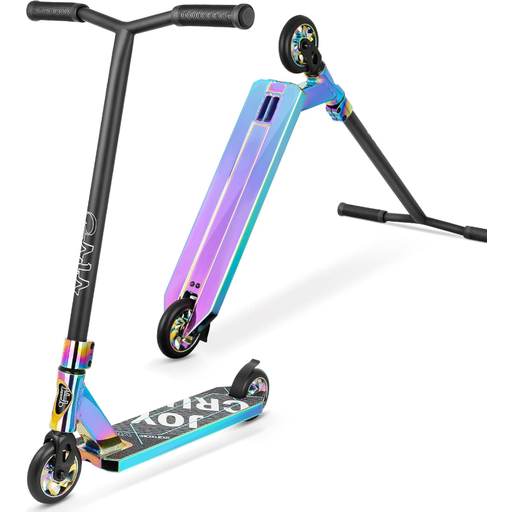
Why It Stands Out: The Vokul V4 combines a robust construction with a striking design. The alloy steel and aluminum frame provides the durability needed for daily use and practicing stunts.
Key Features:
Who is it for? A solid choice for young riders (up to 12 years old) looking for a durable and safe scooter for both stunts and daily use.
Haven't found the perfect match yet, or want to compare more models? There are various options available to suit different ages, skill levels, and budgets.
? Check out our full range of teen scooters here.
A freestyle scooter is built for durability. The main differences are that a stunt scooter is non-foldable, has fixed (not height-adjustable) handlebars, and is made from reinforced materials like aircraft-grade aluminum and chromoly steel to withstand the impact of jumps and tricks. A regular scooter is designed for transportation and comfort, not for stunts.
Most manufacturers recommend a stunt scooter for children from around 7 or 8 years old. However, more important than age are the child's height and skill level. Choose a model that fits the rider well in terms of size (especially handlebar height) and always start with wearing the proper protective gear, such as a helmet, knee pads, and elbow pads.
Regular maintenance is simple but crucial for safety. Before each ride, check that all bolts and the clamp are still tight. Clean the scooter with a damp cloth and avoid getting water directly on the bearings. Inspect the wheels and deck regularly for wear and tear. This will make the scooter last longer and keep it safe to use.
