
Maker with large product photos
If you showcase handmade products, you may need a choice of photo papers and prints up to A3+. Canon Netherlands describes these sizes and paper uses for the PIXMA PRO-200S and imagePROGRAF PRO-310.


Start by deciding on the largest print size and the paper you need for your product photos. A photo-focused inkjet printer offers a different choice of paper and ink from a refillable model for regular mixed use or a dye-sublimation printer for small batches. Also check the connections, media and compliance details for the specific product listing.
If you showcase handmade products, you may need a choice of photo papers and prints up to A3+. Canon Netherlands describes these sizes and paper uses for the PIXMA PRO-200S and imagePROGRAF PRO-310.
If several people share the printer, its size, network connection and ongoing ink and paper requirements all matter. Epson Netherlands lists Wi-Fi and Ethernet for the EcoTank ET-8550.
If you mainly print small photos in batches, consider fixed sizes and their corresponding media alongside individual sheets. DNP Photo Imaging Europe describes the DP-DS620 as suitable for small photo sizes and batches.
| What to consider | What should you check? | Who is this more important for? |
|---|---|---|
| Size, paper and colour settings | Check the supported sizes, paper feed and available profiles for the exact model and paper. Canon Netherlands describes A3+ models and ICC profiles, among other things. | If I want to showcase large product photos on different types of paper, I focus on size and a suitable paper setting. Around 36% of consumers put size and paper choice first. |
| Ongoing printing costs | Compare ink, paper, test prints and maintenance for the same size and paper type. Epson Netherlands notes that print head cleaning can use paper and ink. | For regular printing, I want to weigh up the consumables for the size we actually use. Around 29% of consumers prioritise manageable ongoing costs. |
| Shared studio use | Check the available connections and required drivers, and agree who will manage the paper and colour settings. Epson Netherlands lists Wi-Fi and Ethernet for the ET-8550. | If several people print from different devices, I want a workflow that makes the settings easy to recognise. Around 21% of consumers prioritise shared use. |
| Small photos in batches | Check the supported sizes and corresponding media. For the DP-DS620, DNP lists 10 × 15 cm among the available sizes and specifies a print time for that size. | For recurring batches of small photos, I want to know whether the fixed media and sizes suit our jobs. Around 14% of consumers give small photo batches their highest priority. |
A manufacturer's stated photo yield does not automatically apply to your paper size, coverage or test prints.
Compare usage for the same size and print settings. Don't treat a stated yield as a guaranteed result for your work.
Supported media and paper feeds vary by model. The DNP DP-DS620 uses its corresponding dye-sublimation media, while inkjet models work with different paper options.
Before choosing, check that the exact model supports your preferred paper, size and feed, and has a suitable profile.
A connection helps you link devices, but it doesn't determine which paper and colour settings users should choose.
Test the printer from the devices used in the studio and agree who will manage the drivers, paper and profiles.
Different settings can mean extra test prints and time spent correcting issues.
Canon Netherlands describes the PIXMA PRO-200S as an A3+ photo printer with eight dye-based inks, and the imagePROGRAF PRO-310 as an A3+ model with ten pigment inks.
Epson Netherlands describes the EcoTank ET-8550 as featuring refillable ink tanks, A3+ printing, Wi-Fi and Ethernet. The SureColor SC-P700 is a separate photo-focused model.
DNP Photo Imaging Europe describes the DP-DS620 as a dye-sublimation printer for small photo sizes and batches.
The Joybuy products below are general printer options with colour, A4 or thermal printing features. Check that the paper size and printing technology suit the handmade product photos you want to print.
 No image available
Could be suitable if A4 colour prints are sufficient and you need a network connection; check whether it supports your intended photo paper.
Colour inkjet; A4; Wi-Fi; 4800 × 1200 dpi. The product description also lists Ethernet.
Check the specific product listing for applicable EU compliance and the required CE marking.
 No image available
Only consider this if A4 is large enough for you. Also check that the printer can handle your preferred paper.
Colour inkjet; paper sizes up to A4; 4800 × 600 dpi. The product description lists USB 2.0 and print, scan and copy functions.
Check the specific product listing for applicable EU compliance and the required CE marking.
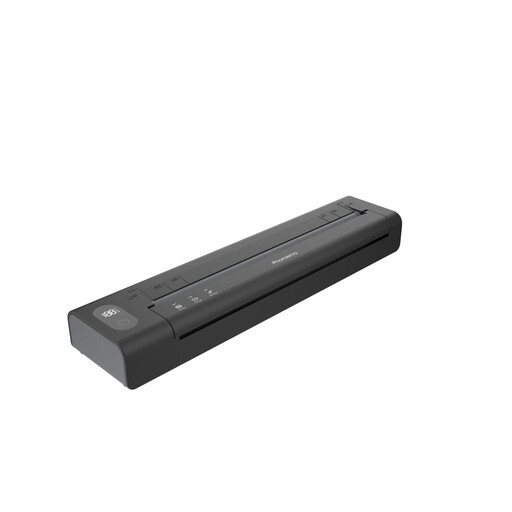 No image available
Could be useful for mobile printing if thermal paper suits the photos you want to print; check the available print size.
Thermal printer for photo printing; Bluetooth; the product title lists 10 rolls of thermal paper.
Check the specific product listing for applicable EU compliance and the required CE marking.
Agree on a standard workflow and profile setting for each type of paper, and make a test print first. Canon describes ICC profiles as a tool for matching colours. Check which profiles are available for your printer and chosen paper.
If print quality deteriorates, Epson recommends running a nozzle check first, followed by print head cleaning if necessary. Cleaning uses paper and ink. This is the manufacturer's advice, not a maintenance interval that applies to every brand.
The ACM describes the legal guarantee for sales to consumers and the seller's responsibility. Don't assume that a business purchase automatically comes with the same consumer rights. Before buying, establish who is making the purchase under the contract and which terms apply.
Yes. The Dutch government lists electronic devices among products that must have a CE marking in the EU. According to the European Commission, the manufacturer uses it to indicate that the product complies with the applicable EU product rules. Check the information for the specific product listing, and don't treat CE marking as an independent quality test.
For an old household electrical appliance, the Dutch government lists options including returning it when buying a similar new appliance, taking it to a collection point or using the local council's recycling centre. If your studio equipment is collected as business waste, check which disposal route applies to your situation.