
Home recorder and editor
You record the intro yourself, then edit it at the same desk. Make sure sound from your headphones doesn’t leak into your microphone; Audio-Technica identifies this as something to consider when recording.


If you also record spoken intros, or work in a noisy home office, start with a well-fitting pair of wired, closed-back headphones. According to Audio-Technica, they can help reduce sound leaking into the microphone and cut out background noise. If you only edit in a quiet room, you could also consider an open-back model. Then compare familiar voice recordings, fit, connectivity and replaceable parts. A manufacturer’s description alone doesn’t prove how accurate or comfortable a model will be for you.
You record the intro yourself, then edit it at the same desk. Make sure sound from your headphones doesn’t leak into your microphone; Audio-Technica identifies this as something to consider when recording.
You edit existing voice recordings while there’s noise from home or work around you. You want to weigh up background noise against fit and keeping the listening volume under control.
You listen to intros repeatedly, so you’ll want to consider fit, connectivity and parts that can be replaced for the exact model.
Best for: recording with a microphone, a shared workspace or a room with background noise.
The trade-off: isolation and fit vary between models, so you’ll need to assess how they feel on your ears.
Best for: editing only in a quiet room of your own, where you want to compare an open-back design.
The trade-off: less isolation and more sound leakage make these a less obvious choice when recording with a microphone at the same time.
For consumers editing spoken intros at home, the choice largely depends on your main concern: voice detail, isolation, comfort or connectivity and maintenance.
| Buying concern | What to look for | Who is this important for? |
|---|---|---|
| Voice detail | Compare familiar voice recordings using the connection you intend to use, and listen back on a second playback device too. Shure positions the SRH440A for critical editing; that’s not an independent listening test. | When I edit intros repeatedly, I want to assess transitions and unwanted sounds in recordings I know well. Around 33% of consumers put voice detail first. |
| Isolation and sound leakage | Consider whether you’ll also be recording with a microphone, and test the seal at a normal listening volume. Audio-Technica describes a closed-back design as reducing sound leakage. | If I’m also recording or household noise distracts me, I want to reduce the sound from my headphones reaching the microphone and listen without distractions. Around 27% of consumers prioritise isolation or minimal sound leakage. |
| Comfort | Try the headphones during a session that’s representative of how you’ll use them, and look out for pressure, warmth and space around your ears. Sennheiser and beyerdynamic list replaceable ear pads for the HD 280 PRO and DT 770 PRO 80 ohm respectively. | During long editing sessions, I want to keep listening without pressure or warmth becoming a distraction. Around 20% of consumers put comfort ahead of other buying concerns. |
| Connectivity and maintenance | Check your computer or audio interface output, the plug and adaptor, cable length and parts for the exact model. Shure lists a detachable cable for the SRH440A; according to beyerdynamic, the DT 770 PRO has a fixed cable. | If I want to use the headphones with my own equipment and maintain the parts easily, I check the connection and cable type in advance. Around 20% of consumers cite connectivity or maintenance as their top priority. |
Sound from your headphones can be picked up by the microphone if you’re recording at the same time.
If you also record, compare closed-back models first and check for sound leakage in your own setup.
You could spend extra time reviewing or recording sections again.
A manufacturer’s description won’t tell you how you’ll experience voice detail or comfort.
Compare familiar voice recordings at a normal volume and try the fit before deciding.
The DT 770 PRO comes in different impedance versions; the separate DT 770 PRO X has a different driver and a detachable cable.
Check the full model name, impedance, cable and connection for the version you’re considering.
Shure positions the SRH440A as a closed-back, over-ear model for podcasting, home recording and critical editing.
The ATH-M40x is a wired, closed-back studio model to compare if connectivity and storage matter to you.
The HD 280 PRO is a closed-back monitoring model to compare if isolation and replaceable ear pads matter to you.
The DT 770 PRO 80 ohm is a closed-back, wired model; the DT 900 PRO X is a separate open-back version to consider for a quiet room.
The K361 is a closed-back, foldable studio model that AKG also positions for editing.
This selection includes headphones and a headset with different connections and listening features. For voice editing, check that the exact model suits your equipment and workflow; product features aren’t proof of a neutral studio sound.
 No image available
Could be worth considering if you want to listen with a wired connection and reduce background noise; check that the connection suits your editing setup.
The product description lists a 3.5mm connection, passive use without a battery, active noise cancellation and 60 hours of battery life.
 No image available
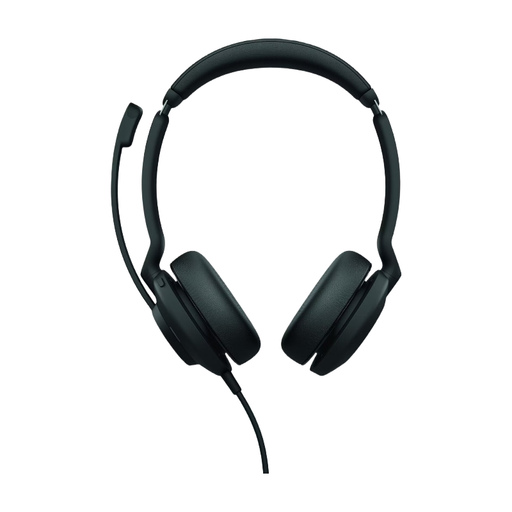
Can connect to a computer via USB-A; check that this connection is compatible with your editing equipment.
The product description lists two integrated microphones, stereo ear cups, memory foam ear pads and an adjustable slider. It also mentions compatibility with Windows and Mac.
 No image available
Could be worth considering if you want to listen with a wired connection and reduce background noise; check the connection and how it works for your editing needs.
The product description lists active noise cancellation, built-in microphones, ear-cup controls and an audio cable for wired listening.
 No image available
Could suit you if you want to reduce background noise while listening; check the connection and whether they’re suitable for voice editing before you buy.
The product description lists noise cancellation and pairing with two devices. According to the product description, battery life is up to 30 hours with noise cancellation switched on.
 No image available
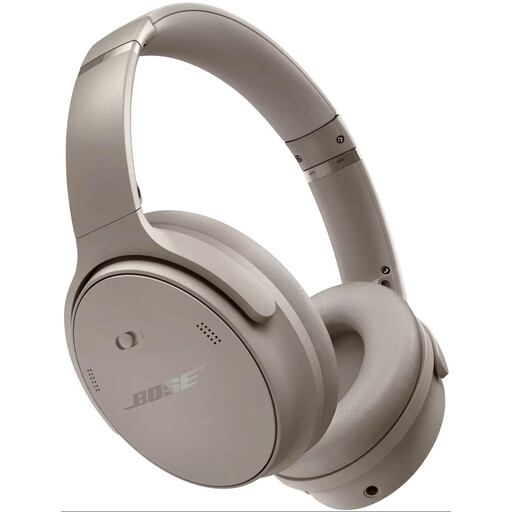
Could be worth considering if you want to compare features for reducing background noise; check that the controls and connection options work with your editing setup.
The product description lists Bluetooth, active noise cancellation, a transparency mode and ear-cup controls. It describes a lightweight design for longer listening sessions.
Closed-back headphones are a more logical starting point for comparison, as Audio-Technica says sound from your headphones can be picked up by the microphone. If you only edit in a quiet room, you could also consider an open-back model.
Compare the headphone output on your computer or audio interface with the plug and adaptor supplied with the exact model. Sennheiser lists a 3.5mm plug with a 6.3mm adaptor for the HD 280 PRO; also check which connection your equipment has.
Check which parts are available for the exact model. Shure lists a detachable cable for the SRH440A, and Sennheiser lists replaceable ear pads for the HD 280 PRO; this doesn’t guarantee that every part is available everywhere.
According to ACM ConsuWijzer, online purchases generally come with a 14-day cooling-off period after delivery, subject to legal exceptions. A product must also meet what you could reasonably expect under normal use. If it breaks too soon, contact the seller for an appropriate free solution; in the Netherlands, the statutory guarantee doesn’t automatically have a fixed end date of two years.
A CE marking is required if the specific model falls under EU product rules that require it. According to the European Commission, this depends on the rules that apply to the product; check the documentation for the model in question. A CE marking is not an independent approval of sound quality.
Not as a general solution. According to the European Commission, the risk to your hearing depends on both the sound level and listening time. First check whether background noise is distracting you, and keep the volume under control; there’s no universally safe volume setting for every pair of headphones.