Wired studio headphones can use the headphone output you already have, so you won’t need a separate mains socket for the headphones. However, your playback device must be able to drive the model you choose properly. In a quiet room, you could consider an open-back model; a closed-back model may be more practical if background noise interferes with your judgement. Compare the original and edited clip at the same volume: iZotope notes that stronger noise reduction can also suppress quiet audio details.
Who is this choice relevant to?
Tape restoration specialist
You compare a recording before and after noise removal, and want to hear whether quiet musical details are preserved or new artefacts are introduced. iZotope describes tape hiss as constant broadband noise in analogue tape recordings.
Editor in a noisy workplace
You’re assessing quiet noise while other sounds are distracting you. The open or closed-back design therefore matters in your working environment: open-back earcups let sound in and out, as Shure Service explains.
Editor with limited access to mains sockets
You want to use an existing headphone output rather than a headphone setup that needs an extra power supply. Focusrite recommends assessing impedance in relation to your device’s output.
What should you look for when choosing?
| Consideration |
What to look for when buying |
Who is it most relevant to? |
| Assessing noise and artefacts |
Compare the same original and edited clip at the same volume. iZotope warns that a higher reduction threshold can also suppress quiet parts of the signal. |
I want to know whether quiet details are preserved and whether the processing introduces new artefacts. Around 33% of consumers prioritise these restoration details. |
| Background noise and sound leakage |
Consider how quiet your workspace is and try the fit. Open-back earcups let sound in and out, as Shure Service explains. |
If noise in my workplace masks quiet residual hiss, I want to take that into account when choosing. Around 27% of consumers prioritise blocking out workplace noise. |
| Connection and drive |
Check the plug and the specifications of your headphone output. Focusrite notes that higher-impedance headphones generally need more power from the output. |
I want to use my existing output without needing an extra powered device. Around 20% of consumers put that connection and adequate drive first. |
| Comfort and maintenance |
Try the fit during a listening session and check whether the cable and ear pads can be replaced on the exact model. |
For longer listening sessions, I want a comfortable fit and the option to carry out maintenance. Around 20% of consumers give the most weight to comfort and replaceable parts. |
Things to watch out for when buying
-
Assuming a frequency range proves better hiss monitoring
A stated frequency range won’t tell you whether you can hear residual noise, lost quiet details or new processing artefacts in your recording. iZotope also explains that stronger noise reduction can suppress quiet parts of the signal.
Compare the same clip before and after processing at the same volume, and listen to sections with quiet signals too.
-
Choosing an open-back model for a noticeably noisy workplace
Open-back earcups let sound in and out. Background noise can therefore mask quiet differences in your recording.
Assess your space first: consider an open-back model for listening in a quiet room, or compare a closed-back model if background noise is a problem.
-
Focusing only on the model range or impedance
The beyerdynamic DT 770 PRO is available in 32, 80 and 250 ohm versions. The ohm rating alone doesn’t determine whether your output can drive your chosen headphones to a usable level.
Check the exact version, plug and any adapter, as well as the specifications of your own headphone output.
An unsuitable plug or output may mean you need a suitable adapter or a different playback setup.
Brands to consider
beyerdynamic
The DT 770 PRO is a wired, closed-back model; beyerdynamic offers it in 32, 80 and 250 ohm versions. The DT 700 PRO X is closed-back and the DT 900 PRO X is open-back; the manufacturer lists a nominal impedance of 48 ohms for both.
- The different designs and impedance options give you a basis for comparing isolation and connectivity across models.
- The DT 770 PRO versions are distinct product variants. Manufacturer specifications don’t tell you whether an unknown headphone output can drive each model properly.
Audio-Technica
Audio-Technica describes the ATH-M50x as a closed-back, wired model. The European product information lists three interchangeable cables included in the box.
- The choice of included cables may be useful for different listening setups.
- Manufacturer claims about clarity and isolation aren’t independent proof that you’ll hear tape noise artefacts better.
Sennheiser
The wired HD 560S is an open-back model. Sennheiser lists a nominal impedance of 120 ohms.
- The open-back design is an option to compare in a quiet room.
- Open-back earcups let sound through. Check whether your own output can drive the model to a usable listening level.
Sony
Sony describes the MDR-7506 as closed-back, wired studio headphones. The Dutch professional product page lists an impedance of 63 ohms and a 9.8 ft cable.
- The product page lists 3.5 mm and 6.3 mm adapters.
- Check that the stated cable length suits your desk; specifications aren’t an independent listening test.
Shure
Shure describes the SRH840A as a closed-back monitoring model with a detachable, locking cable.
- A detachable cable may be useful for maintenance and replacement.
- Shure’s descriptions of frequency response and comfort don’t guarantee that the model will give you a suitable assessment of every restored recording.
Joybuy products
The headphones below have product information that mentions a wired listening option. For each model, check the connection and whether it works with a flat battery before using it for critical tape restoration.
 No image available
Bose QuietComfort Ultra Bluetooth Headphones - Black
The product information describes a closed-back over-ear design and listening via an audio cable, even when the battery is flat. This may suit anyone looking for a wired listening option.
Check that the cable and connection are compatible with your existing output.
Joybuy
 No image available
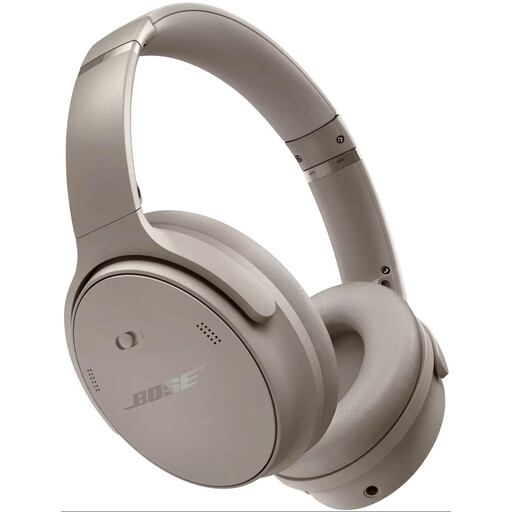
Bose QuietComfort Headphones Sandstone
The product information describes a closed-back design and wired listening when the battery is flat; check whether this way of using them suits your listening setup.
The description also mentions active noise cancellation. That alone doesn’t tell you whether you can assess processing artefacts in a recording accurately.
Joybuy
 No image available
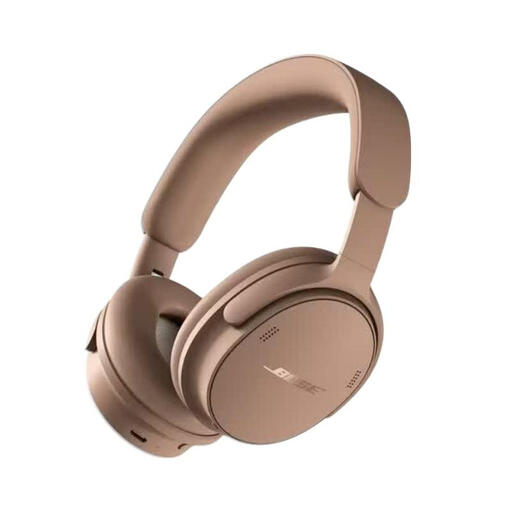
Bose QuietComfort Headphones (2nd Gen) - Hazelnut Taupe
The product information describes a closed-back model with wired connectivity, which may suit you if you also want to listen through a cable.
Check the exact connection and whether the wired operation described is compatible with your playback device.
Joybuy
 No image available
Bose QuietComfort Ultra Headphones (2nd Gen) Black
The product information lists a detachable cable with a 3.5 mm connection, which may suit anyone who wants to listen through an existing headphone output.
The description also mentions USB-C and Bluetooth 5.4. Check which connection you need for your playback device.
Joybuy
 No image available
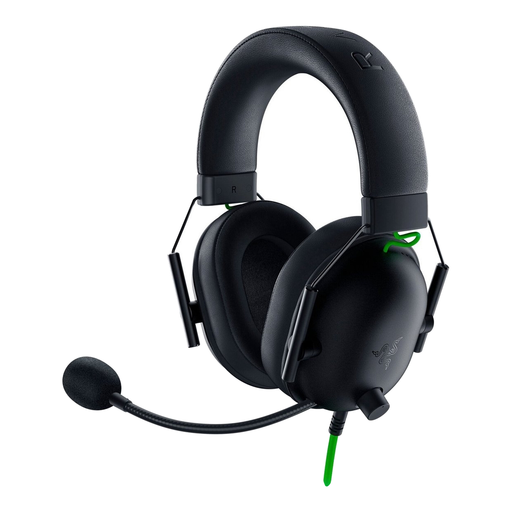
Razer Blackshark V2 X 7.1 Wired Gaming Headset - Black
The product information lists a wired 3.5 mm connection; this may suit you if your device has a compatible audio output.
The product name identifies this as a gaming headset. Consider for yourself whether it’s suitable for critically reviewing restoration work.
Joybuy
Frequently asked questions
Do studio headphones remove tape hiss themselves?
No. Headphones let you listen to the recording and the processed result; noise removal happens in audio editing software. Listen to quiet sections before and after processing too: according to iZotope’s documentation, a higher reduction threshold can suppress quiet parts of the signal.
Do I need an extra mains socket for wired studio headphones?
Not for the headphones themselves if you connect them to a suitable headphone output that’s already working. Check the plug and whether that output can drive your exact headphones sufficiently; impedance alone won’t tell you.
What should I look for in comfort and maintenance for long listening sessions?
Try the fit during a typical listening session and check whether the cable and ear pads can be replaced on the exact model. beyerdynamic lists replaceable ear pads for the DT 770 PRO; Audio-Technica lists interchangeable cables included with the ATH-M50x.
What are my rights when buying online as a consumer in the Netherlands?
When you buy from a business at a distance, in many cases you have a 14-day cooling-off period, subject to exceptions, according to the Dutch government. You’re also covered by the legal guarantee if a product doesn’t do what you could reasonably expect under normal use; ACM ConsuWijzer explains that the seller must then offer an appropriate solution. There is no single fixed statutory guarantee period for every pair of headphones.
Is there a standard safe volume setting for listening at work?
No. A universal volume-control setting doesn’t tell you how loud the sound actually is. According to Arboportaal, employers must provide hearing protection when daily noise exposure exceeds 80 dB(A); above 85 dB(A), employees are required to wear it. Whether these rules apply to you depends on your daily exposure at work; a headphone specification doesn’t establish that exposure.


