
Checking tape hiss in a noisy environment
You compare quiet passages by a window, where outdoor noise could affect your judgement. RTINGS.com explains that open-back headphones generally let more sound through than closed-back models.


By a window where outdoor noise masks quiet passages, a well-fitting pair of closed-back headphones is a sensible first choice. In a quiet room, open-back headphones may suit you if sound leakage is not a concern. RTINGS.com explains that open-back models generally let more sound through. Compare the same passage before and after editing at the same moderate volume: your headphones help you listen, but they cannot prove whether the noise reduction has been done well.
You compare quiet passages by a window, where outdoor noise could affect your judgement. RTINGS.com explains that open-back headphones generally let more sound through than closed-back models.
You usually work in a quiet room and want to assess both any remaining tape hiss and possible editing artefacts. iZotope explains that heavy noise reduction can produce audible artefacts.
You listen to passages repeatedly and want headphones that suit your ears, connection and workspace. Check the fit and whether the cable works for your setup.
Choose this when: outdoor noise masks faint traces of tape hiss, or when you listen near other people.
Trade-off: isolation also depends on the fit; do not turn up the volume to drown out background noise.
Choose this when: the room is quiet enough and sound leakage is not a concern.
Trade-off: an open-back design lets in background noise and leaks sound out, which can make quiet comparisons more difficult.
The window itself does not determine your choice. What matters most is whether outdoor noise masks quiet details. The percentages below show which buying priority may matter most to consumers for this listening task.
| What to consider | What should you check? | Who is this important to? |
|---|---|---|
| Isolation | Compare open-back and closed-back models at your workspace; look for a good seal around the ear cushions without uncomfortable pressure. | If I want to hear faint traces of tape hiss by a window, I do not want outdoor noise to mask them; around 36% of consumers prioritise isolation. |
| Assessing noise reduction | Compare identical passages before and after editing at the same moderate volume; listen out for possible audible artefacts too. | I want to know whether anything unwanted has changed, as well as whether the tape hiss has been reduced; around 29% of consumers prioritise assessing the edit. |
| Fit for repeated listening | If possible, try the headphones with your glasses on and check which replacement ear cushions fit the exact model. | For repeated listening sessions, I want a comfortable fit that stays secure; around 21% of consumers prioritise comfort. |
| Connection and cable | Check your device’s output, the plug or adapter for the version you have chosen, and whether the cable suits your desk setup. | I want to connect the headphones to my existing equipment without any hassle; around 14% of consumers prioritise connection and cable compatibility. |
Open-back ear cups generally let in more background noise. Turning up the volume to drown it out is not a good solution.
Assess the noise in your listening environment and, if needed, try a well-fitting pair of closed-back headphones.
Noise reduction can leave audible artefacts as well as reducing noise. iZotope explains that heavy spectral noise reduction can create a chirping or watery sound.
Compare the same passages before and after editing, and listen for more than just how much noise remains.
beyerdynamic lists 32, 80 and 250 ohm versions of the DT 770 PRO. Check the full model name, your device’s output and the plug or adapter you need.
If the connection is not compatible, you may need to arrange a suitable adapter separately; check what is included with the version you have chosen.
The HD 480 PRO and HD 560S let you choose between a closed-back and an open-back design.
The closed-back DT 770 PRO is a wired model available in several versions to compare with your audio source.
The closed-back ATH-M50x is worth comparing if cable options and storage after a session matter to you.
The closed-back MDR-7506 is a wired monitor headphone worth comparing if a foldable model with an adapter suits your workspace.
Here are headphones and headsets you can compare for this listening task. For each model, check that the connection, listening mode and fit suit your own setup.
 No image available
An option to compare if you also want to listen wirelessly; check that the cable and connection suit your regular listening setup.
The product name mentions noise cancelling and a 60-hour battery life.
 No image available
You can compare this model if you are considering Bluetooth headphones; check that the connection and listening mode suit your regular audio comparison setup.
The product name mentions Bluetooth and noise cancelling.
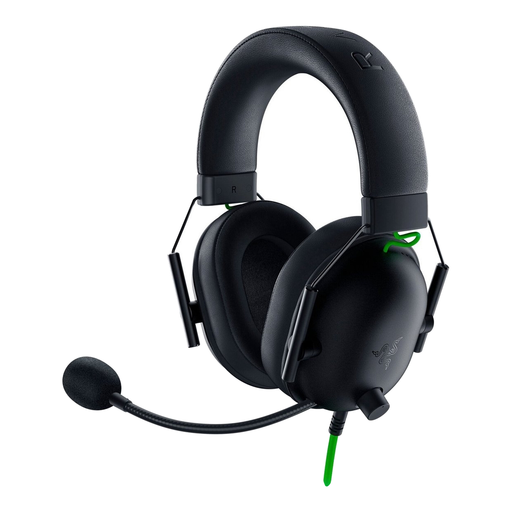 No image available
A wired headset to compare if a fixed connection suits your setup; check that the cable and plug work with your audio device.
The product name describes a wired 7.1 gaming headset.
 No image available
You can compare this wireless headset if you want to listen in a noisy environment; check that its connection options suit the repeatable listening setup you need.
The product name describes a wireless noise-cancelling headset.
 No image available
Compare this model if you are looking for headphones for regular listening checks; first check the wired options and which cables are included with this version.
The product name mentions the second generation and the colour black.
According to the product information, no charger is included and PD fast charging is not supported.
No. You use headphones to listen to the result of an edit. iZotope describes spectral noise reduction as an editing method for things such as tape hiss; afterwards, listen for possible unwanted changes too.
Closed-back headphones are a sensible first choice if outdoor noise masks quiet passages. In a quiet room, open-back headphones may suit you if sound leakage is not a concern; fit still matters.
Compare your interface’s output with the plug or adapter for the exact version. beyerdynamic lists 32, 80 and 250 ohm versions of the DT 770 PRO; Audio-Technica lists a 6.3 mm adapter with the ATH-M50x.
Compare the same passage before and after editing at the same moderate volume, and listen for artefacts as well as any remaining noise. iZotope explains that heavy spectral noise reduction can create a chirping or watery sound.