If you work in a shared student room or one where noise levels vary, closed-back headphones are likely to be the more practical choice. During quiet listening sessions, an open-back model can help you assess the positioning of dialogue, music and effects. Shure describes closed-back headphones as suitable for recording, while beyerdynamic and Sennheiser associate their open-back models with spacious listening or mixing. Also check the connection and fit with your own equipment, and, if possible, listen to the mix on the playback system it is intended for.
Who is this choice for?
Mixing in a shared room
If you work with housemates or background noise around you, compare open-back and closed-back designs and check how well the earpads seal around your ears. Shure and beyerdynamic describe closed-back models as an option to consider when taking ambient noise and sound leakage into account.
Mixing during quiet listening sessions
If you can listen without interruptions and want to assess the positioning of dialogue, music and effects, an open-back model may be an option. Bear in mind that you will still hear your surroundings and sound will leak out; Sennheiser describes its open-back HD 490 PRO as a model for mixing.
Mixing with a simple playback setup
If you use a computer output or audio interface, for example, check before buying that the plug and version you choose are compatible. beyerdynamic provides separate information about the DT 770 PRO impedance variants and suitable sources.
What should you look for in studio headphones?
First choose headphones to suit the room where you mix. Then check the connection, fit and parts for long-term use.
| What to consider |
What to check before buying |
Who is this important for? |
| Ambient noise and sound leakage |
Compare open-back and closed-back designs; consider how well the earpads seal and whether you will be recording with a microphone. |
If you have housemates, you will want to consider noise coming in or leaking out. Around 33% of consumers prioritise reducing this disruption when making this choice. |
| Assessing detail and positioning |
Consider whether you have enough quiet listening time; compare familiar passages at the same listening level. |
If your main aim is to assess the positioning of voices, effects and music, uninterrupted listening is helpful. Around 27% of consumers put assessing the mix first. |
| Connection and power requirements |
Check the headphone output, plug, any adapter and the full model variant. |
If you use a laptop, adapter or audio interface, you will want to make sure the version you choose connects to it. Around 20% of consumers make compatibility with their existing setup their top priority. |
| Fit and maintenance |
Try the clamping force and earpads; check whether the cable and earpads are replaceable on the version you are considering. |
For longer sessions, you will want headphones that feel comfortable and have replaceable parts where relevant. Around 20% of consumers prioritise fit and maintenance. |
Common purchasing mistakes
-
Choosing an open-back model without considering your housemates
With an open-back design, you will hear more of your surroundings, and sound may also be audible outside the headphones. This can be inconvenient in a shared room or when recording with a microphone.
Choose based on when you actually listen and the room you are in, rather than on the ‘for mixing’ description alone.
-
Overlooking the impedance variant or connection
beyerdynamic distinguishes between DT 770 PRO variants by impedance and suitable playback sources. Choosing a compatible headphone output is therefore part of the decision.
Compare the full variant and plug with the output you actually use. If the connection and output are incompatible, you may need a suitable adapter or a different playback solution.
-
Confusing a manufacturer’s warranty with your statutory rights
The Dutch government distinguishes between an additional commercial warranty and your right to a product that meets expected standards. According to the Dutch government, there is no fixed statutory warranty period in the Netherlands.
Keep your proof of purchase and contact the seller if the product is faulty.
Brands to compare
beyerdynamic
The DT 770 PRO and DT 990 PRO give you a choice between a closed-back and an open-back design.
- According to beyerdynamic, the closed-back DT 770 PRO is intended for monitoring with ambient noise, while the open-back DT 990 PRO is for assessing spatial sound.
- With the DT 770 PRO, you need to match the impedance variant to your playback source. An open-back model lets in ambient noise and allows sound to leak out.
Sennheiser
The open-back HD 490 PRO is a model-specific option to compare for mixing during quiet listening sessions.
- Sennheiser lists separate sets of earpads for production and mixing, a detachable cable and spare parts for the HD 490 PRO.
- An open-back design will not block out a noisy or shared listening space. These features apply to this model and do not automatically apply to other Sennheiser headphones.
Audio-Technica
The closed-back ATH-M50x is an option to compare if a detachable cable is important to you.
- Audio-Technica describes the ATH-M50x as having passive isolation and a detachable cable.
- The actual seal and fit depend on how the model sits on you, so check for yourself.
Sony
The MDR-7506 is a wired studio headphone to compare as a closed-back monitoring option.
- Sony lists studio and recording use and specifies a 3 m cable.
- Check that the cable length suits your usual workspace and cable routing; the manufacturer’s description is not an independent assessment of how the mix sounds.
AKG
The closed-back K371 is an option to compare if you are looking for a foldable model.
- AKG lists a foldable design and oval earpads for the K371.
- Claims about isolation and sound come from the manufacturer; assess the actual seal and fit for yourself.
Headphones at Joybuy
These Joybuy headphones have features that may be relevant to a listening setup. Check for yourself that the version and connection meet your requirements for mixing a soundtrack.
 No image available
Sennheiser MOMENTUM 4 Wireless, black
If you are also looking for a listening option with a cable, as well as headphones for mixing, the product description mentions a 3.5mm cable and passive use without a battery.
The product name lists noise cancelling, 60-hour battery life, fast charging and four microphones.
View at Joybuy
 No image available
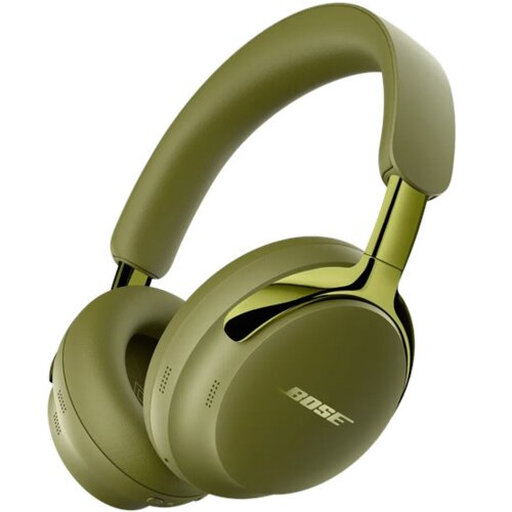
Bose QuietComfort Ultra Headphones (2nd Gen), Olive Green
If you are looking for headphones with a wired connection option, the product description mentions a detachable cable with USB-C and 3.5mm connectors.
The product description also mentions active noise cancelling and spatial audio; check which connection is compatible with your playback device.
View at Joybuy
 No image available
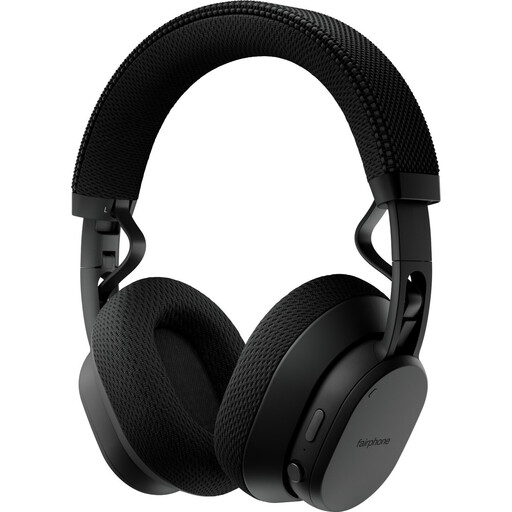
Fairphone Fairbuds XL 2025, black
If you want to compare a closed-back over-ear design, the product description lists this model as closed-back.
According to the product description, nine parts are replaceable, including the battery, earpads and speaker units. Check that the connection options suit your setup.
View at Joybuy
Frequently asked questions
Can I use open-back headphones when my housemate is in the room?
Yes, if the sound leakage and noise coming into the room are acceptable to both of you. In a shared or consistently noisy space, it is worth trying a closed-back model too; check how well it seals around your ears.
Will every DT 770 PRO work equally well with my laptop or audio interface?
No. The right version depends on your playback source. For the 32-ohm version, beyerdynamic mentions sources including computer sound cards and audio interfaces; for the 250-ohm version, it lists stationary sources such as headphone amplifiers. Check the output on your own device and the full model variant.
How can you manage long mixing sessions responsibly?
Keep the volume low and factor listening time into your plans. The World Health Organization gives four hours per week at a sound level of 90 dB as an example. This is advice about exposure to sound, not a guaranteed safe setting for a specific pair of headphones.
What are your rights when buying headphones online in the Netherlands?
The Dutch government says that, in many cases, distance purchases come with a 14-day cooling-off period. You are also entitled to a product that meets expected standards; according to the Dutch government, there is no fixed statutory warranty period in the Netherlands. If the product is faulty, contact the seller. The cooling-off period and any conditions depend on the circumstances that apply.


