Who is this buying guide for?

Critical sound-effects reviewer

You compare subtle differences between sound effects in a quiet home office and want to know whether open-back or closed-back headphones will suit your listening space. Make Digital Music and Sennheiser explain the trade-off between open-back listening and sound leaking into or out of the room.

Creator in a shared home office

You assess sound effects with background noise around you, or monitor audio while recording. Isolation and reduced sound leakage can therefore be important; manufacturers such as beyerdynamic and Audio-Technica describe their closed-back models as suitable for monitoring.

Long-session headphone user

You work in longer sessions and want to consider fit, connections and parts that may wear out. The World Health Organization offers advice on safe listening, while several manufacturers specify replaceable ear pads or cables for particular models.

What should you look for when choosing?

Closed-back, wired headphones

A good fit if: you work in a shared or noisy home office, or record at the same time as using a microphone.

Bear in mind: closed-back headphones offer a different listening experience from open-back models; check the fit too. Make Digital Music explains the trade-off around background noise and sound leakage.

Open-back, wired headphones

A good fit if: the room is quiet, leakage is not an issue and you mainly want to compare effects with each other. Sennheiser positions the HD 560S for analytical listening.

Bear in mind: open-back headphones let sound pass between the headphones and the room, so they may be less suitable if there is background noise or a live recording microphone.

What to consider What should you check? Who should prioritise this?
Comparing sound effects Check whether your room is quiet enough for open-back headphones and, if needed, compare familiar material on a second playback system too. If I want to assess subtle differences between effects, I need to consider how quiet my room is. Around 36% of consumers prioritise sound quality.
Isolation and leakage Check whether the model is closed-back and whether the ear pads fit snugly around your ears. If you work with background noise or a live microphone, you’ll want to minimise disruption from outside noise and sound leakage. Around 29% of consumers put isolation first.
Comfort and listening time Consider how the ear pads fit and keep the volume down during long sessions. If I listen to a lot of effects one after another, I want a comfortable fit that lasts and doesn’t make me want to turn up the volume. Around 21% of consumers prioritise comfort during listening sessions.
Connections and maintenance Check the plug and any adapter against your computer or audio interface; check whether the cable and ear pads are replaceable for each model. If you want to keep using your existing equipment, check the connection first and consider which parts you might want to replace later. Around 14% of consumers prioritise connections and maintenance.

Buying pitfalls

  • Choosing an open-back model without considering your workspace

    With background noise or a live microphone, sound leaking from open-back headphones can interfere with listening or recording.

    First, consider how quiet your room is and whether you’ll be recording at the same time. Then compare models within the design type that suits your situation.

  • Treating the DT 770 PRO and DT 770 PRO X as the same version

    The beyerdynamic DT 770 PRO 80 Ohm has a fixed cable and a nominal impedance of 80 ohms. According to beyerdynamic, the DT 770 PRO X has a detachable mini-XLR cable and a nominal impedance of 48 ohms.

    Check the full model name and version before comparing connections or replacement parts.

  • Assuming there is a standard two-year statutory guarantee

    According to the Dutch Government, there is no fixed statutory guarantee period for all products in the Netherlands. What you can reasonably expect from a product matters; if a product is faulty, the retailer is your point of contact.

    Keep your purchase details and contact the retailer if there’s a problem.

Brands and models to consider

beyerdynamic

The closed-back DT 770 PRO 80 Ohm and DT 770 PRO X are different monitoring models.

  • beyerdynamic lists replaceable ear pads for the DT 770 PRO 80 Ohm; its nominal impedance is 80 ohms.
  • The DT 770 PRO 80 Ohm has a fixed cable. According to the manufacturer, the DT 770 PRO X has a detachable mini-XLR cable and a nominal impedance of 48 ohms. These are differences between models, not proof of the performance of the brand as a whole.

Audio-Technica

The closed-back ATH-M50x is an over-ear model with detachable cables.

  • Audio-Technica lists three interchangeable cables, passive isolation and swivelling ear cups.
  • The manufacturer’s information does not include independent measurements showing a specific sound-quality advantage when assessing sound effects.

AKG

AKG describes the K371 as a closed-back, foldable over-ear studio headphone.

  • AKG lists three detachable cables and replaceable ear pads for this model.
  • AKG’s claims about tuning and isolation are manufacturer claims, not the results of a comparative real-world test.

Sennheiser

The open-back HD 560S and closed-back HD 280 PRO offer different trade-offs between listening and isolation.

  • Sennheiser positions the HD 560S for comparing sound sources and lists replaceable ear pads for the HD 280 PRO.
  • The features listed apply to these models; the open-back HD 560S may be less suitable if background noise or sound leakage is an issue.

Sony

The closed-back, foldable MDR-7506 is a monitor headphone that Sony positions for recording and video work.

  • For this model, Sony lists a 40 mm driver, a carrying pouch and an adapter for 3.5mm and 6.3mm connections.
  • The manufacturer’s page cited is for the US market; don’t treat any prices or purchase terms on it as information for the Netherlands.

Joybuy products

This selection includes closed-back over-ear headphones whose product information mentions wired listening. Check that the connections and features suit the way you assess sound effects; product information for consumer headphones does not, by itself, prove they are suitable for critical studio monitoring.

Bose QuietComfort Ultra Bluetooth headphones, black

Bose QuietComfort Ultra Bluetooth Headphones - Black

Could suit you if you’re looking for a closed-back over-ear model that can also be used with a wired connection; check that the connections work with your playback device.

The product information lists active noise cancellation, an audio cable included in the box, and 2.5 mm and 3.5 mm connections. It also mentions soft ear cushions and use during longer listening sessions.

View at Joybuy
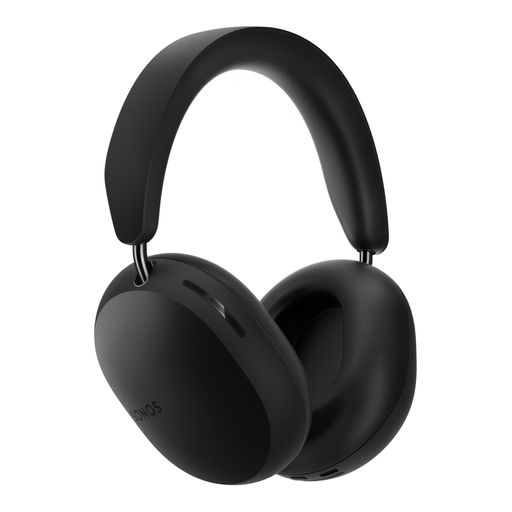
Sonos ACE over-ear Bluetooth headphones, black

Sonos ACE Over-Ear Bluetooth Headset Black

Could suit you if you’re looking for a closed-back over-ear model with wired connection options; decide for yourself whether its features are right for critical listening to sound effects.

The product information lists wired audio sources via USB-C and 3.5 mm, an adjustable headband and memory foam ear cushions, which it says help reduce pressure around the ears.

View at Joybuy

Frequently asked questions

Can I use open-back headphones while recording sound effects?

If you’re recording with a microphone, closed-back headphones are the more practical choice because open-back models let more sound out and background noise in. In a quiet room when you’re not recording, open-back headphones are still an option for comparing effects critically.

How do I connect studio headphones to my home setup?

Check the output on your computer or audio interface against the headphone plug and any adapter. beyerdynamic lists a 3.5mm plug with a 6.35mm adapter for the DT 770 PRO 80 Ohm; Audio-Technica lists a 6.3mm adapter for the ATH-M50x.

What should I consider during long listening sessions?

Look for a comfortable fit, keep the volume down and take breaks if needed. The World Health Organization gives the example that listening at an average of 80 dB can be safe for up to 40 hours a week; louder sound reduces that time. This is not a recommended volume setting for any specific headphone model.

Do I need to replace my headphones if the ear pads or cable are worn?

Not necessarily: beyerdynamic lists replaceable ear pads for the DT 770 PRO 80 Ohm, and Audio-Technica lists a detachable cable for the ATH-M50x. Check whether a suitable replacement part is available for the exact model.

What cooling-off period and guarantee apply to an online purchase in the Netherlands?

When you buy as a consumer, you’re entitled to a product that meets the terms of the agreement; if the product is faulty, the retailer is your point of contact. According to the Dutch Government, there is no fixed statutory guarantee period for all products. For many online purchases made at a distance from a business, you have 14 days to change your mind; exceptions may apply.
