
Singer monitoring their own voice
You sing along to a backing track through a microphone and want to hear your own voice without delay. So pay attention to the monitoring setup and the fit of the closed-back headphones. (Audio-Technica; Focusrite)


For singing with a microphone and backing track, wired, closed-back studio headphones are a sensible place to start, provided they fit well and the plug is compatible with your equipment. Also check whether your interface or recorder lets you hear your voice without noticeable delay: the whole signal chain affects latency. Headphones won’t silence your unamplified singing for other campers, so be mindful of campsite rules and how loudly you sing.
You sing along to a backing track through a microphone and want to hear your own voice without delay. So pay attention to the monitoring setup and the fit of the closed-back headphones. (Audio-Technica; Focusrite)
You’re practising on a shared campsite and want to listen to the backing track through headphones rather than a speaker. Remember to consider how loudly you sing and the campsite rules, too. (Audio-Technica; ANWB)
You take your headphones with you regularly and compare how compactly they fold, their cables and how they connect to your mobile recording setup. (Audio-Technica; beyerdynamic; AKG)
Choose these if: you’re singing into a microphone or listening to a backing track while other campers are nearby.
Worth considering: the fit affects how well they seal; headphones won’t block out your unamplified singing for people around you.
Choose these if: you’ll mainly be listening back to recordings in a quiet setting and sound leaking to others isn’t an issue.
Worth considering: an open-back design provides less isolation than the closed-back models reviewed here.
Choose these if: freedom of movement matters more than hearing your own singing straight away, for example if you’re only listening to the backing track.
Worth considering: check the latency across the entire microphone-to-ear signal chain; Focusrite and Shure explain why the signal path matters.
| Consideration | What to look for | Who should pay particular attention? |
|---|---|---|
| Isolation and sound leakage | For microphone use, choose a closed-back design and check how the ear cups fit. | If I’m singing near other campers, I want to hear the backing track without turning it up unnecessarily loud. Around 33% of consumers say isolation and minimal sound leakage are their top buying priorities. |
| Hearing your own voice without delay | Check whether your interface or recorder offers direct monitoring and whether you can still hear the backing track at the same time. | I want to hear my voice and the backing track together while I’m singing. Around 27% of consumers give top priority to monitoring their voice without delay. |
| Portability and connections | Check the exact model, cable length, plug and any adapter against your own equipment. | If I’m taking my recording setup with me, I want to be able to pack away the headphones and connect them to my device. Around 20% of consumers prioritise portability and connectivity. |
| Comfort and listening volume | Try the fit where possible and start at a low volume. | For longer practice sessions, I want a comfortable fit and a listening volume I can keep under control. Around 20% of consumers make comfort and mindful listening their top priority. |
Closed-back ear cups affect the sound at the headphones; they won’t silence your unamplified voice for other campers.
Use the headphones for the backing track and voice monitoring. Consider how loudly you practise separately, taking your pitch and the campsite rules into account.
The processing in your interface and software also affects when you hear your own voice.
Test the complete monitoring chain and the direct monitoring function. Check that your voice isn’t also coming back with a delay through the software.
beyerdynamic offers the DT 770 PRO in 32-, 80- and 250-ohm variants for different sources. The DT 700 PRO X is a separate model.
Check the full model name, impedance, cable and connection against your own equipment.
The ATH-M40x and ATH-M50x are wired monitoring models; Audio-Technica describes both as foldable.
The closed-back DT 770 PRO comes in variants for different sources; the DT 700 PRO X is a separate closed-back model for recording and monitoring.
Sony describes the MDR-7506 as foldable, closed-back monitor headphones for recording and studio use.
The closed-back, foldable K371 is worth comparing if portability and connecting to a mobile source are important to you.
The closed-back HD 280 PRO is designed for recording and monitoring, and folds for storage.
These Joybuy products are wireless headphones for listening to backing tracks on the go. If you want to monitor your own singing, first check the latency across the whole signal chain.
 No image available
For listening to backing tracks on the go; if you’re monitoring your voice, check the latency across the whole signal chain.
The product name states a 60-hour battery life. The product description mentions an included 3.5 mm audio cable and passive listening over a wired connection.
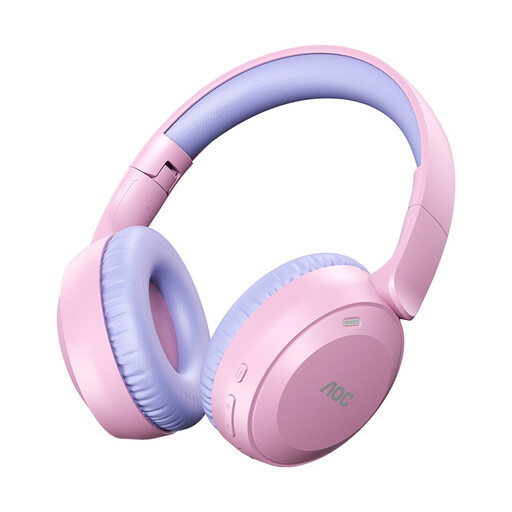 No image available
A foldable design may be useful if you’re taking the headphones with you; check that the connection is compatible with your equipment.
The product name lists Bluetooth 6.0, 75 hours of playback, a foldable design and a weight of 182 g.
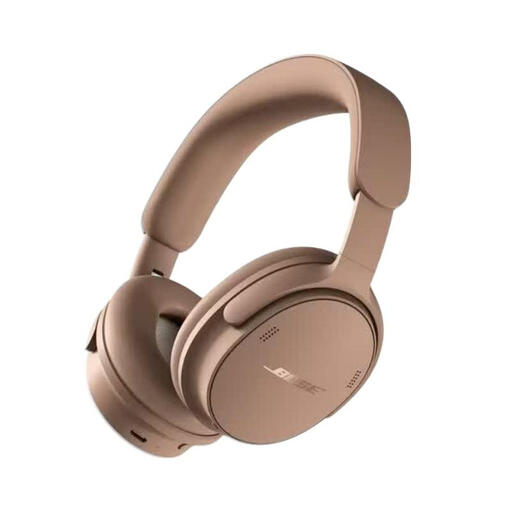 No image available
The product description mentions a wired listening option, even when the battery is flat; check that the connection is compatible with your device.
The same description lists Quiet, Aware, Immersion and Cinema listening modes, as well as an adjustable headband.
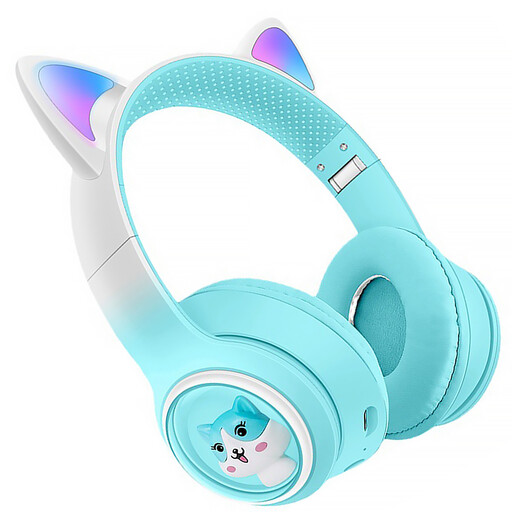 No image available
The product name mentions a foldable design for anyone who wants to take the headphones with them; check that the features suit the way you plan to use them.
The product name lists Bluetooth, RGB LED lighting, a microphone, a TF card slot, FM radio and USB-C.
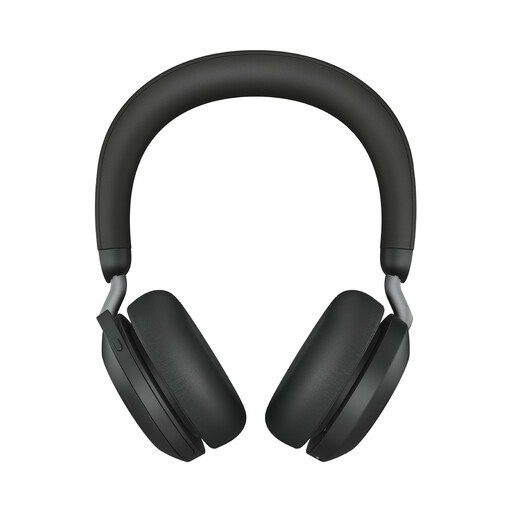 No image available
Before using these with your recording setup, check that the connection and connectivity options are compatible with your equipment.
The product title lists USB-A and MS Teams; the product description mentions Bluetooth and connection to two devices.
Not necessarily: the entire route from microphone to headphones determines when you hear your voice. On supported Focusrite interfaces, direct monitoring sends the input signal to the headphone output with virtually no delay. If the software return sounds delayed, Focusrite recommends muting the recorded track while monitoring and keeping the backing track audible.
Compare the output on your device with the exact headphone model and the adapter supplied. Sennheiser specifies a 3.5 mm plug with a 6.3 mm adapter for the HD 280 PRO; this doesn’t tell you which connection your recorder has.
Store them so the cable and ear pads aren’t squashed, and check for worn pads, as their fit can affect isolation. Sennheiser lists replaceable ear pads for the HD 280 PRO; beyerdynamic lists them for the DT 770 PRO.
For online purchases, consumers usually have a 14-day cooling-off period, according to the Netherlands Authority for Consumers and Markets. This is separate from the statutory guarantee: if the product doesn’t do what you could reasonably expect under normal use, the seller must offer a solution under the applicable conditions, according to ACM ConsuWijzer.
It’s better to start with a good fit and keep the volume low. The World Health Organization points out that both sound level and listening duration contribute to the risk of hearing damage; a product specification won’t tell you how loud the sound is at your ears.