
Editor working alongside colleagues
Assesses effects at a shared desk and wants to limit sound leakage and distractions from conversations. Arboportaal outlines points to consider about noise at work.


When assessing sound effects alongside colleagues, a well-fitting, closed-back wired pair of headphones is a sensible place to start: the closed-back design can help limit sound travelling both in and out. Also check how the specific model reproduces audio, how comfortable it is during long sessions and whether it connects to your equipment. An open-back model is better as a secondary option for a quiet room where sound leakage is not an issue.
Assesses effects at a shared desk and wants to limit sound leakage and distractions from conversations. Arboportaal outlines points to consider about noise at work.
Compares subtle differences between sound effects and wants to assess how the specific model reproduces them, rather than relying solely on its stated frequency range. RTINGS.com reviews the Sennheiser HD 480 PRO as a closed-back studio headphone; this is not a workplace test for every user.
Wears headphones during long editing sessions and considers fit, comfort with glasses and whether parts can be replaced. Consumentenbond highlights comfort and features, as well as sound quality, as factors to consider when choosing headphones.
Start by asking whether the headphones are suitable for a shared workspace. Then check how they reproduce audio, how comfortable they are and whether they connect to your equipment.
| What to consider | What should you check? | Who should prioritise this? |
|---|---|---|
| Isolation and sound leakage | Check the seal on your own head, including when wearing glasses, and consider how much sound leaks out to colleagues. | When assessing effects at a shared desk, I want conversations to be less distracting without unnecessarily disturbing colleagues. Around 36% of consumers put isolation first. |
| Detail and sound reproduction | Compare familiar effects on the specific model; don’t treat the frequency range or manufacturer claims as an independent listening test. | If you need to assess subtle differences between effects, you’ll want to know how a model actually reproduces those clips. Around 29% of consumers prioritise assessing detail. |
| Comfort and maintenance | If possible, try them on with your glasses and check for pressure and heat. Also check whether replacement earpads are available for that exact model. | During long editing sessions, I want a fit that stays comfortable and to know whether worn earpads can be replaced. Comfort and maintenance are the top priority for around 21% of consumers. |
| Compatibility with your workspace | Check the output on your computer or audio interface, the plug you need and the cable length. | When working with existing audio equipment, I want to listen without connection issues. Around 14% of consumers start by checking compatibility with their own workspace. |
Open-back headphones let more sound escape and do little to block out background noise. This can be distracting when you’re working alongside colleagues.
For a shared desk, start with a model that suits the environment. You could keep an open-back pair for a separate, quiet room.
A stated frequency range alone doesn’t tell you how a pair of headphones will reproduce effects on your head.
Compare familiar clips and, where possible, use independent measurements of the exact model. Don’t treat manufacturer claims as a personal listening test.
The beyerdynamic DT 770 PRO is available in 32-, 80- and 250-ohm versions. Cables and earpads must also fit the exact model.
Before buying, check the full model name, version, connection and explicit compatibility of any parts.
The World Health Organization points out that both sound level and listening duration matter for safe listening.
Try improving the fit or your workspace first, and keep the volume down. Avoid listening to loud effects at high volume for long periods.
The closed-back HD 480 PRO and HD 280 PRO have different features, so compare the full model name before choosing.
The closed-back DT 770 PRO is a wired option, and the product family includes several impedance versions.
The closed-back ATH-M50x is worth considering if you want a detachable cable or need to take your headphones with you.
The closed-back, foldable MDR-7506 is a wired option for monitoring effects.
The foldable K371 may suit you if a detachable cable would be useful in your workspace.
This Joybuy selection includes headphones with active noise cancellation that may be useful if background noise is distracting. For each model, check whether its connections and sound reproduction are suitable for critical assessment of effects.
 No image available
May be worth considering if you want to reduce background noise and also listen over a wired connection. Assess its sound reproduction separately before using this model to critically review effects.
The product description lists Adaptive Noise Cancellation, an included 3.5mm audio cable, a 42mm transducer system and adjustable EQ.
 No image available
May suit you if you want to reduce background noise and have the option of listening over a wired connection. Check whether its sound reproduction is suitable for your assessment work.
The product information lists Bluetooth, active noise cancellation and an audio cable for wired listening. It also mentions 2.5mm and 3.5mm connections and up to 24 hours of battery life.
 No image available
Could suit a shared workspace where you want to combine noise cancellation with wired listening. Check whether the model offers the sound reproduction you need to assess effects.
The product information lists active noise cancellation, Bluetooth 5.4 and a detachable cable with USB-C and 3.5mm connections. A charger is not included, and PD fast charging is not supported.
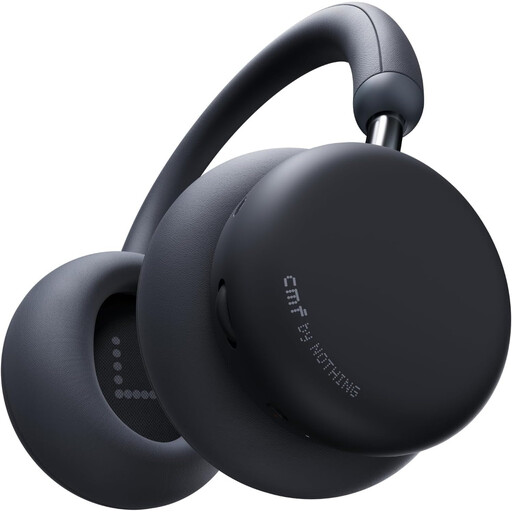 No image available
May be worth considering if you want active noise cancellation and value replaceable earpads. Assess its sound reproduction separately before using this model for critical monitoring.
The product information lists a closed-back design, active noise cancellation, 40mm drivers and replaceable earpads.
Usually not as your only pair: an open-back design lets sound leak out and does little to block background noise. They’re better suited to additional checks in a quiet room where sound leakage is not an issue.
First check which output your computer or audio interface has. Some models come with a 3.5mm plug and a 6.3mm adapter; check which parts are included with your chosen model and what cable length you need.
Check the earpads for wear and only choose a replacement part that is explicitly compatible with your model. For example, beyerdynamic lists EDT 770 VB earpads for the DT 770 PRO; this compatibility does not automatically extend to other models.
Keep the volume low and don’t turn it up just to drown out office noise. The World Health Organization points out that both sound level and listening duration matter; a headphone specification alone doesn’t tell you the level reaching your ears.
According to Arboportaal, employers must provide hearing protection when daily exposure exceeds 80 dB(A); above 85 dB(A), employees must wear it. This depends on actual daily exposure. Ordinary studio headphones are not automatically suitable hearing protection.