What should you look for?
Closed-back, wired model
Choose this when: you regularly play effects at a shared desk, where sound leakage or background noise could be distracting.
Bear in mind: a closed-back design doesn’t guarantee silence or the right fit, so check how it works in your own set-up.
Open-back model
Consider this when: you want to make an additional check of stereo imaging, space or reverberation on your own or in a quiet room.
Bear in mind: open-back models block little background noise and can leak audible sound into the surrounding area.
First decide whether you need isolation at your shared desk. Then compare the sound, fit and connection of the exact model variant.
| What to consider |
What should you check? |
Who should pay particular attention? |
| Isolation and sound leakage |
Check whether the model is closed-back and whether the ear pads fit snugly. At a controlled volume, listen for whether colleagues can hear your audio. |
I want to hear effects without disturbing colleagues, and to be less affected by background noise. Around 36% of consumers give isolation top priority. |
| Assessing effects |
Use familiar clips to assess quiet detail, bass and stereo placement; don’t assume a neutral sound just from a stated frequency range. |
Assessing balance and spatial detail is my main priority, even if I need a quiet room to do so. Around 29% of consumers put sound assessment first. |
| Fit for long sessions |
Assess the fit during a representative listening session, including with glasses if you wear them. Check whether the ear pads are replaceable. |
I wear my headphones for long periods and want them to stay comfortable. Around 21% of consumers name wearing comfort as their top consideration. |
| Connection and maintenance |
Compare the output on your laptop or audio interface with the plug and any adapter. Check the cable length and replaceable parts for each model variant. |
I want the headphones to connect to my work set-up and to be able to replace worn parts. Around 14% of consumers prioritise connection and maintenance. |
Joybuy product options
These Joybuy options are closed-back over-ear headphones to compare for listening at a shared desk. Check for yourself whether the specific model and connection are suitable for critical studio effects assessment.
 No image available
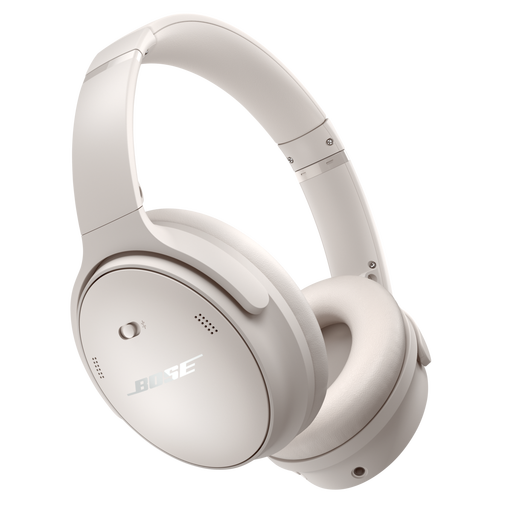
Bose QuietComfort Wireless Bluetooth Noise Cancelling Headphones, White
The product description lists a closed-back over-ear design for anyone considering sound leakage at a shared desk.
The description mentions Bluetooth and an included 3.5 mm to 2.5 mm audio cable; check that the connection suits your audio source.
View at Joybuy
 No image available
Bose QuietComfort Ultra Headphones (2nd Gen), Black
The product specifications list a closed-back over-ear design; compare the fit and connection with your own work set-up.
The description mentions Bluetooth 5.4 and a detachable cable with USB-C and 3.5mm connections.
View at Joybuy
Frequently asked questions
For checking effects at a shared desk, should I choose open-back or closed-back headphones?
A closed-back model is usually a better fit when colleagues are nearby, as it generally leaks less sound and blocks more background noise. An open-back model can be an additional option for assessing spatial sound in a quiet room where leakage isn’t a problem.
Do I need an amplifier or adapter?
It depends on the headphone version and your device’s output. Before buying, check the impedance, plug and included adapter for the exact model; the beyerdynamic DT 770 PRO, for example, comes in different impedance versions.
How can I keep my headphones in good working order with daily use?
Check which cables and ear pads are replaceable for your exact model, and follow the manufacturer’s care instructions. Audio-Technica lists a detachable cable for the ATH-M40x; for the DT 770 PRO version reviewed, beyerdynamic lists replaceable ear pads.
What cooling-off period applies to online purchases in the Netherlands?
According to the Dutch government, consumers buying from a business at a distance are often entitled to a 14-day cooling-off period, although there are exceptions. If you’re making a business purchase, don’t assume the same consumer rights apply; check the terms and conditions for your purchase.
Are noise-isolating studio headphones enough to protect my hearing at work?
No, don’t assume they are. Arboportaal states that an employer must provide hearing protection when the daily noise dose exceeds 80 dB(A), and employees must wear it when it exceeds 85 dB(A). These figures aren’t volume targets for assessing effects at an ordinary desk.


