
Editor with few sockets
Does most of their editing in one place and wants to use headphones via an existing audio output, without needing to set aside another spot for charging.


For editing at a fixed workstation with few sockets, a wired pair of headphones that fits your existing output is a sensible first choice: you won’t need to charge them. Choose closed-back headphones if you also record or work with others; open-back headphones are best for critical listening in a quiet room where sound leakage isn’t an issue. Comfort is a personal matter.
Does most of their editing in one place and wants to use headphones via an existing audio output, without needing to set aside another spot for charging.
Listens back to speech edits repeatedly, comparing sound, connectivity and fit. A manufacturer’s claim about accuracy isn’t an independent measurement.
Checks edits while a microphone is active or others are working at the same desk, so needs to consider isolation and sound leakage.
Choose this if: you edit without wanting to charge separately and also work near a microphone or with others at your desk.
Bear in mind: you’ll have a cable at your desk, and the fit may feel different from an open-back model during long sessions.
Choose this if: you mainly listen back to recordings in a quiet room of your own, where sound leakage isn’t an issue.
Bear in mind: an open-back design is less suitable if you need to limit sound leakage into a microphone while recording.
Choose this if: freedom of movement matters and the exact model also offers a wired listening mode.
Bear in mind: wireless listening means keeping an eye on battery levels; using a cable won’t necessarily prevent delays caused by your chosen monitoring setup.
| What to consider | What to look for | Who is this most relevant to? |
|---|---|---|
| No extra charging spot | Check the headphone output, plug, any required adapter and cable length for your computer or interface. | If I work in one fixed location, I don’t want to plan a separate charging session. Around 36% of consumers surveyed named avoiding charging as one of their main purchase priorities. |
| Listening back for vocal detail | Compare familiar speech clips at the same volume; don’t treat claims about accuracy as independent test results. | If I check speech edits repeatedly, I want to be able to assess the detail clearly. Around 29% of consumers surveyed named vocal monitoring as one of their main purchase priorities. |
| Sound leakage while recording | Think about whether you’ll wear the headphones with an active microphone or at a shared desk; consider how the earcups fit. | If I listen while recording or alongside others, I want to take sound leakage into account. Around 21% of consumers surveyed named this as their main consideration. |
| Comfort and maintenance | Where possible, check the fit with your usual glasses and make sure replacement ear pads or a replacement cable are compatible with the exact model. | If I spend a long time editing, I want the fit to remain comfortable and parts to be replaceable if needed. Around 14% of consumers surveyed named comfort and maintenance as their main purchase priorities. |
Your interface and software monitoring settings can make you hear a voice twice, even when your headphones are wired.
Check which direct monitoring features your interface supports and follow the instructions for turning off duplicate software monitoring. Focusrite recommends disabling software monitoring when it plays the same signal at the same time as direct monitoring.
An open-back design is a different choice from a closed-back model. An active microphone or shared desk can make sound leakage more important than when you’re listening back to recordings on your own.
First decide whether you’ll also use the headphones while recording, then choose a design that suits the situation.
Audio outputs and headphone plugs can use different connections. Detachable cables aren’t necessarily interchangeable either.
Compare the packaging for the exact model with your equipment’s connections and the connection on the headphone side.
If a suitable adapter or model-specific cable isn’t included, you may need to buy one separately.
A manufacturer’s description isn’t the same as an independent review. In January 2026, HIFI.DE noted, among other things, a clear bass emphasis in the ATH-M50x.
Consider manufacturers’ claims alongside independent reviews and, if possible, listen using speech clips you know well.
The wired, closed-back ATH-M50x is worth considering if you want to compare detachable cables and the supplied 6.35mm adapter.
The closed-back, wired DT 770 PRO is available in 32, 80 and 250 ohm versions.
RØDE lists podcasting and audio editing among the uses for its wired NTH-100.
The wired K361 is a closed-back, foldable model; the K361-BT is a separate hybrid version.
The open-back HD 560S is an option for listening back to recordings in a quiet room where sound leakage isn’t an issue.
This selection includes wired and hybrid headphones for podcast editing, including models with a wired listening option.
 Image unavailable
The supplied 3.5mm audio cable allows passive listening without battery power; Bluetooth also gives you a wireless listening option.
The product information lists a 42 mm transducer system and up to 60 hours of playback time.
 Image unavailable
The product information describes a closed-back design and use via the audio cable without battery power.
It also lists active noise cancellation and up to 24 hours of battery life.
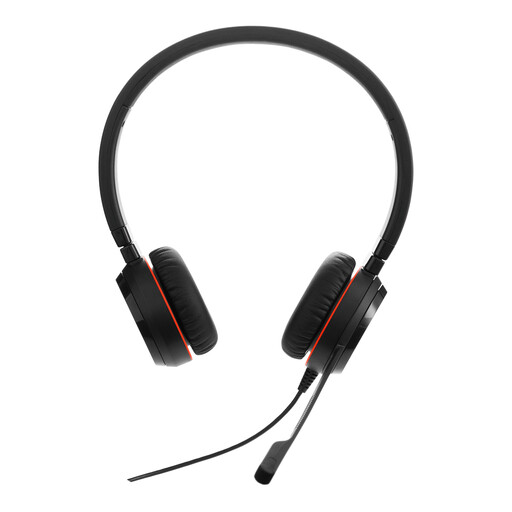 Image unavailable
The wired 3.5mm connection is worth considering if you don’t want to plan an extra charging session for your headphones.
The product information lists a 0.95 m cable and a supplied USB controller.
 Image unavailable
According to the product information, this version offers Bluetooth and a detachable 1 m cable for wired listening.
The headphones are foldable. A charger isn’t included; the product information recommends a suitable 1.8–2.5 W charging output and states that PD fast charging isn’t supported.
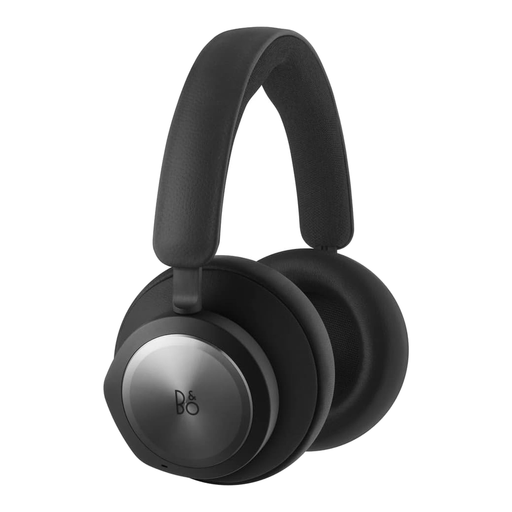 Image unavailable
The product information lists both Bluetooth and a 3.5mm connection for wired listening.
The specifications list Bluetooth 5.1, a 125 cm cable and up to 42 hours of battery life.
Not to charge the headphones themselves. You do need a compatible headphone output on your existing equipment: check whether it uses a 3.5 or 6.35 mm connection and whether the required adapter is included with the version you’ve chosen.
Not always: your chosen monitoring setup can still cause delays. For direct monitoring, Focusrite recommends turning off software monitoring if both routes play the same signal at the same time; check the instructions for your own interface.
Closed-back headphones are often a better fit for recording with an active microphone or working at a shared desk, when you need to consider sound leakage. Open-back headphones may suit listening back in a quiet room where sound leakage isn’t an issue.
Check the fit with your usual glasses and see whether the ear pads and headband feel comfortable. The World Health Organization stresses that both volume and listening time matter, and recommends keeping the volume low and taking regular breaks.
It depends on the model. beyerdynamic lists replaceable pads for the DT 770 PRO, while RØDE provides instructions for the detachable cable and ear pads on the NTH-100. Check that the part is an exact fit for your version and is available to buy.