If you’re working in a quiet room and focusing mainly on timing, placement and balance, compare open-back models. If household noise is distracting or you’re recording at the same time, a closed-back model is more likely to suit you. Check that the connection and power requirements are compatible with your equipment, and consider the fit and replaceable parts too. A stated frequency range doesn’t prove that headphones will reveal clicks or transients more clearly.
Who is this relevant for?
Percussion editor in a quiet room
If you’re mainly assessing transients and placement in a mix, you can compare open-back headphones if sound leaking to others or into an active microphone isn’t an issue. beyerdynamic and Sennheiser position their open-back models for critical listening and mixing.
Home worker dealing with background noise
Household noise can mask subtle details while you’re editing. A closed-back design is worth considering if you also record with a microphone, but fit and the conditions in your room still matter.
Editor working long sessions
For longer editing sessions, fit, cable and replaceable wear parts all matter. The model specifications for certain beyerdynamic, Sennheiser and AKG headphones list replaceable ear pads or a detachable cable.
What should you look for when choosing?
Start with what your workspace needs: a quiet environment with minimal sound leakage, or an open listening experience. Then check the connection, power requirements and fit.
| What to consider |
What to look for |
Who is this most important for? |
| Transients, clicks and placement |
Compare familiar source material at a comfortable volume; don’t treat the frequency range as proof of better detail reproduction. |
I want to assess transients and clicks without relying solely on a stated specification; around 36% of consumers give editing detail top priority. |
| Isolation in a home office |
Compare closed-back headphones with open-back or semi-open models, and check the seal while wearing them, especially if you’re recording at the same time. |
If household noise disrupts my editing or I’m recording with an active microphone, I look for isolation; around 29% of consumers put this first. |
| Comfort and maintenance |
Assess the fit over your usual listening time and check which cables and ear pads are replaceable for the exact model. |
For longer sessions, I want a fit that stays comfortable for me and to know which parts can be replaced; around 21% of consumers name comfort and maintenance as their top priority. |
| Connection and power requirements |
Check the connection, included adapter, model variant and the capabilities of your own laptop, interface or amplifier. |
I want to know in advance whether the headphones will work with my existing audio output; around 14% of consumers give connection and power requirements top priority. |
Buying pitfalls
-
Treating the 80-ohm and 250-ohm DT 770 PRO as the same version
beyerdynamic offers the DT 770 PRO in different impedance variants. The headphone output available to you is an important factor when choosing.
Check the full variant name and the output on your own device before ordering.
You may need a different headphone output or an amplifier.
-
Expecting an open-back or semi-open design to work like a closed-back one
With household noise, an open-back design doesn’t provide the isolation of a closed-back one. When recording, sound from the headphones may reach an active microphone.
First decide whether you’ll only be editing in a quiet room or also recording and working with background noise.
-
Assuming the frequency range proves that clicks will be easier to hear
A stated range is a specification, not a comparative listening test using your source material, and it doesn’t prove that headphones will remove a recording fault.
Compare familiar clips at a sensible volume, and assess any clicks in your audio-editing software too.
Relevant brands to compare
beyerdynamic
The DT 770 PRO is a closed-back model; the DT 900 PRO X has an open-back design and is positioned by the manufacturer for critical listening and mixing.
- According to its model specifications, the 80-ohm DT 770 PRO has replaceable ear pads and a 3.5mm plug with a 6.35mm adapter.
- The DT 900 PRO X has a detachable cable.
- For the DT 770 PRO, check the exact impedance variant and whether your device’s output is suitable.
Sennheiser
The open-back HD 490 PRO is worth comparing if you want to listen critically and mix in a quiet room.
- Sennheiser lists two sets of ear pads and a detachable cable for the HD 490 PRO.
- An open-back design doesn’t offer the isolation of a closed-back model and may let sound leak into an active microphone.
- Check that the headphone output in your own setup can drive the model appropriately.
Audio-Technica
The closed-back ATH-M50x is worth comparing if you’re looking for isolation and a detachable cable.
- Audio-Technica lists three cables included, a 6.3mm adapter and passive isolation.
- The manufacturer’s description of sound quality and suitability for mixing isn’t an independent comparison with open-back models.
Sony
The closed-back MDR-7506 is worth considering alongside other monitoring and editing options.
- Sony lists a 40mm driver and a 3.5mm-to-6.3mm adapter.
- The stated specifications alone don’t determine how the model will sound with your percussion source.
AKG
The semi-open K240 Studio is an alternative to compare in a quiet room for mixing and playback.
- AKG’s Dutch product specifications list 55 ohms, a detachable cable and replaceable ear pads.
- A semi-open design doesn’t necessarily offer the same isolation as a closed-back model when recording with an active microphone.
Joybuy products
These Joybuy products are general over-ear headphones or headsets with stated noise-control or connectivity features; don’t automatically consider them studio headphones for percussion editing.
 No image available
Sennheiser MOMENTUM 4 Wireless, black
May be worth considering if you want to reduce background noise while working from home. The product description mentions adaptive noise cancellation, but doesn’t specifically present this model as studio headphones for percussion editing.
The product description lists Bluetooth, a 42mm transducer system and up to 60 hours of playback time.
Also listed: wired listening with a 3.5mm cable and passive use without a battery.
View at Joybuy
 No image available
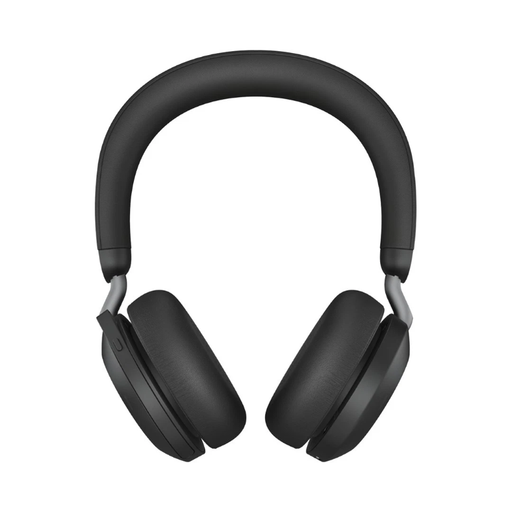
Jabra Evolve2 75 headset
May suit home working where you need to make calls as well as listen to audio; the product description mentions adjustable active noise cancellation and music playback.
The description lists Bluetooth, connection to two devices, an eight-microphone array and battery life of up to 36 hours.
View at Joybuy
 No image available
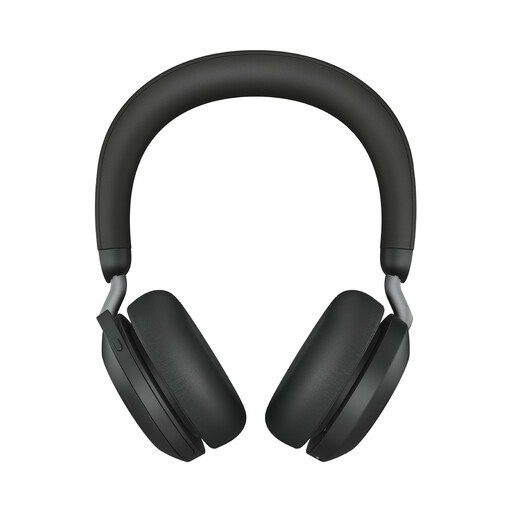
Jabra Evolve2 75 USB-A MS Teams, black
May be an option for a workspace where you also need headset features; the product description mentions active noise cancellation and music playback.
The product name specifies the USB-A MS Teams version. The description lists Bluetooth and battery life of up to 36 hours.
View at Joybuy
 No image available
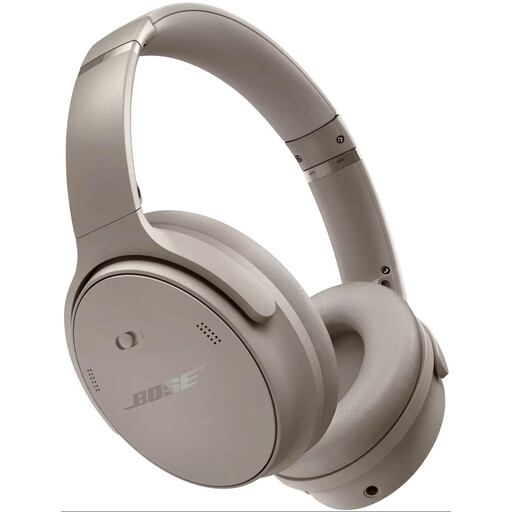
Bose QuietComfort Headphones, Sandstone
May be worth considering if you’re looking for noise-control features in a workspace with background noise; the product description mentions active noise cancellation and a transparency mode.
The description lists Bluetooth, on-earcup controls and the Bose Music app.
View at Joybuy
 No image available
Bose QuietComfort Ultra Headphones, second generation, black
May be worth considering if you want the option of wired or wireless listening; the product description also mentions active noise cancellation.
The description lists Bluetooth 5.4 and a detachable cable with USB-C and 3.5mm connectors.
View at Joybuy
Frequently asked questions
Should I always choose open-back headphones for percussion editing?
No. In a quiet room, you can compare an open-back model for mixing; if household noise is distracting or you’re recording with an active microphone, a closed-back design has a different practical advantage. Compare the options using your own percussion tracks.
How do I connect studio headphones to my workspace?
Check the output on your laptop, interface or amplifier, and the plug on the exact version. beyerdynamic specifies a 3.5mm connection with a 6.35mm adapter for the DT 900 PRO X; also check that your own output can drive the model appropriately.
Can headphones remove digital clicks from my recording?
No. Headphones are for listening; clicks need to be assessed and, where necessary, edited out of the audio file. iZotope describes dedicated software tools for removing clicks and pops.
How can I reduce the risk of listening at high volumes for too long?
Keep the volume low and take breaks. The World Health Organization gives an average of 80 dB for up to 40 hours a week as an example of safe listening; at 90 dB, it recommends four hours a week. These are listening guidelines, not measured levels or legal product limits for the models mentioned.
What returns and warranty rights apply when buying online in the Netherlands?
According to the Dutch government, when you buy remotely online from a business, you’ll often have a 14-day cooling-off period; exceptions and the terms of the specific purchase are important. If a product is faulty, the seller must offer a solution. There is no fixed statutory warranty period in the Netherlands.


