Let the sound around your workspace guide your choice between open-back and closed-back studio headphones. An open-back model may suit a quiet room, while a closed-back model may make more sense if background noise distracts you. Fit, connection and replaceable parts are other important considerations for long editing sessions. A bright window, by itself, doesn’t tell you which design you need.
Who is this choice relevant to?
Percussion editor in a quiet room
Wants to listen back critically to hits, transitions and the balance between tracks. An open-back model is an option to compare, not a guarantee of more accurate results; beyerdynamic and Sennheiser position specific open-back models for critical listening or mixing.
Editor distracted by background noise
Can hear noise from outside or elsewhere in the room while working, and wants to replay sections without constantly turning up the volume. Compare the fit and seal of a closed-back design; beyerdynamic and Audio-Technica describe passive isolation for specific models.
Editor with long working sessions
Wears headphones for long stretches and wants to assess the fit, ear pads, cable and maintenance. These are considerations for both open-back and closed-back models; Sennheiser, for example, lists replaceable ear pads for specific models.
What should you look for when buying?
Start by asking whether you need isolation in your listening space. Then compare fit, connection and maintenance, using the percussion passages you actually edit.
| Consideration |
What to look for when buying |
Who is this important for? |
| Critical listening |
Compare the same passages at a similar volume and check your edit on another familiar playback system too, as Sonarworks advises. |
I want to assess hits and transitions carefully, rather than relying on just one pair of headphones; around 36% of consumers give accurate playback the highest priority. |
| Background noise |
Consider whether noise in the room genuinely bothers you, and try on a closed-back model to check its seal on your own head. |
If noise from outside or elsewhere in the room distracts me, I want to replay passages without constantly turning up the volume; around 29% of consumers prioritise isolation. |
| Comfort |
Check the pressure, fit and ear pads during a longer listening session; if the pads are replaceable, make sure they are intended for the exact model. |
For long editing sessions, I want the headphones to stay comfortable and to be able to assess the fit for myself; around 21% of consumers say comfort is their main concern. |
| Connection and maintenance |
Check the plug, any adapter and cable length for your audio interface and workspace, as well as which cables or ear pads can be replaced. |
I want the connection to suit my interface and desk, and to know in advance which parts I can replace; around 14% of consumers prioritise connection and maintenance. |
Common buying mistakes
-
Treating open-back and closed-back designs as a quality ranking
The two designs suit different listening conditions. Neither one guarantees a better percussion edit on its own.
First decide whether you need isolation, then compare familiar passages at a suitable volume.
-
Assuming similar model names mean the same version
The beyerdynamic DT 770 PRO is available with impedances of 32, 80 and 250 ohms; the DT 900 PRO X is a different, open-back model with a nominal impedance of 48 ohms. Specifications for one model don’t automatically apply to another.
Check the full model name, impedance, plug and supplied adapter for the version you want to buy.
-
Assessing an edit on just one pair of headphones
Sonarworks points out that a mix which sounds good on one pair of headphones may sound different on other playback systems.
So check your edit on another familiar playback system too.
Brands to compare
beyerdynamic
Compare the closed-back DT 700 PRO X with the open-back DT 900 PRO X, taking the noise around your workspace into account. They are separate models.
- The manufacturer lists a detachable cable and a nominal impedance of 48 ohms for both models.
- The manufacturer describes the DT 700 PRO X as a closed-back model with passive isolation.
- These details don’t prove which model reproduces percussion more accurately.
Sennheiser
The open-back HD 490 PRO is a model to compare in a quiet room; according to Sennheiser, the closed-back HD 280 PRO is designed for monitoring when background noise is a factor.
- Sennheiser lists replaceable, washable ear pads and a detachable cable for the HD 490 PRO.
- For the HD 280 PRO, Sennheiser lists replaceable ear pads and a coiled cable.
- Assess the fit and sound for yourself; manufacturers’ claims about comfort and accuracy aren’t independent real-world tests.
Audio-Technica
The ATH-M40x is a closed-back, wired pair of studio headphones to compare if you want to edit while reducing background noise.
- Audio-Technica lists sound-isolating earcups and two detachable cables for the ATH-M40x.
- The ‘flat-tuned’ description is a manufacturer claim; check for yourself how the fit and sound work for your needs.
Sony
Sony Netherlands presents the wired MDR-7506 for recording and studio use.
- Sony Netherlands lists a 3 m cable and a weight of 230 g for the MDR-7506.
- Check that the cable length suits your desk, and assess for yourself how the headphones feel during a long editing session.
Joybuy products
This selection includes headphones and a headset with features for listening with background noise present or using a cable. They are not presented here as studio reference models: before editing percussion, check that they connect to your equipment and compare their sound with familiar passages.
 No image available
Sennheiser MOMENTUM 4 Wireless, black
Worth comparing if you’re looking for over-ear headphones for a workspace where background noise is a factor; check the wired connection before editing with them.
- Bluetooth and active noise cancellation.
- The product information lists a 3.5 mm audio cable.
- The product name lists a 60-hour battery life.
Joybuy
 No image available
Bose QuietComfort Ultra Bluetooth headphones, black
An option to compare when background noise is a factor; check that the wired connection suits your interface before using them for percussion edits.
- Bluetooth and active noise cancellation.
- The product information lists an audio cable for wired listening.
Joybuy
 No image available
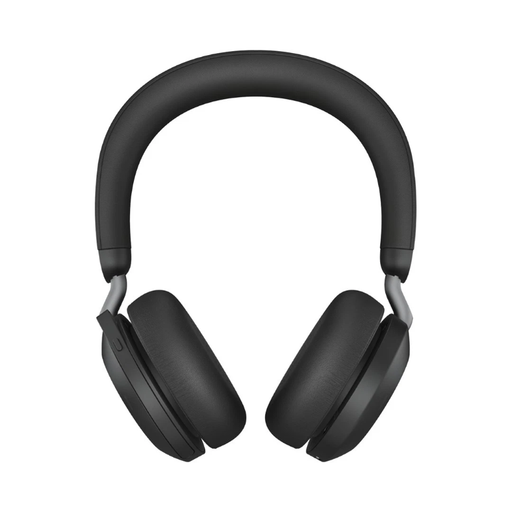
Jabra Evolve2 75 headset
Worth considering if you’re looking for a headset for a workspace with background noise; check the monitoring connection and compatibility with your own equipment before editing percussion with it.
- The product information lists active noise cancellation and Bluetooth.
- The product information lists a USB-C connection.
Joybuy
 No image available
Bose QuietComfort Ultra Headphones (2nd Gen), black
Worth comparing if you’re looking for noise cancellation and the option to listen using a cable; check which connection suits your interface before editing with them.
- The product information lists active noise cancellation.
- The product information lists a detachable cable with USB-C and 3.5 mm connections.
Joybuy
Frequently asked questions
Are open-back headphones better for every percussion edit?
No. An open-back model is worth comparing if you can listen in peace; if background noise is distracting or you’re recording with microphones, a well-fitting closed-back model may make more sense. Check edits on another familiar playback system too.
Does a bright window mean I need closed-back headphones?
No, how bright the window is doesn’t determine whether you need isolation. Let the audible noise around your workspace and your preference for an open listening environment guide your choice.
What should I check about the connection?
Check your device’s headphone output, the supplied plug or adapter, and the cable length. beyerdynamic lists a detachable cable with a 3.5 mm plug and 6.35 mm adapter for the DT 700 PRO X; check what’s included with the version you choose.
What do the cooling-off period and warranty mean for an online purchase in the Netherlands?
For a consumer purchase, the seller is responsible for the statutory warranty if a product doesn’t meet what you could reasonably expect under normal use. According to ACM ConsuWijzer, online purchases generally come with a cooling-off period of up to 14 days after delivery; check in advance which exceptions and return conditions apply.


