
Percussion editor in a quiet space
You assess the placement and balance of individual hits and spend long periods working at your desk. An open-back studio headphone is worth considering if isolation isn’t a priority.


If you work in a quiet space and mainly assess the placement and sound of percussion, start with an open-back model. If background noise is distracting or you record at the same time, a closed-back model is more practical. Then check that the cable, connection and fit work for both your sitting and standing desk heights. Sennheiser’s and beyerdynamic’s descriptions of intended use are not independent comparisons of percussion editing.
You assess the placement and balance of individual hits and spend long periods working at your desk. An open-back studio headphone is worth considering if isolation isn’t a priority.
You want to reduce distracting background noise or you also record. Compare the fit and seal of closed-back models.
You switch between sitting and standing and need a cable that reaches the connection without pulling on your headphones. Models vary in cable type and supplied length.
Suitable for: a quiet space where you assess the placement and balance of percussion.
Trade-off: Sennheiser describes this type as suitable for quiet environments; check that background noise won’t disrupt your work.
Suitable for: a shared space, distracting background noise or recording while listening.
Trade-off: beyerdynamic and Audio-Technica describe passive isolation on specific models; assess the fit and seal for yourself.
Suitable for: anyone looking to compare a semi-open model for mixing and playback in a quiet space.
Trade-off: the AKG K240 Studio is semi-open; don’t expect the same isolation as a closed-back model.
| What to consider | What should you check? | Who is this important for? |
|---|---|---|
| Spatial assessment | Compare familiar percussion passages at the same comfortable volume and assess whether your space is quiet enough. | When I’m assessing the placement and balance of percussion tracks in a quiet space, that comes first; around 31% of consumers put spatial assessment at the top of their list. |
| Isolation | Decide whether you’re only editing existing tracks or also recording; try the seal with your fit and surroundings in mind. | If background noise disrupts my work or I’m recording at the same time, I want more isolation; around 25% of consumers put isolation first. |
| Cable routing when desk height changes | Measure the route to your interface in both desk positions and check the cable length, connection and cable design of the exact model. | I want to work sitting and standing without the cable pulling; around 25% of consumers put cable reach first. |
| Comfort and maintenance | Assess the fit during a typical listening session and check whether suitable replacement earpads are available. | For longer sessions, I want to know whether the fit stays comfortable and the headphones can be maintained; around 19% of consumers give comfort and maintenance top priority. |
According to the manufacturer, classic beyerdynamic DT models such as the DT 770 PRO have a fixed cable, while PRO X models have detachable cables. This matters if you often move the cable or want to replace it.
Check the full model name and cable design, especially if you regularly adjust your desk.
If the cable is damaged, you may need a suitable replacement cable or a repair; the options depend on the cable design.
Ableton describes latency with Bluetooth headphones in Note; Apple also mentions wireless audio output as a possible source of latency when using input monitoring in Logic Pro. The result depends on your setup.
If you need immediate timing feedback while recording or playing, compare a wired connection and test the latency in your own software.
A product label or stated frequency range alone doesn’t prove how a model reproduces your percussion tracks. The manufacturers mentioned don’t provide an independent, like-for-like listening test for this task.
Compare familiar passages at the same comfortable volume, and consider your space, connection and fit when choosing.
The DT 900 PRO X is an open-back option to compare for mixing in a quiet space; the closed-back DT 700 PRO X is worth considering if you’re looking for isolation.
The open-back HD 490 PRO is an option to compare if you value mix detail and comfort when working in a quiet space.
The closed-back ATH-M50x is worth considering if you want to compare isolation and the choice of supplied cable lengths.
The K240 Studio is a semi-open alternative to compare for mixing and playback.
The MDR-7506 is a wired studio reference worth comparing if cable reach and stated weight matter to you.
This Joybuy selection includes headphones for listening. When editing percussion, check that the connection works with your interface and that wireless playback provides sufficiently immediate timing feedback.
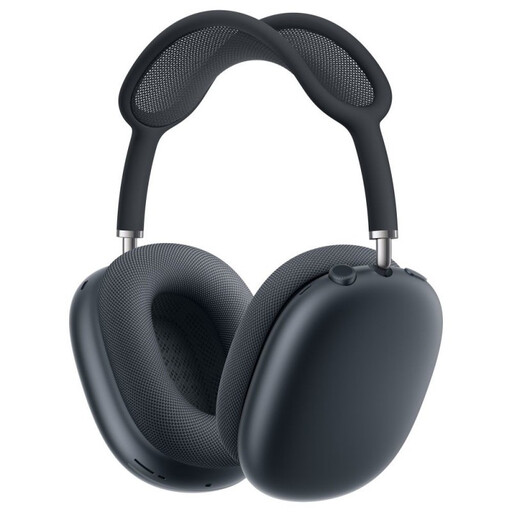 No image available
If you use these wireless headphones for timing-sensitive editing, check the latency in your own software.
 No image available
The wireless version may suit you if freedom of movement matters; for immediate timing feedback, test the latency in your own software.
 No image available
For timing-sensitive work over Bluetooth, it’s a good idea to test the latency in your own software.
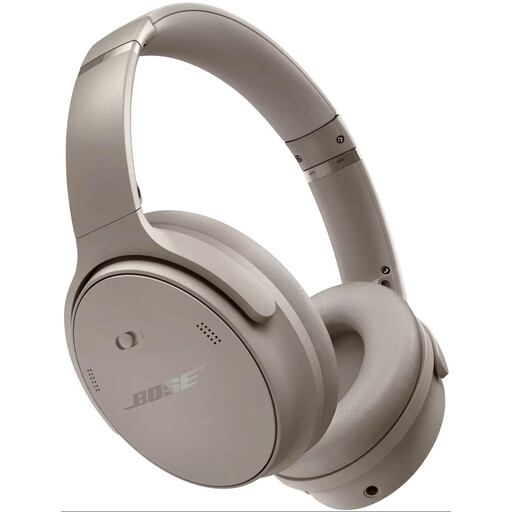 No image available
If you’re considering these headphones for longer listening sessions, assess the fit and comfort for yourself.
 No image available
If you need a wired listening option, check before buying which connection works with this version and your interface.
No. An open-back model is worth considering in a quiet space; if you also record or background noise is distracting, compare closed-back models. This is a choice based on your working environment, not a claim that one design reproduces every percussion track better.
Measure the cable route to your interface or computer with your desk at both its lowest and highest settings. Then check the supplied cable length, plug and any detachable connection on the exact model.
It varies by model. Sennheiser lists replaceable earpads for the HD 490 PRO; Audio-Technica sells a replacement earpad for the ATH-M50x individually. Check availability and model compatibility before ordering parts.
It can with some setups. Ableton describes possible latency with Bluetooth headphones in Note, and Apple mentions wireless output as a possible source of latency when using input monitoring in Logic Pro. Test this in your own software if immediate timing feedback matters.
No. Arboportaal describes thresholds for employees’ daily noise exposure, not a universal headphone volume setting. How they apply depends on the measured daily dose and working conditions; keep your listening volume under control.