If you’re editing percussion tracks in a quiet room and aren’t recording at the same time, start by comparing wired open-back models for critical listening. If you’re also recording or want to hear less background noise, closed-back models are worth considering for their isolation and reduced sound leakage. Fit, connectivity and replaceable parts matter too; a manufacturer’s claim about accuracy is not a comparison listening test.
Who are these studio headphones for?
Percussion editor working in a quiet room
You edit and assess recorded hits and their decay without recording at the same time; critical listening and stereo imaging come first. RTINGS.com distinguishes between open-back headphones for mixing and closed-back models for recording.
Editor who also records
You use the same headphones with a live microphone or alongside other people, so sound leakage and isolation matter more. RTINGS.com points to closed-back headphones as an option for recording.
Editor with long work sessions
You listen for extended periods at a desk, so fit, cable routing and replaceable wear parts could influence your choice. Check the fit for yourself and see which parts can be replaced on the specific model.
What should you look for when editing percussion?
Start by deciding whether you’ll only be editing existing tracks or recording too. Then compare listening reference, fit and connectivity.
| What to consider |
What should you check? |
Who is this important for? |
| Hits, decay and placement |
Listen to familiar percussion tracks and, where possible, compare them with a second listening reference. |
If you mainly edit existing takes in a quiet room, you’ll want to assess detail and stereo imaging using familiar tracks. Around 39% of consumers prioritise assessing detail. |
| Sound leakage and isolation |
Decide whether you’ll be recording while listening; try a closed-back model and check for leakage at a sensible volume. |
If you’re recording at the same time or sharing the room with others, you’ll want to consider sound that a microphone might pick up or that could leak out. Around 23% of consumers prioritise isolation. |
| Comfort during long sessions |
Try the headphones on for longer than a few minutes and check whether the ear pads can be replaced. |
For long editing sessions, you’ll want headphones that stay comfortable and have contact parts that can be replaced when needed. Around 23% of consumers prioritise comfort over long periods. |
| Connectivity and maintenance |
Check your equipment’s output, the adapter and cable supplied, and whether parts can be replaced. |
If you want to connect your headphones to existing equipment, you’ll want to know in advance which plug and cable come with the version you’ve chosen. Around 15% of consumers prioritise connectivity and maintenance. |
Common pitfalls
-
Assuming studio headphones always need to isolate you
If you’re only editing in a quiet room and aren’t recording, microphone isolation may not be essential. An open-back design lets more sound out and blocks less background noise.
Choose based on what you’ll be doing and where you’ll be working, then compare specific models.
-
Treating a manufacturer’s claim as a percussion test
A model’s specifications or sound description don’t tell you how you’ll assess particular hits and their decay.
Listen to familiar percussion tracks and, where possible, use a second listening reference.
-
Choosing wireless headphones without checking latency
Ableton states that Bluetooth codecs in Note have a latency of 34–200 milliseconds. This isn’t a measurement of latency in your own setup.
For timing-sensitive work, choose a practical wired connection where possible, and check your software and audio interface settings too.
-
Mistaking a short manufacturer’s warranty for all your legal protection
According to ACM ConsuWijzer, your statutory protection depends on what you could reasonably expect from the product under normal use; it applies alongside any commercial warranty.
Keep your proof of purchase and report any faulty product to the seller.
Brands to consider
beyerdynamic
Compare the open-back DT 900 PRO X for critical listening with the closed-back DT 700 PRO X if you also record or want more isolation.
- beyerdynamic specifies a wired connection, 48 ohms and detachable cables for both models.
- The different designs suit different needs; these specifications don’t prove which model reproduces percussion more accurately.
Sennheiser
The open-back HD 490 PRO is designed for production and mixing; the closed-back HD 480 PRO is a separate option when isolation matters.
- Sennheiser lists two types of ear pads and a detachable cable for the HD 490 PRO.
- Check the exact version: the HD 490 PRO isn’t the same model as the closed-back HD 480 PRO or a Plus bundle.
Neumann
The open-back NDH 30 is a model to compare if your focus is on editing, transients and stereo imaging.
- Neumann positions the NDH 30 for editing, mixing and mastering.
- Its open-back design won’t provide the isolation you may need when recording at the same time; the manufacturer’s positioning isn’t an independent ranking.
AKG
The closed-back K371 is a foldable, wired option to compare if you also want to monitor while recording.
- AKG lists detachable cables and replaceable ear pads.
- The manufacturer’s claim about neutral calibration doesn’t prove that this model will seal better or sound more accurate on every wearer than open-back alternatives.
Audio-Technica
The closed-back ATH-M50x is another option to compare for cable choice and passive isolation.
- Audio-Technica lists three detachable cables as included.
- The manufacturer’s claims about sound and comfort aren’t independent confirmation that this is the right choice for percussion editing.
Joybuy products
These Joybuy products are over-ear headphone and headset options. The features listed don’t automatically make them studio references for assessing percussion; check the connection and listen for yourself using familiar tracks.
 No image available
Sennheiser MOMENTUM 4 Wireless, black
An option to compare if you want the choice of wired listening as well as wireless.
The product information lists active noise cancellation, an included 3.5mm audio cable and passive use without a battery. The product name lists 60 hours of battery life, fast charging and four microphones.
View at Joybuy
 No image available
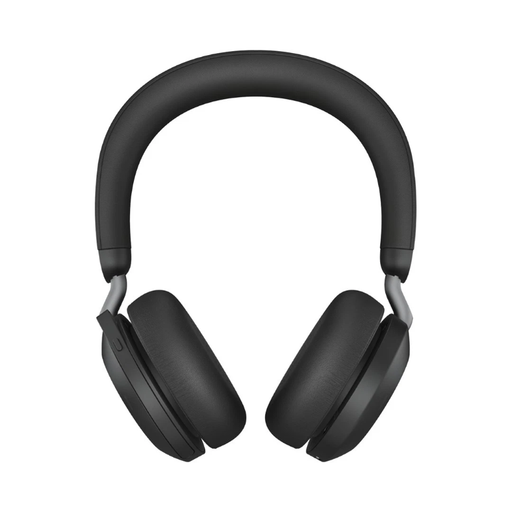
Jabra Evolve2 75
A headset option if you also want to use the same model for calls; assess its sound separately using your own percussion tracks.
The product information lists Bluetooth, a USB-C cable for wired use, active noise cancellation and up to 36 hours of battery life.
View at Joybuy
 No image available
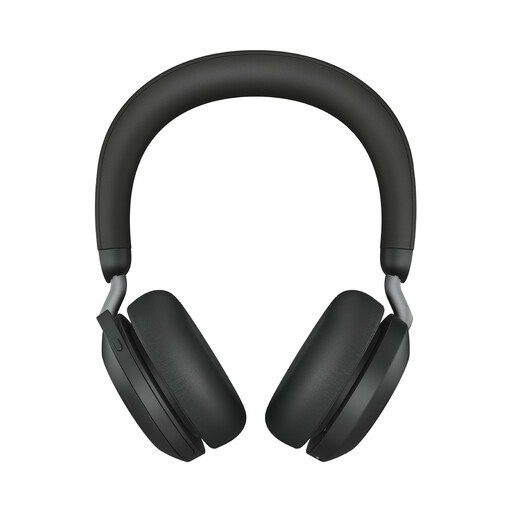
Jabra Evolve2 75 USB-A MS Teams, black
A headset version to consider if you make calls as well as listen; check that the connection is compatible with your equipment.
The product name lists USB-A and MS Teams. The product information lists Bluetooth, adjustable active noise cancellation, connection to two devices and up to 36 hours of battery life.
View at Joybuy
Frequently asked questions
Do I have to use closed-back headphones to edit percussion tracks in a quiet room?
No, not if you’re working in a quiet room without a live microphone. An open-back wired model is an option for critical listening; if you’re recording at the same time, reducing sound leakage becomes more important.
Which plug or setting do I need for my audio interface?
First check which headphone output your interface has and which plug and adapter come with the exact version. For example, the beyerdynamic DT 900 PRO X is specified with a 3.5mm plug and 6.35mm adapter; this doesn’t tell you which accessories are included with other models. If you notice latency while playing, check your software’s audio settings too.
How can I make long editing sessions practical and safe?
Check the fit and wear of the ear pads, and don’t turn the volume up to drown out distracting noise. VeiligheidNL recommends paying attention to a good fit so you don’t need to turn the volume up unnecessarily; this is health advice, not proof that a particular model is safe at every volume.
What are my rights if headphones bought online don’t fit or break soon after purchase?
For an online purchase from a business, you’ll generally have a 14-day cooling-off period, subject to legal exceptions, according to the Netherlands Authority for Consumers and Markets. A product must also meet what you could reasonably expect from it under normal use; ACM ConsuWijzer explains that the seller is responsible for offering a suitable solution if the product turns out to be faulty earlier than expected. This isn’t a fixed warranty period for every pair of headphones.
Is a CE logo always legally required on studio headphones?
You can’t determine that without assessing the specific version. According to the European Commission, CE marking is only mandatory for products covered by applicable harmonised EU rules that require it. If in doubt, ask for the product documentation rather than drawing a conclusion based only on whether the logo is present or absent.


