What should you look for when choosing?
Start with the conditions you listen in. The choice between open-back and closed-back headphones depends mainly on sound leakage, your workspace and whether you also record with a microphone.
| What to consider |
What to look for |
Who is this important for? |
| Assessing the sound |
Compare open-back and closed-back models using the same familiar rehearsal recordings and at a controlled listening volume. beyerdynamic and Sennheiser describe their open-back models as suitable for critical listening; sound quality still depends on the model and your listening experience. |
If you want to assess subtle differences between existing recordings, you’ll want to compare them with music you know well. Sound quality is the top priority for around 36% of consumers in this home-working situation. |
| Isolation and sound leakage |
Consider whether you’re only editing existing files or also recording, and whether other people at home or a microphone are nearby. According to manufacturers, a closed-back design can help reduce sound leakage; fit also plays a part. |
If you work near other people or record at the same time, you’ll want to hear less of your surroundings and limit sound leaking into the microphone. Isolation is the top priority for around 29% of consumers in this situation. |
| Fit and maintenance |
Assess the fit during a realistic listening session. Check whether replacement ear pads are available for the exact model; manufacturers list this option for some versions. |
For long editing sessions, you’ll want headphones that feel comfortable and to know whether parts can be replaced. Comfort and maintenance are the top priorities for around 21% of consumers. |
| Connection and power requirements |
Check the exact impedance version, headphone output and supplied cable or adaptor. Focusrite notes that higher-impedance headphones generally need more power from the output, so having the right plug alone doesn’t tell you everything. |
If you want to keep using your existing computer or audio interface, you’ll need to make sure it works well with the headphones. Connection and power requirements are the top priority for around 14% of consumers. |
Joybuy products
This selection includes over-ear headphones whose product information mentions features such as wired listening, noise cancellation or a closed-back design. These features don’t automatically make a model suitable as studio headphones; check that the connection and sound reproduction suit your editing needs.
 No image available
Bose QuietComfort Ultra Headphones (2nd Gen) Black
This may be worth considering if you’re looking for wired listening; the product information also mentions active noise cancellation.
According to the product information, the detachable cable has USB-C and 3.5 mm connections. A charger isn’t included; the product information recommends a suitable 1.8–2.5 W charger for charging.
View on Joybuy
 No image available
Sennheiser MOMENTUM 4 Wireless
The product information mentions wired listening, which may be useful if you don’t want to use a wireless connection while editing; this isn’t an assessment of its studio sound.
The stated wireless playback time is up to 60 hours. Wired use is described as passive and not requiring battery power. The information also mentions a 42mm transducer system, customisable EQ and an app.
View on Joybuy
 No image available
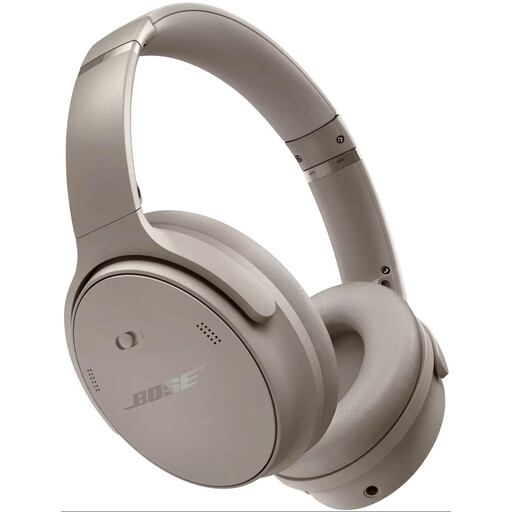
Bose QuietComfort Headphones Sandstone
This may suit you if you’re looking for over-ear headphones with active noise cancellation; the product information also mentions a transparency mode.
The product information lists Bluetooth, on-earcup controls and adjustments via the Bose Music app.
View on Joybuy
 No image available
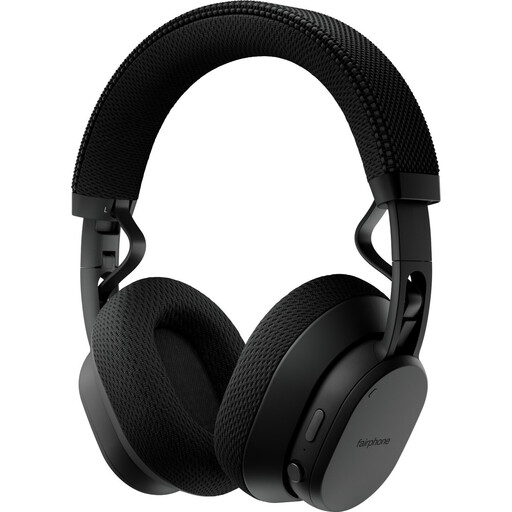
Fairphone Fairbuds XL 2025 Black
The product information describes a closed-back design and replaceable ear pads; check for yourself whether the fit and sound reproduction suit your editing needs.
According to the product information, nine parts are replaceable, including the battery and ear pads. It also mentions 40mm drivers and hybrid active noise cancellation.
View on Joybuy
Frequently asked questions
Should I choose open-back headphones if I only edit existing rehearsal recordings?
Not necessarily. Open-back headphones are an option if you work in a quiet room and sound leakage isn’t a problem. If other people are at home, there’s distracting background noise or you use them while recording, closed-back headphones may be more practical. Compare both types using the same familiar recording.
Can I plug studio headphones straight into my audio interface?
That depends on your interface’s output and the headphone plug. Focusrite specifies a 6.35 mm stereo headphone plug for the fourth-generation Scarlett 2i2; if your headphones have a smaller stereo plug, you’ll need an adaptor. Check your equipment’s manual and the headphone version.
How can I listen at a safe volume during long editing sessions?
Keep the volume at a moderate level and take breaks. The World Health Organization gives the example of a maximum of 40 hours a week at an average of 80 dB, compared with four hours at 90 dB. This is listening advice, not a buying limit or product specification.
Do I have a cooling-off period if I buy headphones online in the Netherlands?
Online purchases generally come with a statutory cooling-off period of up to 14 days after delivery, according to ACM ConsuWijzer. There are exceptions, so check the terms that apply to the specific product before buying, including any rules for hygiene products.
Does the statutory guarantee in the Netherlands automatically end after two years?
No. According to ACM ConsuWijzer, the statutory guarantee depends on what you could reasonably expect from the product with normal use. If a product breaks down too soon, the seller is responsible for providing an appropriate solution free of charge; a separate manufacturer’s guarantee doesn’t replace this right.


