If you’re working in a quiet room and your main concern is balance and placement, compare open-back studio headphones. If you want to block out household noise, avoid disturbing others or monitor close to a microphone, start with closed-back models. Also check that they remain comfortable during long sessions and that their connection and output requirements suit your audio interface. Design alone doesn’t guarantee an accurate mix or a comfortable fit.
Who is this relevant to?
Editors working in a quiet room
You mainly edit existing live recordings and want to assess the detail, balance and placement in peace. Sound leakage isn’t an issue while you’re doing this. Sound On Sound and Audio-Technica explain the differences between open-back and closed-back designs.
Editors in a shared home
You want to hear quiet passages despite background noise, or avoid disturbing others or sound reaching a microphone. Audio-Technica and Sound On Sound discuss why sound leakage can matter when recording.
Anyone working with an audio interface for long sessions
You edit several takes in a row and want to choose a fit, cable and connection that work with your own equipment. Focusrite explains why the interface’s output should be considered when choosing the impedance.
What should you look for when choosing?
Open-back, wired
Best for: mainly listening back and editing in a quiet, separate room where sound leakage isn’t an issue.
Bear in mind: you’ll hear more of your surroundings and sound can leak out; this design is less suitable close to a live microphone.
Closed-back, wired
Best for: reducing household noise, disturbing others less or monitoring close to a microphone.
Bear in mind: closed-back doesn’t mean soundproof, and it doesn’t guarantee that headphones alone will be enough to reference a final mix.
| What to consider |
What should you check? |
Who should give this more weight? |
| Household noise and sound leakage |
Compare the isolation and fit of closed-back models. An open-back design lets more sound in and out. |
If household noise is a problem or you also monitor with a microphone, you’ll want less noise around you and a lower risk of sound bleeding into the mic; around 31% of consumers put isolation first. |
| Balance and placement |
Compare open-back models for a quiet room and listen to passages you know well. |
If you mainly want to assess balance and spatial detail in a quiet room, choose according to what you want to hear; around 31% of consumers make critical listening their top priority. |
| Comfort during long sessions |
Assess the fit, pressure and weight during longer listening sessions; check whether the ear pads are replaceable on the exact model. |
When you’re editing several takes in a row, you’ll want a fit that stays comfortable for you, including if you wear glasses; around 23% of consumers put wearing comfort first. |
| Connection and maintenance |
Check the impedance, output and connection required by your device, as well as the cable supplied with the exact model. |
If you’re using an existing laptop or interface, you’ll mainly want to know whether they connect properly and provide a usable volume level; around 15% of consumers start with connection and maintenance. |
The percentages show how priorities are distributed across scenarios; they aren’t measured market shares. Sound On Sound and Audio-Technica describe some of the differences between open-back and closed-back headphones, while Focusrite explains the relationship between impedance and headphone outputs.
Common mistakes when choosing
-
Choosing an open-back model when background noise is a problem
Open-back ear cups provide less isolation and let more sound escape. This can be distracting if there’s household noise, or inconvenient when a microphone is live.
First decide whether you’ll mainly be listening back in silence, or whether you also need more isolation and less sound bleeding into the microphone.
-
Assuming the DT 770 PRO and DT 770 PRO X are the same model
beyerdynamic distinguishes between the DT 770 PRO versions, with 32, 80 and 250 ohm impedance and a fixed cable, and the DT 770 PRO X, with a nominal impedance of 48 ohm and a detachable cable. Focusrite points out that higher-impedance headphones generally need more power from the output.
Before buying, check the full model name, impedance, cable and output of your device.
-
Treating a manufacturer’s description as a guarantee of a good final mix
A description such as ‘flat’ or ‘precise’ isn’t an independent measurement, and on its own it doesn’t tell you how a recording will sound on other playback systems.
Use familiar passages at a controlled volume and, if possible, check your final mix against a second listening reference.
Brands to compare
beyerdynamic
The DT 770 PRO X is a closed-back model to compare for monitoring, while the open-back DT 900 PRO X is designed for a different listening environment. Note the difference between these and the various DT 770 PRO versions.
- According to the official specifications, the DT 770 PRO X and DT 900 PRO X have a nominal impedance of 48 ohm and a detachable cable.
- The open-back DT 900 PRO X is less suitable if sound leakage is a problem. The stated impedance alone doesn’t tell you how well your device will drive the headphones.
Audio-Technica
The closed-back ATH-M40x is worth considering if you combine editing with monitoring and want a detachable cable. The ATH-M50x is a separate model.
- Audio-Technica lists two detachable cables supplied with the ATH-M40x and describes its ear cups as isolating.
- The manufacturer describes the tuning as flat; this isn’t an independent measurement. According to Audio-Technica, a replacement cable for the wired M40x/M50x won’t fit the M50xBT models.
Sennheiser
The open-back HD 490 PRO is an option to compare for editing and mixing in a quiet room.
- Sennheiser lists two sets of interchangeable ear pads and a detachable cable for this model.
- The open-back design is less suitable if you need to minimise sound leakage. Claims about precision and comfort come from the manufacturer.
Sony
The wired MDR-7506 is a closed-back model to compare with other monitoring headphones.
- Sony lists a 3.5 mm to 6.3 mm adapter as included.
- Check the specific cable configuration and fit; this specification isn’t in itself a reason to choose this model over other headphones.
AKG
The open-back K712 PRO is another option for critical listening and mixing in a quiet room.
- AKG lists an open, over-ear design and a mini-XLR connection for replacing the cable.
- An open-back design won’t limit sound bleeding into a microphone as effectively as a well-fitting closed-back model. Descriptions of sound and comfort are manufacturer claims.
Headphones at Joybuy
These Joybuy products are headphones with features for listening at home, such as a stated wired option or noise cancellation. These features don’t automatically make a model a studio reference for assessing a mix.
 No image available
Sennheiser MOMENTUM 4 Wireless, black
A wireless pair of headphones to consider if you also want to listen at home and are looking for a wired option; this doesn’t automatically make them a studio reference for your mix.
The product name lists 60u battery life, quick charging and 4 microphones. The product description mentions Adaptive Noise Cancellation, adjustable EQ via the Smart Control app and a 3.5 mm audio cable included.
View at Joybuy
 No image available
Bose QuietComfort Ultra Bluetooth Headphones, black
These Bluetooth headphones could suit you if you want to reduce background noise as well as listen at home; don’t treat noise cancellation as proof that they’re a studio reference.
The product description lists active noise cancellation and an audio cable for wired listening.
View at Joybuy
 No image available
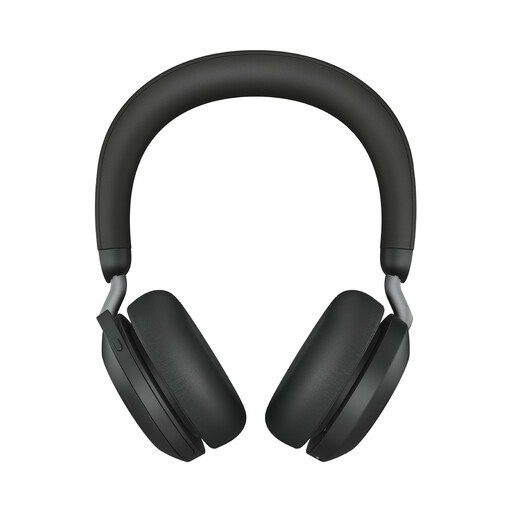
Jabra Evolve2 75, USB-A, MS Teams, black
This headset is an option if you’re also looking for one to listen with and want to reduce background noise; the listed features don’t show that it’s suitable as your only mix reference.
The product description lists Bluetooth, connection to two devices and adjustable Active Noise Cancellation.
View at Joybuy
 No image available
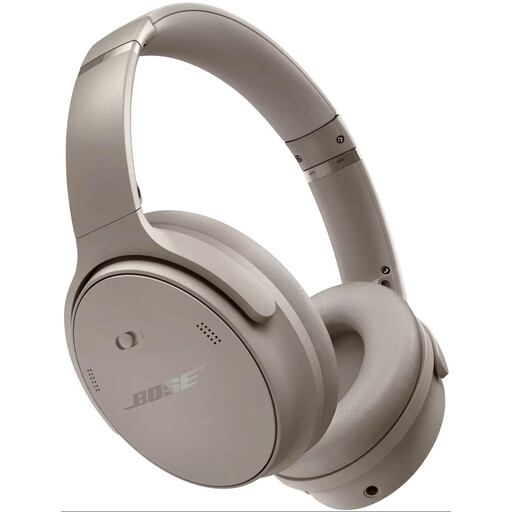
Bose QuietComfort Headphones, Sandstone
Worth considering if you want to listen at home and reduce background noise; the stated noise cancellation alone says nothing about their suitability as a mix reference.
The product description lists Bluetooth, controls on the ear cup and Active Noise Cancellation.
View at Joybuy
 No image available
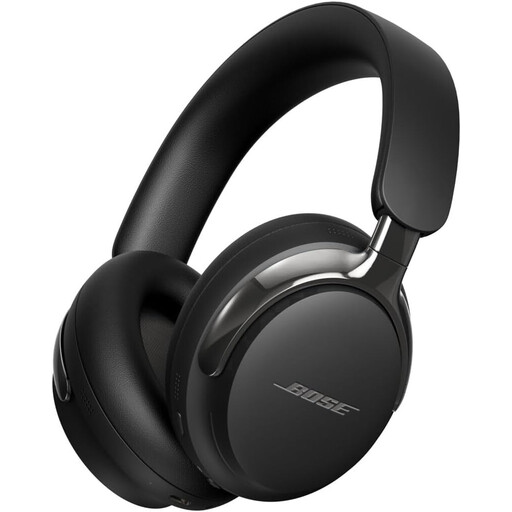
Bose QuietComfort Ultra Headphones (2nd Gen), black
This version could suit you for listening at home if you want both Bluetooth and a wired option; the stated connections don’t automatically make it a studio reference.
The product name lists Bluetooth 5.4. The product description mentions Active Noise Cancellation and a detachable cable with a 3.5 mm connection.
View at Joybuy
Frequently asked questions
Do wired headphones help reduce latency when recording extra takes?
Not on their own. Focusrite says that direct monitoring on a suitable audio interface routes the input signal to the headphone output with virtually no delay; check whether and how your interface offers this feature. If you also hear an echo from the software, check software monitoring.
Can I use 250 ohm headphones with any laptop or interface?
Don’t assume so. Focusrite says that higher-impedance headphones generally need more power from the output. So assess how the headphones work with the specific device, rather than checking only whether the plug fits.
How can I listen safely during a long editing session?
Keep the volume low and take regular listening breaks. The World Health Organization stresses that both sound level and listening duration affect exposure; a general recommendation for a device setting isn’t a measurement of the sound level from your headphones.
What cancellation period and warranty apply to an online purchase in the Netherlands?
For a distance sale to a consumer in the Netherlands, there’s usually a statutory 14-day cancellation period from delivery, according to ACM ConsuWijzer. If a product is faulty, the seller is responsible for the statutory guarantee; there isn’t one fixed duration that applies to every pair of headphones.


