Who is this choice relevant to?

Creators comparing recordings at matched levels

If you repeatedly compare recordings side by side, using a consistent measurement and listening setup helps prevent perceived loudness differences from influencing your judgement. EBU R 128 treats programme loudness and maximum true peak as separate measurements.

Listeners working alongside colleagues

If you work close to other people, you need to consider both background noise and sound leaking from your headphones. RTINGS discusses closed-back models for situations where isolation and reduced leakage matter.

Users sharing a listening space

If several people use the same headphones or workspace, fit, earpad care and a suitable cable are practical considerations. Sonarworks explains that factors such as earpad material and wear can affect what reaches your ears.

What should you look for when choosing?

Closed-back studio headphones

Choose this option: if colleagues work nearby, the room is noisy or you record at the same desk.

Bear in mind: fit and connections vary by model; a closed-back design doesn’t automatically make headphones suitable for every mixing task.

Open-back studio headphones

Consider this option: if you want to listen critically and sound leakage won’t bother your colleagues.

Bear in mind: open-back models let more sound through and provide less isolation from background noise, as RTINGS explains.

What to consider What should you check? Who is this important for?
Comparing recording levels Use the same loudness measure, playback chain, volume setting and headphone setup. In a broadcast context, EBU R 128 treats programme loudness for normalisation and true peak as separate technical checks. If you compare recordings repeatedly, you don’t want a different listening setting to skew your judgement. Around 33% of consumers give reliable level comparison the highest priority.
Isolation and sound leakage Consider whether colleagues work nearby or a microphone might pick up sound from your headphones; then assess open- or closed-back models and their fit. If you work close to others, weigh up background noise and sound leakage before choosing a design. Around 27% of consumers put isolation first.
Fit and earpad care Try the headphones on if possible, and check whether suitable earpads for the exact model can be replaced or washed. For shared or extended use, you’ll want a fit and care routine that works for everyone using them. Around 20% of consumers give this the highest priority.
Compatibility with your listening chain Check the plug type, cable length and available output; don’t judge the power requirements by impedance alone. If you use a fixed listening chain, you won’t want to keep changing outputs or connections. Around 20% of consumers start by checking compatibility with their existing equipment.

Common pitfalls

  • Assuming a louder recording has higher peaks

    Average loudness and maximum true peak answer different questions. A recording that sounds louder doesn’t, by itself, prove that its peaks are higher.

    Compare recordings using the same playback settings and measure both values when they’re relevant to your task. EBU R 128 describes programme loudness and true peak separately; don’t apply a broadcast target without the relevant delivery requirements.

  • Choosing open-back headphones without considering colleagues

    An open-back design leaks sound and blocks very little background noise. This can disrupt comparisons at a shared desk or disturb other people.

    Choose open-back only if the room allows for sound leakage. Otherwise, compare closed-back models for fit and connectivity.

  • Overlooking swapped or worn earpads

    Earpad material and wear can affect what you hear. Sennheiser specifies two types of earpad with different sound profiles for the HD 490 PRO.

    For repeatable comparisons, stick to the same type of earpad and check which replacement and care instructions apply to the exact model.

Brands to compare

Audio-Technica

The closed-back ATH-M40x is a wired option with detachable cables for desk use.

  • Audio-Technica lists an impedance of 35 ohms and a detachable cable for the ATH-M40x.
  • “Tuned flat” is a manufacturer’s claim and doesn’t, by itself, demonstrate measured neutrality in your listening space.

beyerdynamic

According to the manufacturer, the closed-back DT 700 PRO X is designed for recording, monitoring and mixing.

  • beyerdynamic lists an impedance of 48 ohms and a detachable cable for this model. Its help centre says the cable, earpads and headband can be replaced.
  • “Balanced” is the manufacturer’s description, not an independent comparison with other models.

Sennheiser

The open-back HD 490 PRO is an option when critical listening is the priority and sound leakage is acceptable; the closed-back HD 480 PRO is a separate model for those seeking isolation.

  • Sennheiser specifies two types of interchangeable, washable earpad with different sound profiles for the HD 490 PRO.
  • Features of the closed-back HD 480 PRO don’t automatically apply to the open-back HD 490 PRO, or vice versa.

Neumann

Neumann positions the closed-back NDH 20 for monitoring, editing and mixing, including in environments with background noise.

  • Neumann lists isolation and two detachable cables for the NDH 20.
  • The manufacturer’s claims about sound and performance don’t demonstrate an advantage that applies to every user.

Joybuy products for related listening scenarios

These headphones have features that may suit wired listening or a shared workspace. The connections and features listed don’t automatically make them studio headphones for accurate level assessment.
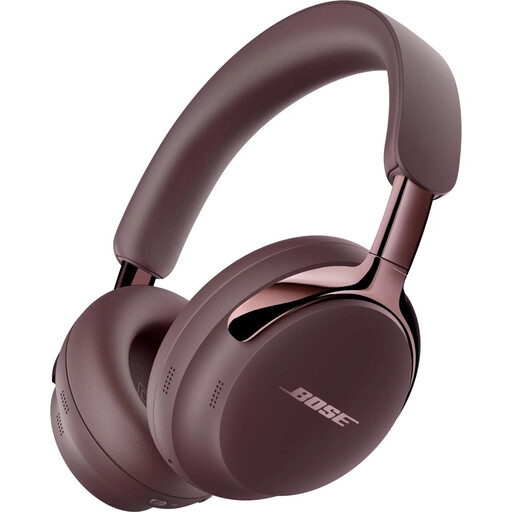
Bose QuietComfort Ultra Headphones (2nd Gen), Cherry Chocolate

Bose QuietComfort Ultra Headphones (2nd Gen), Cherry Chocolate

Worth considering if you want a wired connection as well as Bluetooth.

The product information lists a detachable cable with USB-C and 3.5mm connections.

View at Joybuy
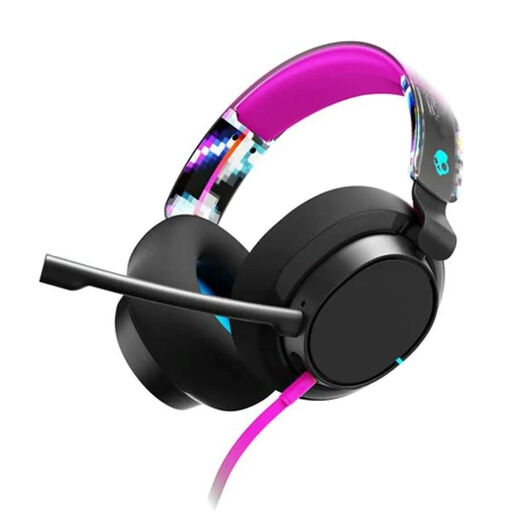
Skullcandy Slyr Pro Multi-Platform Gaming Wired Over-Ear, Black Digi-Hype, Black/Red

Skullcandy Slyr Pro Multi-Platform Gaming Wired Over-Ear, Black Digi-Hype, Black/Red

Consider this option if you’re looking for a wired headset and the listed connections suit your equipment.

The product information lists USB-C and 3.5mm connections, along with plush memory foam earpads.

View at Joybuy
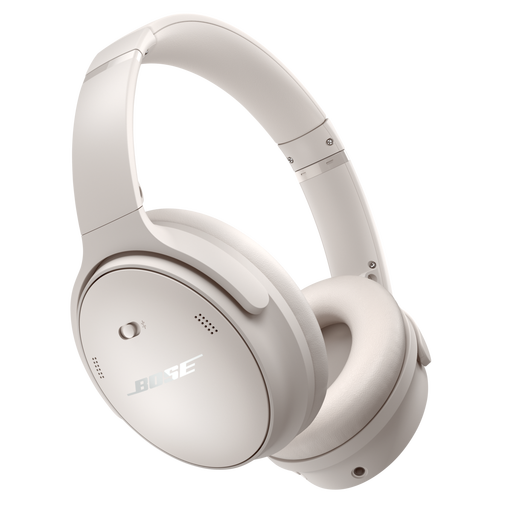
Bose QuietComfort Wireless Bluetooth Noise Cancelling Headphones, White

Bose QuietComfort Wireless Bluetooth Noise Cancelling Headphones, White

Worth considering if you want the option of using an audio cable for repeated listening.

The product information lists Bluetooth and an audio cable with 3.5mm and 2.5mm connections.

View at Joybuy

Sony WH-CH720N Wireless Bluetooth Headphones, Blue

Sony WH-CH720N Wireless Bluetooth Headphones, Blue

Consider these headphones if background noise is a concern in a shared workspace.

The product information lists Bluetooth and active noise cancelling.

View at Joybuy
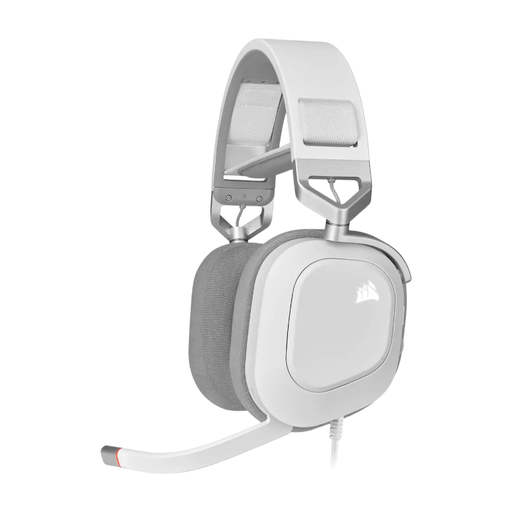
CORSAIR HS80 RGB USB Wired Gaming Headset, White

CORSAIR HS80 RGB USB Wired Gaming Headset, White

An option for a fixed computer setup if a USB connection suits your listening chain.

The product information lists USB as the connection, along with memory foam earpads and an adjustable headband. No other audio input is listed.

View at Joybuy

Frequently asked questions

Can studio headphones tell you whether two recordings are equally loud?

No, you also need a consistent loudness measurement. EBU R 128 recommends programme loudness for normalisation and uses true peak for a separate technical check. The recommendation was developed for broadcast audio; the broadcast target doesn’t automatically apply to every recording.

How can you keep the listening setup consistent when several people use the headphones?

Use the same output and settings, and keep a record of the model and type of earpad used. Earpads can affect what you hear; Sennheiser also specifies two types of earpad with different sound profiles for the HD 490 PRO. Software correction is only relevant if you use a suitable profile for the exact model.

What should you do if a cable or earpad wears out?

Check which parts are intended for the exact model, and contact the seller if you think the product may be faulty. beyerdynamic describes how to replace the cable, earpads and headband on the DT 700 PRO X. ACM ConsuWijzer states that statutory guarantees apply alongside any manufacturer’s or seller’s guarantee.

What noise rules apply in a Dutch workplace?

Employers have obligations when daily noise exposure exceeds the applicable thresholds. Arboportaal states that employers must provide hearing protection when daily exposure exceeds 80 dB(A), and employees must wear it above 85 dB(A). This concerns workplace exposure, not a recommended headphone volume or a product specification.
