
Chord hunter sharing a home
You want to follow the instruments in a track while other people at home are making noise; fit and isolation matter here.


If household noise is clearly audible, a well-fitting pair of closed-back studio headphones is generally a more sensible starting point than an open-back model, as the closed design helps block out some background noise. Also consider comfort and compatibility with your device, and compare using the same music clip at a moderate volume. No design or specification can guarantee that you’ll be able to pick out every chord.
You want to follow the instruments in a track while other people at home are making noise; fit and isolation matter here.
You want to listen to the same clip repeatedly and assess its tonal balance, with some background noise around you.
You’re looking for chords during longer sessions and want a comfortable model that works with your laptop or audio interface.
Choose these when: conversations or other household noise disrupt your listening, and you have a compatible wired output.
Bear in mind: how much noise they actually block also depends on the fit.
Choose these when: your listening space is quiet enough and you want to listen back critically.
Bear in mind: an open-back design lets sound in and out, making it less suitable for a noisy home.
| What to consider | What to look for when buying | Who this matters to |
|---|---|---|
| Background noise | Look for a closed-back design and consider how well the ear pads fit. | If I can hear other people at home, I want to focus on the recording without constantly turning up the volume. Around 36% of consumers prioritise blocking out background noise. |
| Picking out individual parts | Compare the same familiar music clip; don’t treat a manufacturer’s description such as ‘neutral’ as a guarantee. | When I’m picking out chords in a recording, I want to be able to follow recurring parts. Around 29% of consumers prioritise assessing individual parts and tonal balance. |
| Comfort during repeated listening | Assess the pressure and fit during a typical listening session, with your glasses on if you wear them. | For longer sessions, I want a fit that feels comfortable to wear and stays in place. Around 21% of consumers prioritise comfort during long listening sessions. |
| Compatibility with your device | Check the plug, any adapter and, for models available in different versions, the exact variant. | If I use my laptop or audio interface, I want to know beforehand whether the headphones will connect to it. Around 14% of consumers say device compatibility is their main concern when buying. |
An open-back design lets background noise through, while blocking it out can be important when you’re trying to pick out chords at home.
First, assess how much noise you can hear where you listen. Then compare open-back and closed-back models for your situation.
beyerdynamic offers the DT 770 PRO in 32, 80 and 250 ohm versions, designed for different audio sources.
Check the full version and compare it with the output on your device before you order.
A frequency range or a manufacturer’s description of a sound as neutral doesn’t prove that you’ll be able to distinguish chords in a particular mix.
Compare the same familiar recording at a moderate volume, focusing on the parts you want to follow.
The closed-back HD 280 PRO is worth considering if isolation and replaceable ear pads matter to you; the HD 480 PRO is a separate model.
The closed-back DT 770 PRO may suit a listening spot with background noise; the open-back DT 990 PRO is an option for a quieter room.
The closed-back K371 is worth considering if you want to assess its fit, detachable cables and replaceable ear pads together.
The closed-back ATH-M50x is a wired alternative with a detachable cable.
The closed-back SRH440A is worth considering if you’re looking for an over-ear design and a detachable straight cable.
This selection includes over-ear headphones with noise cancellation, as options for reducing background noise. Check that each model’s connection suits your listening source; noise cancellation or a stated audio feature doesn’t guarantee that you’ll be able to pick out chords more easily.
 No image available
The product description mentions noise cancellation and an audio cable for wired listening.
A 3.5mm cable is listed; check that it fits your device’s output.
 No image available
The noise cancellation described may be useful if background noise disrupts your listening.
The product description mentions Bluetooth 5.4 and a detachable cable with USB-C and 3.5mm connections; check which connection you need.
 No image available
According to the description, this model combines adaptive noise cancellation with a 3.5mm audio cable for wired listening.
The description mentions a 42 mm transducer system and adjustable equaliser. These features alone can’t predict how easily you’ll pick out chords in a particular recording.
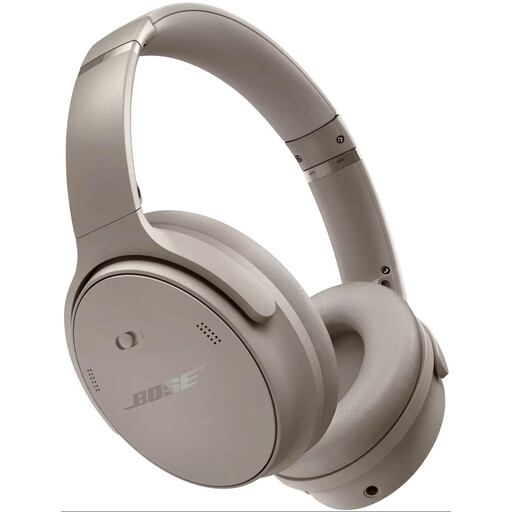 No image available
The description mentions active noise cancellation and a transparency mode for managing the noise-control modes.
Before buying, check that the available connection options suit your listening source.
No. First, try improving the fit and isolation, or listen at a quieter time. Thuisarts advises keeping music at a safe volume and using a volume limiter.
Check the output on your laptop or audio interface against the plug and any adapter supplied with your chosen model. Sennheiser lists a 3.5mm plug and a 6.3mm adapter for the HD 280 PRO; check other models and versions separately.
That depends on the model and the parts available. Sennheiser lists replaceable pads for the HD 280 PRO, and AKG does so for the K371; check whether the right parts are available for your version.
When you buy from a business online, you’re generally entitled to a 14-day cooling-off period after delivery, according to ACM ConsuWijzer. The seller is also responsible for providing a solution if a product, under normal use, doesn’t meet the standards you could reasonably expect. The rules and conditions may depend on the purchase.