What should you look for?
Start with a closed-back model that fits well, and check that you can follow the part at a sensible volume. If you’re recording yourself, also consider the signal path through your interface and the headphones’ connector.
| What to consider |
What to look for |
Who should prioritise this? |
| Background noise and isolation |
Try the ear pads around your ears and compare the fit using a practice track of your own. |
When I practise at home, I want to follow the part without constantly turning it up. Around 33% of consumers give a good fit the highest priority. |
| Following the harmony part |
Compare the same track at a similar, sensible volume, listening specifically for the vocal line you want to pick out. |
I want to pick out that one vocal line in a familiar recording. Around 27% of consumers prioritise following the harmony part. |
| Singing along and monitoring |
Check that the plug fits your equipment. If you use an audio interface, see whether direct monitoring is available. |
When I’m recording, I want to hear my own voice in time. Around 20% of consumers put recording timing first. |
| Comfort and maintenance |
Try the pressure from the headband and ear pads, and check whether replacement ear pads are available for the exact model version. |
When I repeat passages for a long time, I want a comfortable fit that lasts and pads I can replace if needed. Around 20% of consumers name comfort and maintenance as their top consideration. |
Joybuy products
These Joybuy product picks are over-ear models with noise cancelling for listening in environments with background noise. They aren’t all studio headphones, so before practising or recording, check each model’s connection and your equipment’s signal path.
 Image unavailable
Sennheiser MOMENTUM 4 Wireless, black
A wireless, over-ear model with noise cancelling. The product information also lists a 3.5 mm audio cable for wired listening. Check that the connection is compatible with your source.
The product name lists 60 hours of battery life, fast charging and four microphones.
View at Joybuy
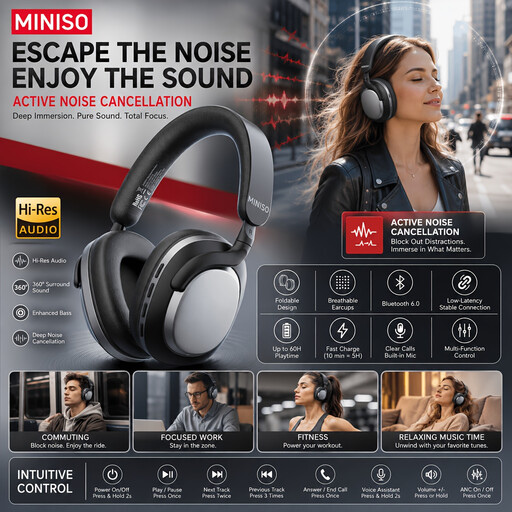 Image unavailable
MINISO MG210 wireless headphones, black
This wireless model is described as over-ear headphones with noise cancelling. The product name lists 24 hours of battery life.
View at Joybuy
 Image unavailable
Bose QuietComfort Ultra Bluetooth Headphones, black
A wireless, over-ear model to compare if you’re looking for noise cancelling. The product information also lists an audio cable for wired listening; check that it’s compatible with your source.
View at Joybuy
 Image unavailable
Sonos ACE over-ear Bluetooth headphones, black
The product information lists active noise cancelling and wired connection options via USB-C and 3.5mm cables. Check which connection your recording or playback equipment uses.
View at Joybuy
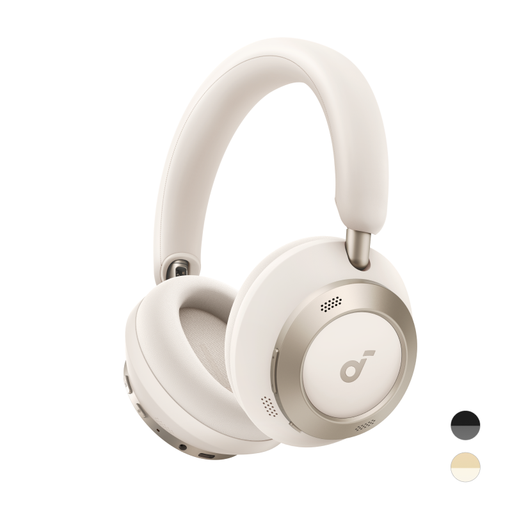 Image unavailable
Soundcore by Anker Space One Pro
This wireless model is listed with active noise cancelling and a closed-back design. The product name also mentions a foldable design and 60 hours of battery life.
The product information lists memory foam ear pads and a pressure-relieving headband.
View at Joybuy
Frequently asked questions
Will different headphones fix the delay in my voice when I’m recording?
Not necessarily. Focusrite says that direct monitoring on a suitable audio interface can send the input signal to the headphone output with virtually no delay. If you also hear the same voice with a delay through your recording software, check whether you need to turn off that second monitor signal.
Can I connect studio headphones directly to my playback device or audio interface?
It depends on the output and the exact model. Audio-Technica lists a 6.3mm adapter and several cables for the ATH-M50x; Sennheiser lists a 3.5mm plug with a 6.3mm adapter for the HD 280 PRO. Check which connection your device has before choosing a model.
What can I do if the ear pads wear out?
Check whether replacement pads are available for the exact model version. For example, Sennheiser offers a set for HD 280 PRO versions from 2016 onwards. The manufacturer says that worn pads can also affect the fit and seal.
What are my rights when buying online in the Netherlands?
According to ACM ConsuWijzer, online consumer purchases generally come with a statutory cooling-off period of up to 14 days after delivery, subject to applicable exceptions. Your statutory guarantee is separate from any manufacturer’s warranty: under normal use, the product must do what you could reasonably expect of it.
Is CE marking relevant if I order electronics for use in the Netherlands?
The Dutch government states that electronic devices placed on the market in the EU must have a CE marking. Check the product information for the specific version; details about a model alone don’t prove that the item you receive meets the applicable requirements.


