
Producer with a quiet mixing space
You have little room for speakers and mainly want to assess the kick, bass and stereo balance. Open-back headphones could suit you if you work in a quiet room and also check your mix elsewhere.


In a quiet room, open-back wired studio headphones are a sensible place to start. In a shared space, or when recording at the same desk, a closed-back model is more practical if you need isolation. Sonarworks points out that headphones present the stereo image differently from speakers, and that you don’t feel the bass physically. So check the kick, bass and stereo width using familiar reference tracks and on a second playback system.
You have little room for speakers and mainly want to assess the kick, bass and stereo balance. Open-back headphones could suit you if you work in a quiet room and also check your mix elsewhere.
You can hear people or equipment around you, or you record at the same desk. In that case, isolation and sound leakage may matter more than an open-back design.
You’re looking for a fit and cable that suit your workspace, and want to know whether any wear parts can be replaced. Keep an eye on your listening volume during long sessions, too.
Choose this when: you’re assessing balance and placement in the mix in a quiet room.
The trade-off: background noise and sound leakage make an open-back design less suitable for shared spaces or recording with a nearby microphone.
Choose this when: isolation matters or you record at the same desk.
The trade-off: isolation and fit vary between models and users. Don’t treat isolation alone as proof that a model provides a reliable mix reference.
| Consideration | What to look for | Who this matters to |
|---|---|---|
| Kick and bass | Compare familiar reference tracks and check the mix on a second system; a frequency range on its own doesn’t prove that bass reproduction is neutral. | If the kick and bass are my first priority, I want to be able to assess their balance properly. Around 33% of consumers with this mixing need prioritise kick and bass. |
| Stereo image | Check panning and width on a second playback system, too; for wired use, make sure the plug and cable routing work at your desk. | If I want to know whether panning and width also sound right beyond my headphones, I check the mix on another system. Around 27% of consumers with this mixing need prioritise stereo placement. |
| Isolation | Consider a closed-back model if there’s background noise or you’re recording, and check how well the ear pads fit. | If I mix in a shared space or record at my desk, I want to reduce background noise and sound leakage. Around 20% of consumers with this mixing need prioritise isolation. |
| Fit and connection | Look for comfort, a suitable cable and replaceable pads; check that your laptop or interface can provide a usable volume with this version. | For long sessions, I want headphones that are comfortable and work with my output. Around 20% of consumers with this mixing need prioritise fit and connection. |
A frequency range on a spec sheet doesn’t show how the kick and bass will sound in your mix. Sonarworks recommends using reference tracks and checking the mix on another playback system, too.
Compare familiar tracks and check the kick and bass on a second system as well.
An open-back design is more suited to a quiet listening space; in a shared room or near a microphone, isolation may matter more.
First decide whether critical listening in a quiet room or isolation is more important for the way you use your headphones.
beyerdynamic offers 32, 80 and 250 ohm versions. A different version may therefore require a different match with your headphone output.
Check the full version name and connection, and make sure your output provides a sufficiently usable volume.
An incompatible output or plug may mean you need a different connection or another solution.
beyerdynamic describes the DT 900 PRO X as an open-back model for critical listening and mixing, and the DT 700 PRO X as a closed-back model for recording, monitoring and mixing.
Sennheiser describes the open-back HD 490 PRO as being for production and mixing, and lists separate production and mixing ear pads.
The ATH-R70x is an open-back model, while the ATH-M40x is a closed-back, foldable model; these features apply to these specific versions.
Sony describes the closed-back MDR-7506 as a monitor headphone and the open-back MDR-MV1 as being for stereo and spatial mixing.
These Joybuy products are general-purpose headphones with product information covering wired listening. Their titles don’t identify them as studio monitor models, so don’t automatically treat them as a reference for mixing.
 No image available
Could suit you if you also want to listen over a wired connection as well as mix; the product information mentions passive listening with the supplied 3.5mm cable.
The product information lists active noise cancellation and adjustable EQ via the app.
The title states a battery life of 60u; don’t treat this as a specification for passive wired listening.
 No image available
Could suit you if you also want to listen over a wired connection at your desk; the product information mentions a detachable cable with USB-C and 3.5mm connections.
The product information lists active noise cancellation and spatial audio. The charger is not included, and PD fast charging is not supported.
The product contains magnets; if you have a medical implant, follow the product information and consult a doctor.
 No image available
Could suit you if you want the option of using a cable as well as listening wirelessly when the battery runs out; the product information mentions an audio cable for listening without battery power.
The product information lists active noise cancellation and leather ear pads.
 No image available
Could suit you if you want the option of using a cable at your mixing space; the product information mentions an audio cable for listening without battery power.
The product information lists active noise cancellation and Bluetooth.
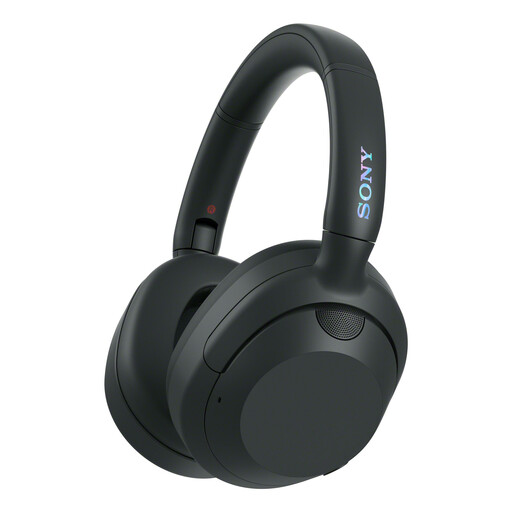 No image available
Could suit you if you also want to listen over a wired connection at your desk; the product information mentions a detachable cable and a 3.5mm connection.
The product information lists active noise cancellation and a closed acoustic chamber, as well as Bluetooth.
You can make mixing decisions with headphones, but you won’t get the physical sense of bass you experience with speakers. Compare your mix with familiar tracks and check the result on another playback system.
Not on the basis of the impedance figure alone. Check the exact version and whether your laptop or audio interface can provide a sufficiently usable level at a moderate listening volume. The DT 770 PRO, for example, is available in 32, 80 and 250 ohm versions.
Keep the volume moderate and take breaks. The World Health Organization gives 80 dB for up to 40 hours a week as an example; at 90 dB, it recommends four hours. The volume setting on a device doesn’t measure how much sound actually reaches your ears.
No. According to the Dutch government, there is no fixed statutory guarantee period in the Netherlands: a product must remain fit for purpose for as long as you can reasonably expect. If there’s a problem, contact the seller; normal wear and tear isn’t automatically covered by free repairs.
For many distance purchases from a business, you have a 14-day cooling-off period. Check the seller’s applicable terms and information before ordering; this doesn’t address any product-specific exceptions.