
Mixer without a recording microphone
You mainly make decisions about the balance and placement of backing vocals in a quiet space. An open-back model could be a good option.


If you only mix in a quiet space, open-back wired headphones are a sensible choice for judging the placement of backing vocals. If you also record at the same desk, a closed-back model is a better option to reduce the risk of sound leaking into your vocal recordings. Either way, check the connection, cable length and output of your interface, and listen to your mix on a second playback system too.
You mainly make decisions about the balance and placement of backing vocals in a quiet space. An open-back model could be a good option.
You wear the same headphones to record vocals near a microphone. In this case, reducing the amount of sound that gets into the recording is more important.
You work with limited space and a specific laptop or audio interface. The connection, cable length and achievable listening volume all affect your choice.
First, decide whether you’ll also use the headphones with a live microphone. Then consider the connection, listening volume and cable at your workstation.
| What to consider | What should you check? | Who is this important to? |
|---|---|---|
| Placement and balance | Compare open-back wired models if you only mix. Listen to the backing vocals alongside the lead vocal, and check the mix on a second playback system too. RTINGS and beyerdynamic describe open-back models as an option for mixing, not as a guarantee of a good mix. | If I mainly want to judge how the backing vocals sit in the overall mix, I look for headphones suited to that quiet listening environment. Around 36% of consumers consider placement and balance their top priority. |
| Isolation when recording | Consider whether you record with a live microphone. RTINGS and Shure describe closed-back headphones as a better choice for recording, as sound from the headphones is less likely to leak into the microphone. | If I record vocals at the same desk, I want to reduce the risk of monitoring sound getting into the recording. Around 29% of consumers prioritise isolation when recording. |
| Connection and listening volume | Note the exact model of your interface or laptop, then check the plug, adapter and headphone output specifications. Focusrite explains that higher-impedance headphones generally need more power from the output; impedance alone doesn’t determine how loud the combination will sound. | If I want to keep using my existing interface or laptop, I want to know in advance whether the connection will work and whether I can achieve a usable volume. Around 21% of consumers give device compatibility top priority. |
| Cable and comfort | Check the cable length, whether it’s detachable, and whether replacement cables or ear pads are available for the exact model. For example, beyerdynamic describes differences between the cables on the DT 770 PRO and DT 770 PRO X. | At a small desk, I want to avoid a cable getting in the way and make sure the fit stays comfortable during a work session. Around 14% of consumers prioritise a practical cable and wearing comfort. |
Open-back headphones let sound escape. If you’re using a live microphone, that sound could get into the recording.
Before you buy, decide whether you’ll also record at that desk. If you will, compare closed-back models and keep the monitoring volume at a sensible level while recording.
beyerdynamic describes differences in impedance and cable construction. If you choose based on the DT 770 name alone, you could end up comparing the wrong version with your interface.
Check the full model name and impedance version. The manufacturer lists the DT 770 PRO X at 48 Ω with a detachable cable; the DT 770 PRO comes in 32, 80 and 250 Ω impedance versions and has a fixed 3 m cable.
According to Focusrite, the listening volume you can achieve also depends on the headphone output and other factors. An impedance specification alone won’t tell you how loud the combination will sound with your equipment.
Check the specifications for your own interface and judge the balance of the backing vocals in the context of the whole mix. Listen on a second playback system too.
The open-back HD 560S is an option for analytical listening in a quiet space, without recording vocals at the same time.
The closed-back, foldable K371 is an option if you’re looking for recording isolation and detachable cables.
The closed-back DT 770 PRO and DT 770 PRO X show why you should check the full model number when you have a small workstation.
The closed-back SRH440A is an option for home recording and monitoring if you’re looking for a detachable straight cable.
The closed-back ATH-M50x is another option to consider if you’re looking for a foldable model with a detachable cable.
The headphones below are listed as offering a wired listening option. Check that the connection and listening setup are right for your interface and mixing arrangement.
 No image available
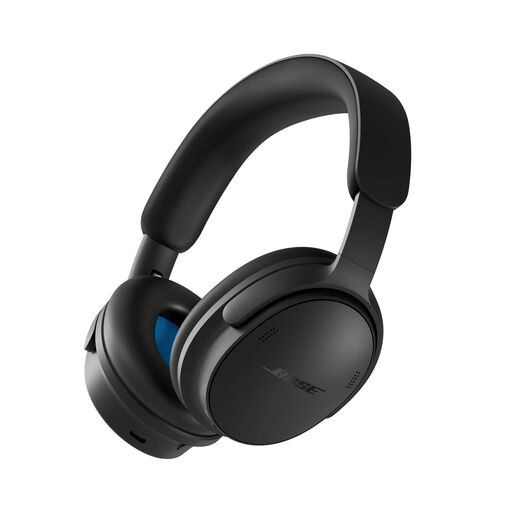
The product information lists wired listening via the supplied 3.5 mm cable, as well as passive use. Check that this connection works with your audio interface output.
 No image available
The product information lists USB-C audio and a 3.5 mm-to-USB-C audio cable. Check that your interface supports this connection before choosing this model for wired mixing.
With a live microphone, closed-back headphones are generally a better choice, as sound from open-back headphones can get into the recording. Open-back models can work well for mixing in a quiet space; even with closed-back headphones, keep the monitoring volume at a sensible level.
Check the plug type and supplied adapter for the exact model, then compare them with your interface connection. Focusrite explains that higher-impedance headphones generally need more power from the headphone output; sensitivity, source material and surroundings also affect the listening volume you can achieve.
Listen at a low volume and take regular breaks. The World Health Organization gives a maximum of 40 hours per week at an average of 80 dB as an example; this is health advice, not a measured level for your headphones.
Check whether the cable and ear pads are replaceable for the exact model. According to ACM ConsuWijzer, the seller is responsible for providing an appropriate free remedy if a product proves faulty under normal use; this is separate from any manufacturer’s warranty.
For many eligible distance purchases from a business, there is a statutory 14-day cooling-off period. The Dutch government lists some exceptions, so check the seller’s information for your specific order.