
Mixer in a quiet workspace
You mainly work on the soundtrack balance and can put up with some sound leakage. RTINGS discusses open-back models for mixing, while noting that they offer little isolation.


If you mainly mix in a quiet room, start by comparing open-back models. If you also record or want to reduce background noise, look at closed-back models. RTINGS describes open-back headphones as an option for mixing, with the trade-off that they let sound out and do little to block external noise. Neither option guarantees that a mix will translate well to a theatre setup: check key decisions on the speakers you plan to use, and make sure the fit, cable and connection work at your standing desk.
You mainly work on the soundtrack balance and can put up with some sound leakage. RTINGS discusses open-back models for mixing, while noting that they offer little isolation.
You switch between mixing and recording at the same desk, and want to stop headphone sound reaching a microphone. AKG describes the K371 as a closed-back model with replaceable ear pads.
You regularly change your posture or move further from or closer to your audio interface. That makes fit, cable reach and a connection that works with your equipment especially important.
Choose this when: you mainly mix in a quiet room and sound leakage is not an issue.
Trade-off: you will still hear background noise, and others may hear your audio. Check the mix on the speakers you plan to use, too.
Choose this when: you record as well as mix, or your room is not quiet.
Trade-off: passive isolation can reduce sound leakage and background noise, but it does not prove that your mix will translate well to other speakers.
Choose this when: you want to try a middle-ground option and can accept some sound leakage.
Trade-off: the semi-open label alone does not tell you how much isolation a particular model offers or how your mix will sound through it.
| What to consider | What should you check? | Who should pay particular attention? |
|---|---|---|
| Balance and spatial judgement | Compare with familiar material and check key decisions on the speaker setup you plan to use. | When I’m judging balance and stereo placement, I don’t want to rely on headphones alone. Around 33% of consumers cite mix evaluation as their main concern when buying. |
| Isolation and sound leakage | Decide whether you will be recording at the same time, and try how well the ear cups seal. | If I’m recording too, I want to stop sound from my headphones reaching a microphone. Around 27% of consumers cite isolation or recording as their main concern when buying. |
| Fit and cable reach | Try the headphones while standing and leaning forwards. Check the cable length, plug and whether a replacement cable is available for that specific model. | When I move around at my standing desk, I want the headphones to stay in place and the cable not to pull. Around 20% of consumers cite freedom of movement as their main concern when buying. |
| Long listening sessions and maintenance | Assess the fit during a longer session and check whether suitable ear pads or cables can be replaced. | When listening repeatedly, I want to take comfort and maintenance into account, without losing sight of the volume. Around 20% of consumers cite long listening sessions and maintenance as their main concern when buying. |
An open-back design lets sound through and does little to block background noise. That can be impractical when a microphone is in use or the room is noisy.
Before comparing models, decide whether you also record or need isolation. If you do, include closed-back models in your comparison.
Headphones that slip out of place or a cable that pulls can be distracting when you move around at a standing desk.
Try the model while standing and leaning forwards. Check the cable route and connection, and make sure any replacement cable is suitable for the exact model.
If the cable is damaged, you may need a model-specific replacement part.
A product description does not tell you how your mix will sound on the final playback setup.
Compare with familiar material and check key mixing decisions on the speakers you are creating the soundtrack for.
The manufacturer distinguishes the open-back DT 900 PRO X from the closed-back DT 700 PRO X by their acoustic design.
The open-back HD 560S is a model to compare for critical listening in a quiet room.
The closed-back K371 is a model to compare if you need to combine isolation, recording and a workspace where you move around.
The closed-back ATH-M50x is an alternative with swivelling ear cups and a choice of cables.
The closed-back MDR-7506 is a model to compare if you also record or monitor audio.
Here you’ll find Joybuy headphones and headsets related to this topic. For each model, check that the connection, cable and sound reproduction suit your audio interface and mixing workflow.
 Image unavailable
The listed 3.5 mm cable lets you listen via a wired connection. Check that the connection and sound reproduction suit your interface and mixing workflow.
The product name mentions noise cancelling, 60 hours of battery life, fast charging and four microphones. The description also says you can use the headphones passively with the supplied 3.5 mm cable, without a battery.
 Image unavailable
Check that the listed USB-A connection works with your equipment and that the sound reproduction meets your mixing needs.
The description mentions stereo sound, two ear cups, USB-A, noise isolation, memory foam ear cushions and an adjustable headband.
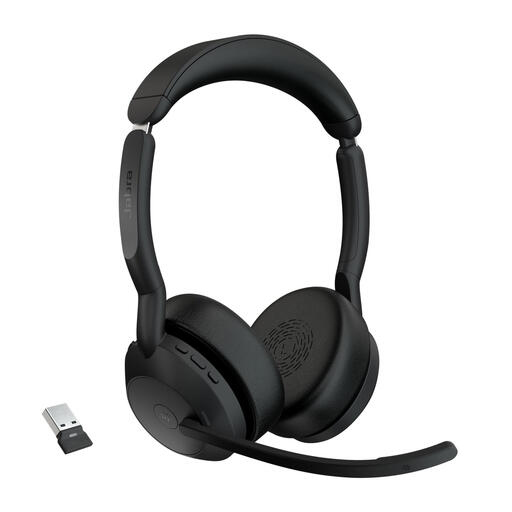 Image unavailable
Check that the listed connection options work with your interface. The product information does not make clear whether this model suits your specific mixing needs.
The product information mentions stereo sound, Bluetooth, connection to two devices and a USB adaptor.
 Image unavailable
Before using it with an audio interface, check which connection you need and whether the sound reproduction suits your mixing workflow.
The description mentions Bluetooth, adjustable noise cancelling and eight microphones.
 Image unavailable
Check that the USB-A adaptor works with your equipment and that the model suits how you want to assess your mix.
The product information mentions Bluetooth, a USB-A adaptor and adjustable noise cancelling.
Use headphones for detailed work, but also check the balance and spatial impression on the speakers or playback setup you are mixing for. The comparison by RTINGS and Sound On Sound is about headphone choices, not whether a mix made using headphones alone will work in every theatre.
Check your audio interface’s output, the plug or adaptor, and the cable length you need with the desk both low and high. Route the cable so it does not pull on the headphones or interface. If you need a replacement, check that the cable is intended for your exact model.
The World Health Organization (WHO) links the risk from sound to both volume and duration. As an example, the WHO cites an average of 80 dB for up to 40 hours a week, and four hours a week at 90 dB. This is not a guaranteed safe volume for everyone, nor a measurement of your headphones. Keep the volume low and take breaks.
No. According to the Dutch government, the Netherlands does not have a fixed legal guarantee period of exactly two years. When you buy as a consumer, you are entitled to a product that meets what you can reasonably expect from it; if something is wrong, contact the seller. A manufacturer’s guarantee is in addition to your statutory rights. This does not automatically apply to a business purchase for a theatre production.
No, not simply because of the product category. According to information from the Dutch government, CE marking is required for specific product groups and must not be applied when it is not required. The applicable rules depend on the features of the exact version, so there is no single CE ruling for all wired and wireless studio headphones.