
Mixing a folk demo in a quiet room
If you’re mainly balancing vocals and acoustic instruments and can listen in peace, compare open-back headphones. Check your mix on a second playback system, too.


If you mainly mix in a quiet room, compare open-back headphones for critical listening. If you’re also recording vocals or guitar with a microphone, start with a closed-back model that helps reduce sound reaching the microphone. A semi-open design may suit quiet listening, but won’t provide the same isolation for microphone recordings. Also check the connection, fit and sound balance using recordings you know well.
If you’re mainly balancing vocals and acoustic instruments and can listen in peace, compare open-back headphones. Check your mix on a second playback system, too.
If you’re recording with a microphone, you’ll want to stop the monitor signal from being picked up in the recording. Sound On Sound recommends closed-back headphones for this.
Isolation may matter in a shared or frequently noisy room. Check that the headphones fit well, and don’t try to drown out background noise simply by turning up the volume.
Choose this if: you mainly mix in a quiet room and aren’t recording with a microphone while wearing your headphones.
Bear in mind: open-back earcups don’t block out background noise and let sound escape.
Choose this if: you’re recording vocals or guitar with a microphone at the same time, or need more isolation.
Bear in mind: isolation also depends on the fit; a closed-back design isn’t automatically a neutral reference for mixing.
Choose this if: you mainly mix somewhere quiet and want to compare a semi-open design.
Bear in mind: don’t treat this as a leak-free compromise for microphone recordings; also check your equipment’s connection and output.
| What to consider | What to look for | Who is this important for? |
|---|---|---|
| Mix balance | Compare recordings you know well and check your test mix on another playback system, too. | If I want to assess the balance between vocals and guitar, I don’t want to rely on just one pair of headphones. Around 36% of consumers make mix balance their top buying priority. |
| Recording spill | Work out whether you’ll be using a microphone at the same time; test the isolation and make a short test recording. | If I’m recording vocals or acoustic guitar with a microphone, I want to stop the monitor signal bleeding into the recording. Around 29% of consumers prioritise reducing this spill. |
| Blocking out household noise | Try the headphones in your room and listen at a controlled volume. | If noise from housemates masks quiet passages, I want to be able to listen without constantly turning up the volume. Around 21% of consumers say blocking out background noise is their main concern. |
| Connections and maintenance | Check the exact version, output, adapter, cable length and compatible replacement parts. | If I want to use the headphones for a long time, the connection needs to work with my computer or audio interface, and I need to know which parts can be replaced. Around 14% of consumers start by looking at connections and maintenance. |
Isolation and sound balance are two different things. In a review, Sound On Sound’s reviewer describes the Audio-Technica ATH-M50x as having a slight emphasis on bass, upper mid-range and treble.
Assess vocals and guitar using familiar reference tracks, and check your test mix on a second playback system.
Sound from the headphones can reach the microphone. Sound On Sound describes a closed-back design as the right choice for reducing spill during recording.
Before choosing, decide whether you’ll be recording at the same time and test for sound leakage with a short recording.
The beyerdynamic DT 770 PRO is available in 32, 80 and 250 ohm versions, each with different guidance on suitable sources. What’s included in the box can also vary by version.
Check the exact version and included connections against your computer or audio interface. If they aren’t compatible, you may need a suitable adapter or a different output.
Compare the closed-back DT 770 PRO for monitoring while recording with the open-back DT 990 PRO for listening in a quiet room.
The open-back HD 490 PRO is worth comparing if your main task is mixing in a quiet room.
The closed-back ATH-M50x is worth comparing if you also record and want a foldable model with detachable cables.
The semi-open K240 Studio is a separate option for mixing somewhere quiet.
The foldable MDR-7506 is worth comparing if you want compact headphones for recording work.
The Joybuy options below are general-purpose headphones whose product information mentions features such as wired listening, noise cancellation or a closed-back design. These features don’t automatically make a model a studio reference; check that the connection and sound suit your equipment and mixing goals.
 Image unavailable
A general listening option to consider if background noise is distracting you; the product information mentions active noise cancellation, but that doesn’t prove the sound is neutral for mixing.
Bluetooth 5.4, USB-C and 3.5mm connections are listed. Check which connection is suitable for your audio interface.
 Image unavailable
Could suit you if you’re looking for wireless headphones that can also be used wired, according to the product information. Check that wired mode works with your intended mixing setup.
Bluetooth, a 3.5mm audio cable and passive use without a battery are listed. The description also mentions adaptive active noise cancellation.
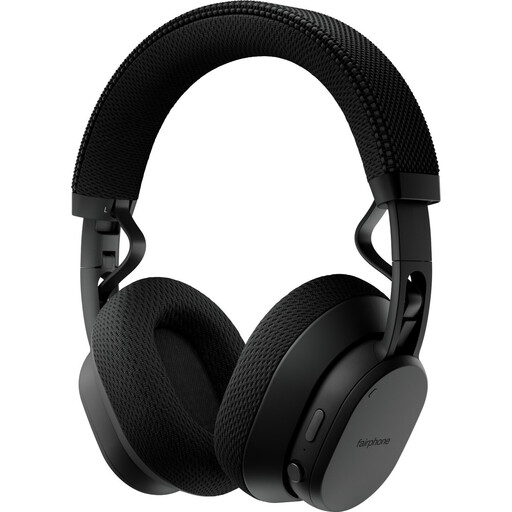 Image unavailable
The product information mentions a closed-back design and hybrid active noise cancellation. Decide for yourself whether this model suits your listening needs; these features alone say nothing about its sound balance for mixing.
Bluetooth 5.1 and multipoint are listed. The product description mentions nine replaceable parts.
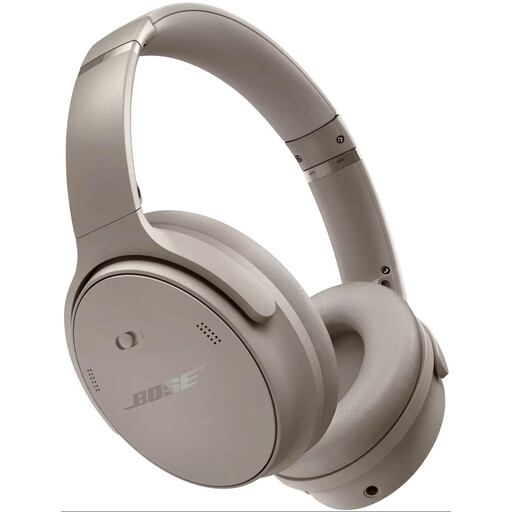 Image unavailable
A general listening option if background noise is distracting you. Active noise cancellation is listed, but it doesn’t indicate that these are a neutral reference for mixing.
The product information mentions Bluetooth, on-earcup controls, EQ settings in the app and a transparency mode.
Yes, if speakers aren’t practical in your room. Check the mix on another playback system, too, as it can be harder to judge depth, effects and levels relative to one another on headphones.
Not necessarily. For simultaneous microphone recordings, a closed-back model helps reduce sound leakage; for critical listening in a quiet room, you could also compare an open-back model.
Don’t assume you can without checking. beyerdynamic recommends the 250 ohm DT 770 PRO for stationary sources, such as headphone amplifiers, and also lists the 32 ohm version for computer sound cards and portable devices. Check the specifications of your output and the exact model version.
Check the fit, take listening breaks and avoid compensating for background noise by turning up the volume. The World Health Organization advises considering both sound level and exposure time; its example of 80 dB for up to 40 hours per week isn’t a measurement of your headphone volume.
For a consumer purchase, the seller is responsible if the product doesn’t meet what you could reasonably expect under normal use. According to the Dutch government, there’s no fixed statutory warranty period of two years in the Netherlands; normal wear and tear or damage you cause yourself doesn’t automatically entitle you to a free repair.