
Mixing with a room-mate
You’re assessing changes to your mix while someone else is in the bedroom, and want to limit sound leakage and distractions. RTINGS and Sound On Sound describe sound leakage as a point to consider with open-back headphones.


If you share your bedroom while listening, start with wired, closed-back over-ear headphones: they generally limit sound leakage and reduce some background noise. If the room is quiet and sound leakage won’t disturb anyone, an open-back model may suit you for assessing changes to the spatial mix. With either type, check the fit and connections, and listen to important decisions on a second, familiar system too.
You’re assessing changes to your mix while someone else is in the bedroom, and want to limit sound leakage and distractions. RTINGS and Sound On Sound describe sound leakage as a point to consider with open-back headphones.
You can listen without disturbing anyone else, and also want to assess stereo placement and spatial changes. RTINGS discusses open-back models as a possible choice for mixing, with sound leakage as a trade-off.
You compare lots of small changes, so pay attention to the fit, headband, ear pads and cable setup to make sure they suit your workspace.
Choose this option: if a room-mate is present, background noise distracts you or you also record.
Bear in mind: the fit affects how much sound is blocked; check the sound on a second, familiar system too.
Consider this option: if the bedroom is quiet and sound leakage isn’t an issue when checking the spatial mix.
Bear in mind: open-back ear cups let sound through and do little to block out background noise.
| Consideration | What should you check? | Who is this important to? |
|---|---|---|
| Sound leakage | Check that the ear cups are closed-back and that the cushions fit around your ears. | If my housemate is in the same bedroom, I want to limit sound leakage without interrupting my mixing; around 36% of consumers put sound isolation first. |
| Changes to the mix | Listen to the same passage at the same volume and check important decisions on a second, familiar playback system. | If I want to assess small changes to tonal balance or stereo image, I look for a listening presentation that suits this; around 29% of consumers give mix assessment their top priority. |
| Fit for long sessions | Consider pressure, warmth and room for your ears; also check whether replacement cushions are available for the exact version. | When I listen for long periods repeatedly, I want my headphones to feel comfortable and stay in place; around 21% of consumers prioritise long-term comfort. |
| Connection and cable | Check your computer or audio interface connection, the adapter you need and the cable supplied with the exact version. | If I want to connect my headphones at my own workstation, I want to know in advance which cable and connection will work; around 14% of consumers prioritise connectivity and maintenance. |
Open-back ear cups let sound through and do little to block out room noise. This can be impractical when someone else is in the bedroom.
Take your shared listening situation into account. If listening on open-back headphones isn’t practical, compare closed-back models and also check your mix on a second system.
A product description or the inclusion of replaceable cushions doesn’t prove that the fit will seal well enough or feel comfortable on your head.
Check the fit at your usual listening volume and look for parts made for the exact version.
The DT 770 PRO discussed here is the wired 80-ohm version with a straight cable, as listed in beyerdynamic’s European product specifications.
Before buying, compare the full model name, impedance, plug and cable with your audio output.
The closed-back K371 may be worth considering if you’re looking for sound isolation and a wired setup.
The closed-back DT 770 PRO 80 Ohm is a wired version to consider for monitoring in a shared room.
The closed-back ATH-M50x is an option to consider if you want to switch between different cable setups.
The open-back HD 560S and HD 490 PRO are models to consider for listening while mixing, provided sound leakage into the shared room isn’t an issue.
The closed-back MDR-7506 is a model to consider if you also monitor recordings.
These Joybuy models are over-ear headphones whose product information lists wired listening options. Check that the connection and listening mode for each version suit your audio interface and the way you assess mix changes.
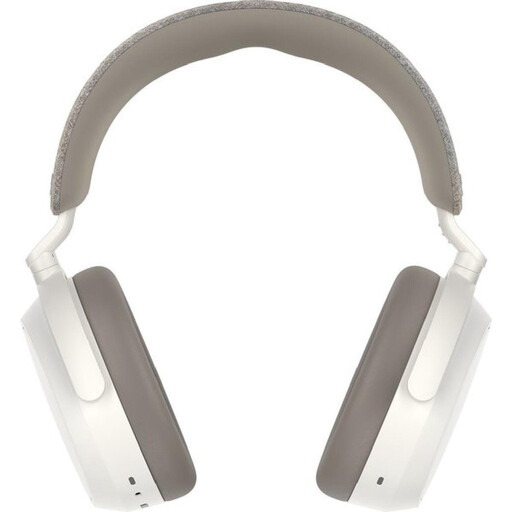 No image available
Check that wired listening and the connection suit your monitoring setup; the product name doesn’t confirm that these headphones are tuned for studio use.
Wireless over-ear headphones with noise cancelling, according to the product name.
The product name lists 60 hours of battery life and fast charging.
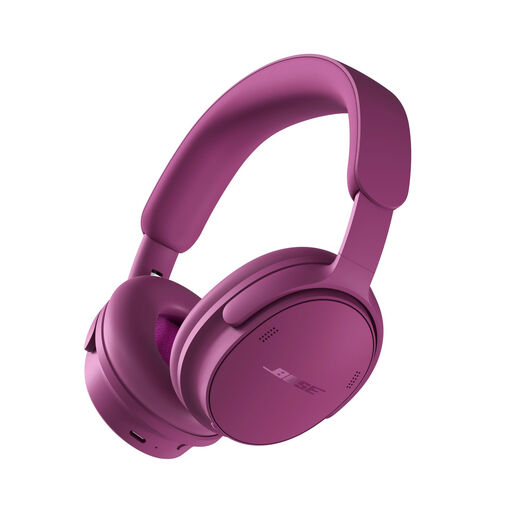 No image available
The product information lists wired USB audio; check that this connection works with your audio interface and listening needs.
Over-ear headphones; the product name lists the colour Rosewood Mauve.
 No image available
The product information lists a closed-back design and wired audio via USB-C and 3.5mm; check which connection your workspace requires.
The product name describes an over-ear Bluetooth headset.
 No image available
Before buying, check that the wired connection and listening mode you need are suitable for your mixing work; the product name describes wireless headphones.
The product name lists noise cancelling and the colour Silver.
 No image available
The product information lists a closed-back design and a detachable cable with USB-C and 3.5mm connections; check which one works with your equipment.
Over-ear headphones; the product name lists the colour Black.
Only if the sound leakage won’t bother them and the room stays quiet enough for you to assess your mix. Open-back models let sound through and block very little background noise; closed-back headphones are a more obvious choice if you’re in the room together.
No. Sennheiser says an amplifier isn’t essential. The HD 560S has an impedance of 120 ohms; try your own audio output to see whether it delivers enough volume for comfortable listening.
Listen at a low volume, take regular breaks and don’t turn the sound up to drown out room noise. The World Health Organization gives the example of a maximum of 40 hours a week at an average of 80 dB; at higher levels, safe listening time is shorter. This is listening advice, not a measurement of any of these headphones.
For online consumer purchases, you generally have a 14-day cooling-off period, according to the Dutch government; exceptions and the terms of the specific purchase matter. Products are also covered by the statutory guarantee, but the Netherlands has no fixed statutory guarantee period. If there’s a problem, contact the seller.