
Mixer in a quiet home studio
Wants to assess balance and positioning in a quiet room, and can also check the mix on other playback systems.


For mix checks at a sit-stand desk, open-back studio headphones are best suited to a quiet room; in a shared or noisy space, closed-back headphones make more sense if you need isolation. Check the fit, cable routing and connection with the desk at its highest setting, and check important decisions on speakers or another playback system too. Sonarworks explains that headphones reproduce stereo imaging differently from speakers.
Wants to assess balance and positioning in a quiet room, and can also check the mix on other playback systems.
Needs to take background noise or other people in the same room into account when checking a mix, so compares closed-back models and their fit.
Changes position at a sit-stand desk and wants the headphones, cable and connection to remain practical as they move.
Best for: checking mixes in a quiet room, when sound leakage won’t disturb anyone else.
Bear in mind: an open-back design won’t block out background noise. Check important mix decisions on other playback systems too.
Best for: a shared or noisy space, or when you also monitor recordings.
Bear in mind: fit affects isolation; a closed-back design doesn’t prove that a model will reproduce your mix more neutrally.
Best for: anyone who wants to compare an option between the two and can assess it in their own workspace.
Bear in mind: the label alone doesn’t tell you how much background noise gets through or how the mix will sound.
| What to consider | What to look for | Who is this important for? |
|---|---|---|
| How the mix translates to other playback systems | Compare familiar reference tracks and listen to your mix on speakers or another playback system too. | I mainly want to know whether my mix holds up beyond my headphones; around 36% of consumers prioritise how their mix translates. |
| Background noise and sound leakage | Consider whether you work alone or share the room; compare open-back and closed-back models in similar surroundings. | If I work in a shared space, I want to account for background noise without unnecessarily disturbing others; around 29% of consumers prioritise isolation. |
| Fit and cable routing | Measure the cable route with the desk at its highest setting and assess the fit both sitting and standing. | I want to change position without the cable or fit getting in the way; around 21% of consumers prioritise freedom of movement. |
| Replaceable parts | Check which parts are available for the exact model and version, and review the service terms. | If parts wear out, I want to know what can be replaced and who to contact; around 14% of consumers prioritise maintainability. |
Headphones and speakers reproduce stereo differently. A decision based on one playback system may therefore sound different on another.
Compare a familiar track and check important balance and stereo decisions on another playback system too before you finalise your mix.
When the desk rises, the distance to the audio output may change and the cable could cross your walking route.
Measure the cable route with the desk at its highest setting, and check the length, plug and contents of the exact version.
The Dutch government describes a manufacturer’s warranty as an additional benefit and says you should contact the seller if a product is faulty.
Keep your proof of purchase and check the terms of any manufacturer’s warranty alongside your statutory rights.
The open-back DT 900 PRO X is worth comparing for critical mix checks in a quiet room.
The open-back HD 490 PRO is designed for producing, mixing and mastering.
The open-back K702 is worth comparing for critical listening in a suitable, quiet room.
The closed-back ATH-M50x is worth comparing when isolation matters for checking a mix.
These Joybuy products offer a wired listening option or are described for office and call centre use; check whether each model suits your mix set-up.
 No image available
A wired listening option may be useful if you want to connect your headphones to your audio set-up; check that the connection is compatible with your equipment.
The product information lists a 42 mm transducer system, adjustable EQ and a 3.5mm audio cable.
 No image available
The listed wired and wireless listening options give you ways to connect the headphones and test them with your own equipment.
The product information lists Bluetooth, active noise cancellation and a detachable cable with USB-C and 3.5mm connections.
 No image available
The listed wired listening option may suit an audio set-up; check that the connection works with your own equipment.
The product information lists Bluetooth, active noise cancellation and lossless audio via USB.
 No image available
A wired listening option may be useful if you want to connect headphones to your audio output; check the fit and connection with your own set-up.
The product information lists Bluetooth, active noise cancellation and an audio cable for wired use.
 No image available
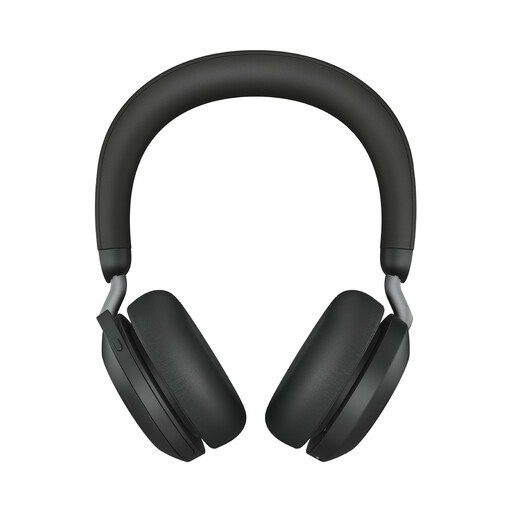
This model is described as a headset for office and call centre use; before using it for mix checks, make sure it suits your listening set-up.
The product information lists connection to two devices, adjustable ANC and eight microphones.
No. Check important balance and stereo decisions on other playback systems too, and use familiar reference material. Sonarworks explains why stereo is perceived differently through headphones than through speakers.
Check the cable route with the desk at its highest setting, check your device’s output and keep the cable out of your walking route. beyerdynamic lists a detachable 1.8 m or 3 m cable, a 3.5mm plug and a 6.35mm adapter for the DT 900 PRO X; check what’s included with the version you’re buying.
The World Health Organization recommends keeping the volume down, taking breaks and being mindful of how long you listen. This is general health advice, not a measurement of your headphones’ output level.
When you buy online from a business, you’re often entitled to a 14-day cooling-off period; check which terms apply to your purchase. The Dutch government also states that you should contact the seller if a product is faulty, and that there is no fixed statutory warranty period in the Netherlands.