
Mix reviewer in a quiet room
You mainly listen for balance and stereo placement, so isolation isn’t your priority. Compare open-back models and check the mix on other playback systems too.


For checking mixes in a quiet room, open-back wired studio headphones are a sensible first option to compare. Choose a closed-back model if you also record with a microphone or need isolation. Check the fit and connection with your own equipment, and listen to the mix on other speakers or headphones too, as stereo is presented differently through headphones than through speakers.
You mainly listen for balance and stereo placement, so isolation isn’t your priority. Compare open-back models and check the mix on other playback systems too.
You listen for extended periods and want to consider fit, ear pads and a sensible listening level, rather than relying on sound descriptions alone.
You may want to use the same headphones when recording with a microphone. In that case, isolation and reduced sound leakage may matter more than an open-back design.
A good fit when: the room is quiet and you mainly want to assess mix balance and stereo imaging.
Bear in mind: they offer little isolation when recording or dealing with ambient noise.
A good fit when: you also record with a microphone, want to limit what others can hear, or outside noise interferes with your listening.
Bear in mind: the manufacturer describes the closed-back DT 700 PRO X as having a more compact stereo image than the open-back DT 900 PRO X. So check your mix on another listening setup too.
A good fit when: you have checked the sound leakage and suitability of the specific model for your mix work.
Bear in mind: the design alone doesn’t prove that a model offers a suitable middle ground.
First decide whether you mainly need to check mixes or also need isolation for recording. Then compare the connection, fit and performance with your own audio output.
| What to consider | What to look for | Who it matters to |
|---|---|---|
| Mix balance and stereo | Compare familiar reference tracks and your mix at the same listening level, then check them on another playback system. | If you mainly assess balance and stereo placement in a quiet room, the way the headphones present sound matters a great deal. Around 36% of consumers prioritise checking mixes. |
| Comfort | Check the fit, including with glasses if you wear them, and see whether the ear pads are replaceable. | For longer listening sessions, you’ll want to consider pressure and warmth instead of relying solely on claims about weight or comfort. Around 29% of consumers prioritise long-term comfort. |
| Connection | Check the headphone output, plug and achievable listening level with your own equipment. | If you want to connect the headphones to your existing computer or audio interface, check the full setup before buying accessories. Around 21% of consumers prioritise source compatibility. |
| Isolation | Consider whether you record with a microphone or whether sound leakage could disturb others. | If you also record as well as checking mixes, isolation may matter more than an open-back design. Around 14% of consumers prioritise isolation. |
Stereo sounds different through headphones than it does through speakers. A stated frequency range alone won’t tell you how your mix will sound on other systems.
Compare your mix with familiar recordings, then check it on another playback system.
An open-back design offers little isolation. That can be inconvenient when recording with a microphone or if sound leakage might disturb others.
Decide in advance whether you’ll also be recording and whether the room is quiet enough. If you need isolation while recording, you may need a different model.
Impedance alone doesn’t tell you whether your output can drive the headphones to a usable listening level.
Check your equipment’s connection and output, and, if possible, try the combination at a sensible listening level.
The DT 900 PRO X is open-back, while the DT 700 PRO X is closed-back. These models offer different trade-offs for critical listening and recording.
The open-back HD 490 PRO is designed for production, mixing and mastering, and comes with separate mixing and producing ear pads.
AKG describes the open-back K702 as suitable for uses including studio mixing.
Audio-Technica describes the open-back ATH-R70x as a model for critical listening and mixing.
The Joybuy selection below consists of over-ear headphones with features for wired listening or noise reduction. That doesn’t automatically make them studio headphones for checking mixes, so pay particular attention to the closed-back design, connection and intended use.
 No image available
The closed-back design and noise cancellation make these more suited to listening with noise reduction than to open-back studio use.
The product description lists a 3.5mm audio cable and passive use without a battery; the product name states a 60-hour battery life.
 No image available
The product description mentions an audio cable for listening without a battery; check that the connection suits your source for checking mixes.
The product name mentions Bluetooth.
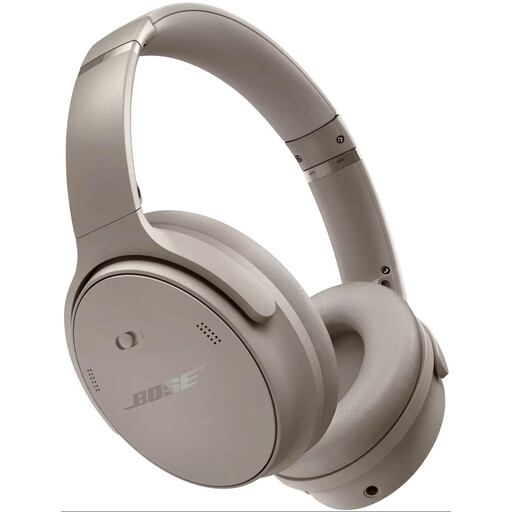 No image available
This model is described as wireless, with Bluetooth and active noise cancellation according to the product description.
Before using them to check mixes, make sure the connection options and closed-back design suit the way you work.
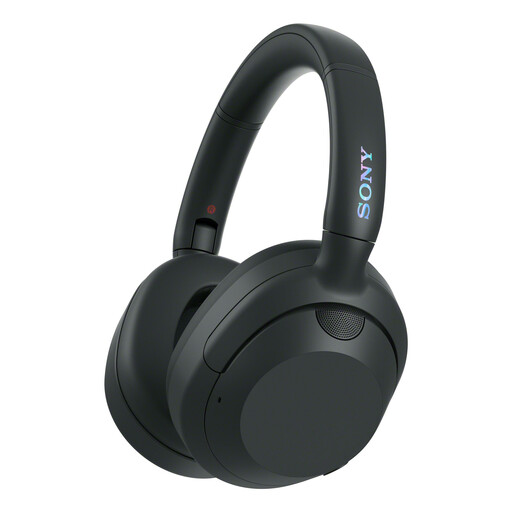 No image available
For wired listening, the product description lists a 3.5mm connection and a 120 cm cable.
The product name mentions noise cancellation. Check that the connection and closed-back design suit your mix work.
 No image available
The product description mentions active noise cancellation and a detachable cable with a 3.5mm connection.
Check that the connection suits your audio output; these features don’t automatically make the model suitable for checking mixes.
You can make mixing decisions with headphones, but check the result on speakers or another familiar playback system too. Sonarworks explains that the left and right channels reach your ears differently through headphones than through speakers, which affects how you assess stereo.
First check that your device has a suitable analogue headphone output. According to AKG, the K702 has a 3.5mm plug with a 6.3mm adapter; beyerdynamic lists a 3.5mm plug with a 6.35mm adapter for the DT 700 PRO X. Check the connection for the complete model you choose.
Don’t buy one based on the impedance figure alone. Check the specifications of your existing output and see whether the combination works at a sensible listening level. For example, Audio-Technica lists an impedance of 470 Ω for the ATH-R70x.
When you buy from a business at a distance, you’ll often have a 14-day cooling-off period; terms and exceptions may apply. You’re also entitled to a product that meets acceptable standards. According to the Dutch government, there’s no fixed statutory warranty period in the Netherlands, and the seller is your point of contact if there’s a fault.
Keep the volume down and take the length of your listening sessions into account. The World Health Organization gives a maximum of 40 hours per week at an average of 80 dB as an example; at higher sound levels, listening time should be shorter. This isn’t a product specification, and you can’t work it out directly from a fixed volume control setting.