What should you look for?
Closed-back headphones
Choose these if: you work at a shared or noisy desk, or want less sound to escape into the room.
Bear in mind: isolation and fit vary between models and users. Also check that the cable and connection suit your workspace.
Open-back headphones
Choose these if: you want to judge instrument placement and relative levels in a quiet room, and sound leakage is not a concern.
Bear in mind: open-back designs leak sound and do little to block out background noise, as RTINGS.com explains.
Semi-open headphones
Choose these if: you want to compare a semi-open design in a relatively quiet room.
Bear in mind: do not assume a particular level of isolation. Check how much sound leaks in your room, and consider where a long cable will run.
When editing instrumental loops at a small desk, one buying priority may be decisive: mix detail, isolation, your workspace layout or comfort during longer sessions.
| What matters |
What to look for |
Who is this for? |
| Editing detail and tonal balance |
Compare familiar recordings and your own loops using the same source; listen on a second playback system too. |
I want to judge subtle differences between instrument layers and not rely solely on a frequency range; around 33% of consumers in this situation give editing detail top priority. |
| Isolation and sound leakage |
Compare open-back, semi-open and closed-back designs, and check the seal on your own head. |
If I want to disturb others less or limit distractions, I pay attention to fit and design; around 27% of consumers in this situation prioritise isolation. |
| Cables and storage |
Check the cable length, plug, supplied adapters and cable route around your desk; also see whether the model folds. |
I want to keep the cable away from my controls and store the headphones compactly; around 20% of consumers in this situation give desk layout top priority. |
| Comfort and maintenance |
Try the fit, including with glasses if relevant, and check whether the pads for the exact model can be replaced. |
During longer editing sessions, I want a fit that stays comfortable for me and to know what maintenance options are available; around 20% of consumers in this situation prioritise long-term comfort. |
Related headphones at Joybuy
These headphones and headsets are relevant when choosing headphones for a small desk. For each model, check that the connection and features suit your editing source and workflow.
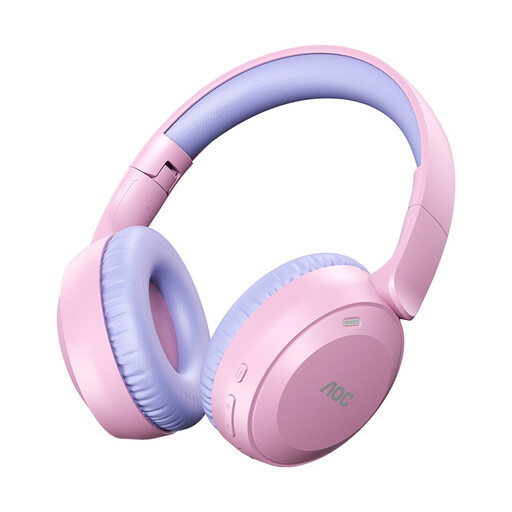 Image unavailable
AOC ACH2611 wireless headphones
The foldable design may be useful if you want to store the headphones compactly. Check whether wireless use suits your editing source.
Bluetooth 6.0; stated playback time 75 hours; foldable; 182 g; USB-C charging.
View at Joybuy
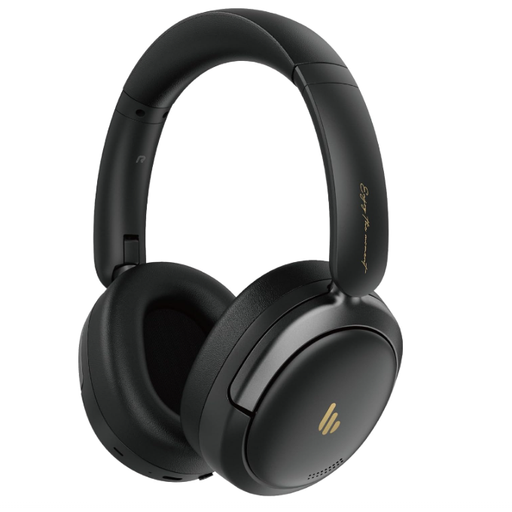 Image unavailable
Edifier Atom Max, black
If you want to listen wirelessly and storage matters, check that this headset is compatible with your editing source.
Bluetooth 5.4; hybrid active noise cancellation; foldable; stated playback time 45 hours.
View at Joybuy
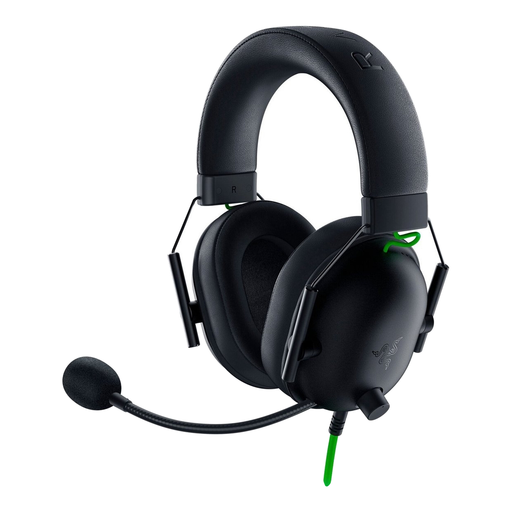 Image unavailable
Razer BlackShark V2 X 7.1, wired, black
The product name describes this as a wired gaming headset. Check that the connection works with your computer or audio interface.
Wired; 7.1; gaming headset.
View at Joybuy
 Image unavailable
Sony PlayStation INZONE H9 II, white
If you want to listen wirelessly, check which connections are available with your editing source and whether they suit your workflow.
Wireless headset with noise cancellation.
View at Joybuy
 Image unavailable
Bose QuietComfort Ultra Headphones (2nd Gen), black
Before choosing this model for editing, check that the supplied or detachable connection works with your audio source.
The product name lists active noise cancellation and a detachable cable with USB-C and 3.5mm connections. Contains magnets; consult a doctor if you have a medical implant.
View at Joybuy
Frequently asked questions
Should I choose open-back or closed-back headphones for loops?
It mainly depends on your room: closed-back headphones are generally a better fit if you want isolation or less sound leakage, while open-back headphones are mainly an option for a quiet room. Before buying, also check the cable, plug and connection to your audio source.
How can I listen safely during repeated editing?
The World Health Organization recommends keeping the volume low and taking listening breaks. As an example, it advises a maximum of 40 hours per week at an average of 80 dB, and four hours per week at 90 dB. This is health advice, not a product specification or a Dutch legal volume limit.
What should I know about wear, repairs and the guarantee?
Before choosing a model, check whether replacement parts are available and what terms and conditions apply. The Dutch government states that there is no fixed statutory guarantee period in the Netherlands. If a product is faulty, you can ask the seller for an appropriate solution. Normal wear and tear or damage you cause yourself does not automatically entitle you to a free repair.
Are there rules for online purchases and CE marking?
When you buy online as a consumer from a business, you generally have a 14-day cooling-off period, subject to exceptions explained by the Dutch government. Purchases from private individuals are not automatically covered by the same rules. According to the European Union, CE marking is only mandatory if the specific product variant falls under EU rules that require it. So do not assume that a product needs a CE mark simply because it is called ‘headphones’.


