
Listener at a shared study table
You want to hear mix adjustments without disturbing other library visitors with sound leakage. A closed-back design and how well it seals at normal listening volume are therefore important considerations.


For making mix adjustments at a shared, quiet library table, a well-fitting pair of wired, closed-back headphones is a sensible starting point. Sound On Sound explains that a closed-back design can help reduce sound leakage, but check this with your fit and normal listening volume. Then compare the same familiar passage on the models you’re considering, paying attention to sound, comfort and connectivity. Open-back headphones are mainly an option if sound escaping to others and noise from your surroundings won’t be a problem.
You want to hear mix adjustments without disturbing other library visitors with sound leakage. A closed-back design and how well it seals at normal listening volume are therefore important considerations.
You compare small edits in a familiar recording and want to avoid mistaking the headphones’ own sound for a change in the mix.
You listen for extended periods through a portable device and weigh up the fit, cable, plug and whether that version is suitable for your device’s output.
Sound On Sound explains that a closed-back design can help reduce sound leakage, but only a check at your normal listening volume will show how audible your headphones are to people nearby.
Choose this if: you listen around other library visitors and want to reduce sound leakage.
Trade-off: the design alone doesn’t tell you how much sound your headphones leak with your fit and listening volume.
Choose this if: you listen somewhere where sound escaping won’t be a problem.
Trade-off: an open-back design lets sound escape more easily and lets more ambient noise in.
| What to consider | What to look for | Who should pay extra attention? |
|---|---|---|
| Sound leakage | Check how well the ear pads seal, and ask someone nearby to listen while you use your usual volume. | I listen at a shared table and don’t want to disturb others. Around 31% of consumers put minimal sound leakage at the top of their list. |
| Assessing mix adjustments | Compare the same familiar passage at the same volume; a manufacturer’s claim about sound isn’t an independent ranking of the models. | I want to hear small edits without mistaking the headphones’ own sound for a change in the mix. Around 31% of consumers also prioritise mix detail above all else. |
| Long-term comfort | Assess pressure, warmth and how the ear pads fit; the stated weight doesn’t tell you how the headphones will feel on your head. | I listen for extended periods and want the fit to stay comfortable, even when I’m wearing glasses. Around 23% of consumers put comfort first. |
| Connectivity and use on the go | Check the plug, any adapter you may need and the cable; compare the impedance and sensitivity with your device’s output. | I listen through a laptop or portable device and want to know whether the connection will work in practice. Around 15% of consumers put connectivity and portability first. |
A closed-back design can help reduce sound leakage, but it doesn’t tell you how much sound your pair will let through with your fit and volume.
Check how the ear pads fit and ask someone nearby to listen while you use your usual volume.
beyerdynamic offers 32-, 80- and 250-ohm versions for different intended sources. Impedance alone doesn’t tell you whether your setup will be loud enough.
Before you buy, compare the full version name with the output on your laptop or audio interface.
You may need a different version or additional equipment if your chosen combination isn’t suited to your source.
Open-back headphones let sound escape more easily, which may disturb other library visitors.
Save an open-back model for somewhere where sound leakage won’t be an issue, and compare closed-back models first for library use.
ACM ConsuWijzer distinguishes between your statutory rights and a warranty offered by the manufacturer or retailer.
Keep your proof of purchase and contact the retailer if the product is faulty.
The closed-back DT 770 PRO is worth considering if you want to compare versions designed for different playback sources.
The closed-back ATH-M50x is a wired option with a detachable cable.
The closed-back HD 280 PRO is an option to compare if isolation and replaceable ear pads matter to you.
The closed-back K371 is designed for those who want to compare a foldable design with a detachable cable.
The MDR-7506 is a closed-back monitor model you can compare with others.
The PRO 4000 is another option to compare if you’re considering closed-back over-ear headphones.
This selection includes over-ear headphones for listening. The product titles don’t describe them as studio headphones, so check the sound, fit, connection and how audible they are to people nearby before using them to check mixes.
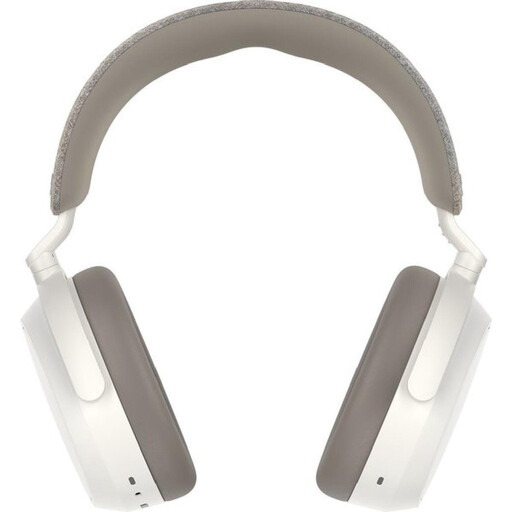 No image available
A wireless over-ear option if you’d rather not have a cable trailing across your workspace; check the sound and leakage yourself before using them for mixing.
The product title lists noise cancelling and a 60-hour battery life.
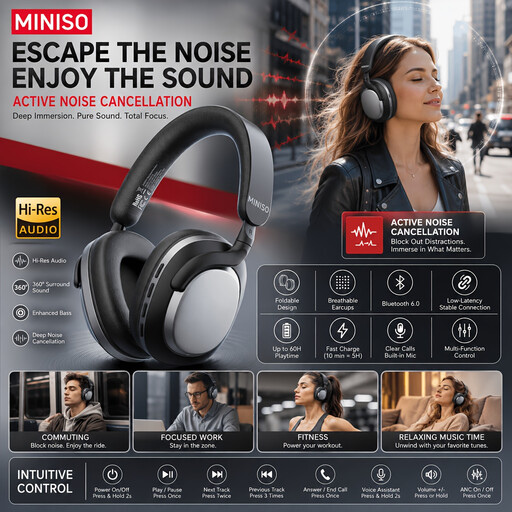 No image available
Wireless over-ear headphones to consider if you want to listen without a cable; check for yourself whether the fit and sound suit your mixing work.
The product title lists noise cancelling and a 24-hour battery life.
 No image available
If you’re considering this model for library use, first check the connection and whether people nearby can hear it at your normal listening volume.
 No image available
The product title describes these as Bluetooth headphones with noise cancelling; check that the connection options suit your listening setup and test sound leakage for yourself.
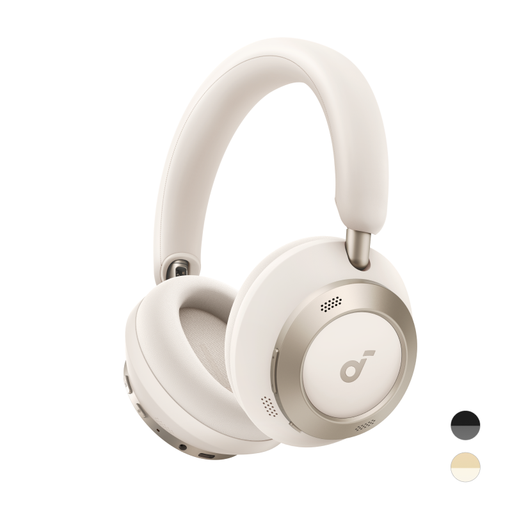 No image available
A wireless option if you want to listen without a cable; check for yourself how the sound and fit work for you when mixing.
The product title lists noise cancelling, a foldable design, a 60-hour battery life and LDAC audio.
For a shared, quiet space, closed-back headphones are generally the more sensible option to compare first, as an open-back design lets sound escape more easily. Check whether people nearby can hear it at your normal listening volume.
Not necessarily. Check the connection and assess the exact headphone version alongside your laptop’s output. beyerdynamic offers the DT 770 PRO in 32-, 80- and 250-ohm versions, among others; Focusrite cautions that impedance alone doesn’t determine whether a combination will be loud enough.
It varies by model. Sennheiser lists replaceable ear pads for the HD 280 PRO, and Shure lists replacement ear pads for the SRH840A. Check which parts fit and are available for the exact version you’re considering.
According to ACM ConsuWijzer, for a typical online consumer purchase you generally have a cooling-off period of up to 14 days after delivery, with some exceptions. You also have statutory rights if a product used normally doesn’t meet the standard you could reasonably expect; a manufacturer’s warranty doesn’t replace those rights.
Don’t automatically turn the volume up: according to the World Health Organization, the risk to your hearing depends on both the sound level and how long you listen. The organisation gives 80 dB for up to 40 hours per week as an example; this is health guidance, not a legal volume limit for a library in the Netherlands.