
Listening alongside other library users
You want to replay a solo without unnecessarily disturbing people at nearby tables. So consider the fit and how much sound can be heard outside the ear cups.


In a shared, quiet space, start with well-fitting closed-back headphones and listen at a modest volume. According to VeiligheidNL, sound leakage depends partly on how the headphones fit, while open-back models generally let more sound escape, according to RTINGS.com. Then check that the connection and cable suit your playback device, and compare the sound with a recording you know: the ‘studio’ label doesn’t guarantee that you’ll be able to pick out every guitar note in a mix.
You want to replay a solo without unnecessarily disturbing people at nearby tables. So consider the fit and how much sound can be heard outside the ear cups.
You’re listening again to the phrasing and notes in an existing recording. Compare models using the same passage; slowing it down without changing the pitch is a separate feature offered by suitable playback software.
You’ll be sitting at a table for a while, so you want the fit, plug and cable length to work well with your laptop or portable device.
First, consider sound leakage and fit when listening around other people. Then compare the sound of a recording you know, and check that the connection and cable are practical for your playback device.
| What to consider | What to look for | Who is this important for? |
|---|---|---|
| Sound leakage | Compare open-back and closed-back models, and check whether someone nearby can hear your music at a modest listening volume. | If I’m listening at a shared library table, I want to avoid disturbing others with my music. Around 36% of consumers prioritise reducing sound leakage. |
| Comparing guitar passages | Listen to the same recording on the same device; use separate software to slow down a passage if needed. | If I’m trying to hear small differences in a short passage, I want to compare models using the same recording. Around 29% of consumers prioritise how passages sound. |
| Fit for repeated listening | Consider pressure and how well the headphones seal; if possible, try them on with your glasses and check whether the ear cushions are replaceable. | For longer listening sessions, I want headphones that fit comfortably and sit securely. Around 21% of consumers put wearing comfort first. |
| Connection and cable | Check your device’s output, whether you need an adapter, and whether the cable is manageable at the table. | If I’m using my laptop or portable device, I want to make sure the plug and cable are compatible. Around 14% of consumers prioritise device compatibility. |
A recommendation for mixing or listening in your own space doesn’t automatically mean the headphones are suitable alongside other library users. Open-back models generally let more sound escape.
For use in a shared, quiet space, start by considering the fit and how well the headphones limit sound leakage. Consider an open-back model mainly for somewhere that sound escaping is less of a concern.
beyerdynamic offers 32, 80 and 250 ohm versions for different types of audio source. So the model name alone doesn’t tell you which version will suit your device.
Before choosing a model, check the full version name and your device’s output.
According to the World Health Organization, sound level, duration and frequency of exposure all contribute to the risk to your hearing. Listening louder also doesn’t guarantee that details in a densely mixed recording will become clearer.
Listen at a modest volume, take breaks and replay short passages. Use suitable software if you want to slow down a recording.
The K371 is a closed-back, foldable model to compare if you’ll be carrying your headphones with you.
The closed-back ATH-M40x is a wired model to compare if detachable cables are important to you.
The closed-back DT 770 PRO comes in different impedance versions; compare the version with your playback source.
The closed-back HD 280 PRO and HD 480 PRO are different models you can compare for fit and cable design.
The MDR-7506 is a foldable professional model to include in your comparison.
The Joybuy products below are headphones you can compare against the factors to consider for library use. Check the fit, connection and sound with your own recording.
 No image available
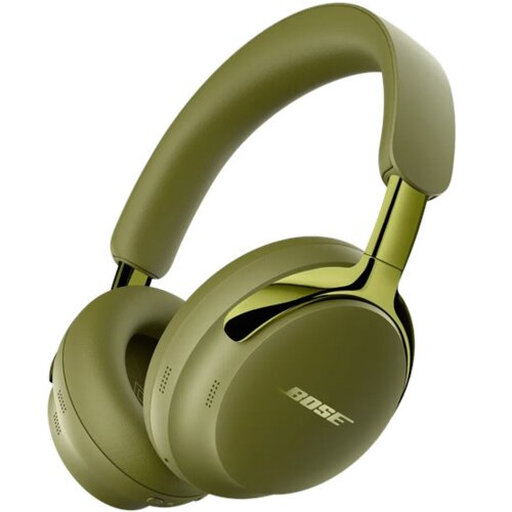
An over-ear model to compare with a recording you know; check for yourself whether the fit is suitable for listening in a shared space.
The product name specifies wireless use and noise cancelling.
 No image available
Compare the fit and sound with a passage you know well before choosing this model for repeated listening.
 No image available
An option to consider when listening alongside other people; check for yourself whether the fit limits sound leakage enough.
The product name specifies Bluetooth and noise cancelling.
 No image available
Compare the fit and sound with a recording you know, and check that the connection works with your listening set-up.
The product name specifies an over-ear Bluetooth headset.
 No image available
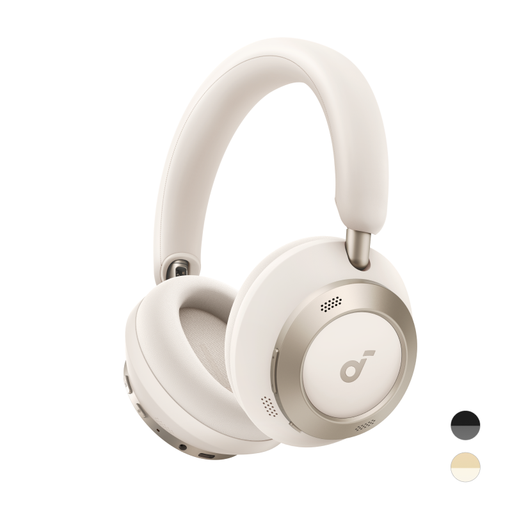
If you’re taking your headphones with you, compare this model’s fit and sound with a recording you know well.
The product name specifies wireless use, active noise cancellation and a foldable design.
No, a product description doesn’t prove that you’ll be able to pick out every note in your recording. Compare the same short passage on the models you’re considering. With a suitable audio file, Audacity’s Change Tempo feature can adjust the tempo and playback duration without changing the pitch.
First, check the output on your playback device and compare it with the plug on the exact version you’re considering. According to Audio-Technica, the ATH-M40x has a 3.5mm plug; for models available in different versions, don’t rely on the product family name alone.
Start at a modest volume, take regular breaks and don’t turn the volume up to force out details. The World Health Organization emphasises that sound level, duration and frequency of exposure all matter; the position of a volume slider doesn’t measure the sound level at your ear.
Check whether replacement ear cushions are available for the exact model. According to the Dutch government, there is no fixed statutory warranty period in the Netherlands; if a product is faulty, the solution depends on the circumstances. Normal wear and tear or damage caused by your own actions doesn’t automatically entitle you to a free repair.
For a distance purchase, you generally have a 14-day cooling-off period, but not every purchase is covered by this scheme. The Dutch government advises checking the seller’s information for your specific order.