
Quiet harmony listener
You want to listen to a part repeatedly without the recording being audible to people nearby. A good fit and minimal sound leakage are top priorities.


For listening back quietly, a well-fitting pair of closed-back over-ear headphones is a good place to start. According to VeiligheidNL, a good fit can help limit sound leakage, but it doesn’t guarantee that nobody else will hear anything. Also check that the plug and cable are compatible with your playback device, and listen at a low volume to make sure you can follow the harmony line clearly. Headphones don’t make singing aloud appropriate in a quiet zone; Leiden University Libraries prohibits conversations in study rooms designated as quiet zones.
You want to listen to a part repeatedly without the recording being audible to people nearby. A good fit and minimal sound leakage are top priorities.
You take a laptop or another playback device with you and want to check in advance that the plug, cable and exact headphone model are compatible.
You listen for extended periods and want to be able to try on and carry your headphones, rather than assuming from a product specification how comfortable they’ll be for you.
Start by checking the fit around your ears and the connection to your device. Then listen for yourself to see whether you can follow the harmony line clearly at a low volume.
| What to consider | What to look for | Who is this important for? |
|---|---|---|
| Sound leakage and fit | Try on the headphones and assess sound leakage at the volume you intend to use. | I want to listen in a quiet reading area without disturbing others, so a good fit matters to me. Around 33% of consumers prioritise minimal sound leakage. |
| Following the harmony line | If possible, listen to your own recording at a moderate volume. | I want to be able to pick out my own harmony line in the recording so I can listen back to it. Around 27% of consumers prioritise being able to follow the vocal part. |
| Connection and cable | Check that the plug and cable on the exact model are compatible with your device’s output. | I connect to my own laptop or player and don’t want to discover at the table that the plug or cable isn’t compatible. Around 20% of consumers prioritise compatibility with their playback device. |
| Comfort and portability | Try on the headphones, with your glasses if needed, and consider how you plan to carry them. | For longer listening sessions, I want to try them on first and find out how easy they are to carry. Around 20% of consumers prioritise comfort and portability. |
Headphones don’t muffle your own voice. Rules can vary from one space to another: the study rooms at Leiden University Libraries are quiet zones where conversations aren’t allowed.
Use the library to listen back quietly, and check the rules at your own branch before practising aloud anywhere.
The beyerdynamic DT 770 PRO is available in 32, 80 and 250 ohm versions. beyerdynamic matches these versions to different sources and uses.
Before buying, check the full model specification and compare it with the output of your playback device.
Sennheiser states that the HD 280 PRO can reduce ambient noise by up to 32 dB. This isn’t a guarantee for every fit in a library, nor does it measure how much sound other people can hear.
Try on the headphones and assess sound leakage at the volume you actually intend to use.
The closed-back ATH-M20x is a wired entry-level model, while the closed-back ATH-M50x has a foldable design.
The closed-back DT 770 PRO could be a good choice if you select the version to suit your playback source.
The closed-back, foldable K361 is an option to take with you.
According to Sennheiser, the HD 280 PRO combines a closed-back design with a foldable construction.
The MDR-7506 is a closed-back, foldable professional headphone.
Here are Joybuy headphones suited to this listening scenario. Check whether each model’s connection is compatible with your device; noise cancellation alone doesn’t prove that people nearby won’t hear anything.
 No image available
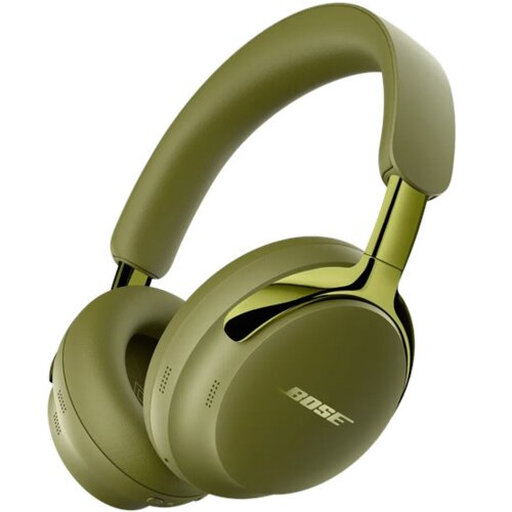
For anyone considering a wireless over-ear model; check that the connection and fit work for your listening setup. The product name states a battery life of 60 hours.
 No image available
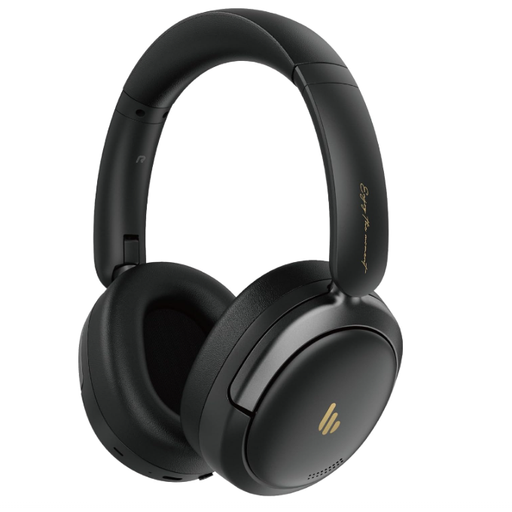
An option to take with you; before buying, check that the fit and connection method suit your needs. Noise cancellation alone doesn’t tell you whether sound will leak out to other people.
 No image available
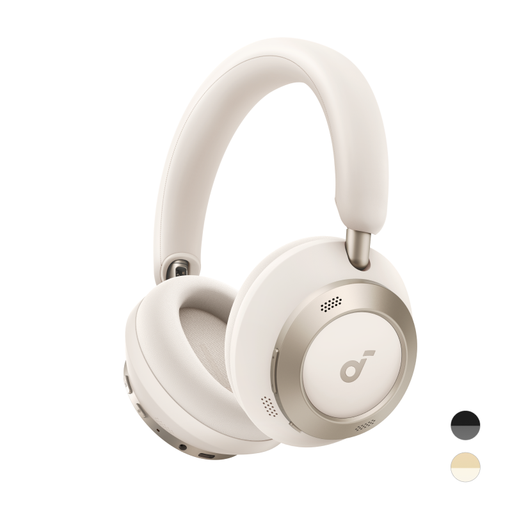
The product name describes a foldable over-ear headset, making it suitable for anyone who wants to take their headphones with them. Check which connection is available for your playback device.
 No image available
For anyone looking for a wireless model to take with them; check that the connection is compatible with your playback device. The product name describes these as wireless headphones.
 No image available
A second colour option for this model. Check that the connection method is compatible with your device, and assess the fit for a longer listening session.
Don’t assume you can: headphones muffle the recording for people nearby, not your own voice. The study rooms at Leiden University Libraries are quiet zones where conversations aren’t allowed; other areas may have different rules. Check the rules at your branch and practise aloud somewhere suitable.
Not necessarily. First, check your device’s output and the exact version of the headphones. beyerdynamic says the 32 ohm DT 770 PRO is suitable for portable players, among other devices, and pairs the 250 ohm version with stationary sources.
Start at a low volume and don’t turn it up just to drown out background noise. VeiligheidNL explains that a good fit can help you listen at a lower volume.
Check whether replacement ear pads are available for your exact model. According to ACM ConsuWijzer, if a product is faulty despite normal use, the seller must put it right free of charge, for example by repairing or replacing it, or refunding you.
For online purchases, ACM ConsuWijzer says you generally have a statutory 14-day cooling-off period from delivery, although there are exceptions. Before ordering, check the conditions for unpacking and trying the headphones.