
Listener in a quiet reading room
You compare recordings alongside other visitors and mainly want to make sure they can’t hear your music.


For comparing orchestral recordings in a shared, quiet library, a well-fitting pair of closed-back studio headphones is usually the more practical choice, as open-back models let sound leak out. An open-back model may suit you if you want to assess the sense of space and sound leakage won’t disturb anyone. Either way, compare the same familiar passages at a modest volume, and consider fit and connectivity too.
You compare recordings alongside other visitors and mainly want to make sure they can’t hear your music.
You focus on differences between performances and recordings, and want to listen to them on your own playback device at a modest volume.
You listen for extended periods, so fit, cable and maintenance all factor into your choice.
Sound leakage matters in a shared, quiet space: RTINGS.com and beyerdynamic explain that open-back headphones let sound out, while a closed-back design generally leaks less. The percentages below show which buying priority comes first for consumers in this situation.
| What to consider | What should you check? | Who is this more important for? |
|---|---|---|
| Sound leakage and isolation | Check the design and fit, and assess the seal on your own head at your usual listening volume. | If you listen alongside other visitors, you’ll want to avoid disturbing them with your music. Around 36% of consumers give sound leakage top priority. |
| Differences between recordings | If possible, compare the same familiar passages on the models you’re considering, at a similar, modest volume. | If you’re comparing performances and recordings, you’ll want to judge the differences for yourself rather than relying on descriptions of the sound alone. Around 29% of consumers put this comparison first. |
| Comfort | If possible, wear the headphones for an extended period and check whether the ear pads can be replaced. | For longer listening sessions, you’ll want a fit that stays comfortable. Specifications alone can’t tell you how the headphones will feel on your head. Around 21% of consumers say long-term comfort is their main consideration. |
| Connectivity and maintenance | Check your player’s output, the plug or adapter you need, and which cables and ear pads can be replaced for the exact model. | If you use a specific player or want to be able to replace parts, the connectivity and accessories need to suit your needs. Around 14% of consumers prioritise compatibility and maintenance. |
An open-back design lets sound out and does little to block ambient noise. In a shared, quiet space, this can disturb other visitors.
Choose based on where you’ll actually be listening, and save an open-back model for somewhere its sound leakage won’t bother anyone.
A manufacturer’s description or stated frequency range is not, on its own, an independent comparison of how different recordings sound.
Compare the same familiar passages at a modest volume, and assess the seal and fit too.
Wired models can differ in their cables and adapters, and comfort and isolation also depend on the fit.
Check your player’s connection and the accessories included. If possible, try the headphones on before you decide.
The DT 700 PRO X and DT 900 PRO X illustrate the choice between a closed-back and an open-back design.
The closed-back ATH-M50x is a wired, foldable model.
AKG describes the closed-back, foldable K371 as a model for monitoring and on-the-go use.
The MDR-M1 is a closed-back monitoring model, while the MDR-MV1 is an open-back alternative.
The closed-back HD 280 PRO and HD 480 PRO are wired models you can compare for fit, accessories and more.
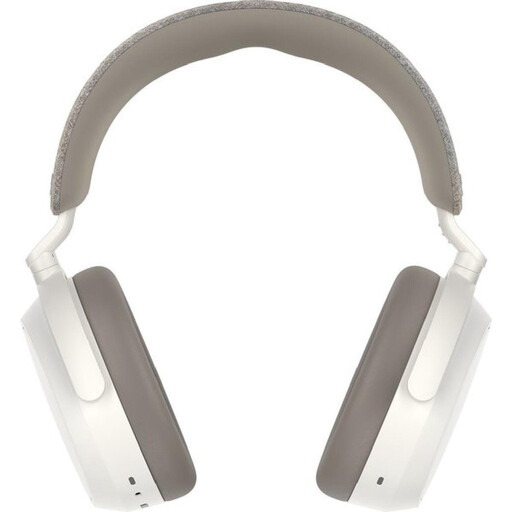
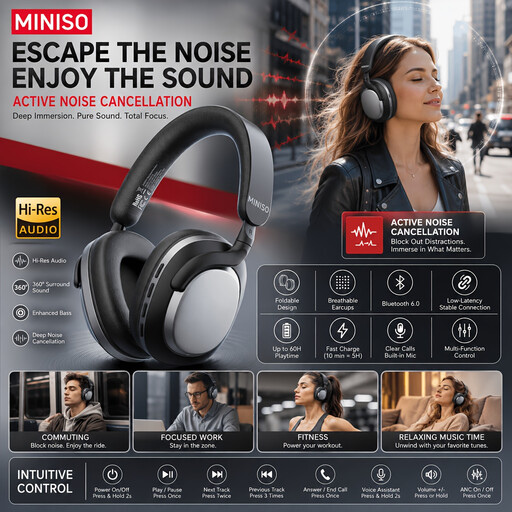
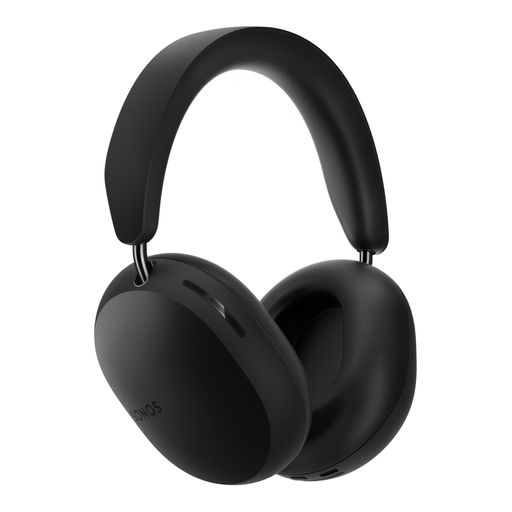
This Joybuy selection features over-ear headphones for listening to music. For each model, check whether its design, any wired connection and fit are suitable for quiet comparisons in the library.
 No image available
Over-ear headphones for listening to music, with a wired option too. The product information lists wireless listening, adaptive noise cancellation and an included 3.5 mm audio cable; the stated battery life is 60 hours.
 No image available
An over-ear model for wireless music listening, with noise cancellation. The product information lists Bluetooth, active noise cancellation and battery life of up to 24 hours.
 No image available
Closed-back over-ear headphones for listening to music, with a wired option if you need one. The product information lists Bluetooth, active noise cancellation and an included audio cable.
 No image available
Over-ear headphones for listening to music, with wired connectivity options. The product information lists USB-C and 3.5 mm wired connections, active noise cancellation and up to 30 hours of listening with noise cancellation on.
 No image available
Over-ear headphones for listening to music, with both wireless and wired options. The product information lists Bluetooth 5.4, active noise cancellation and a detachable cable with USB-C and 3.5 mm connections; a charger is not included.
Yes, as long as audible sound leakage won’t disturb anyone where you’re listening. Closed-back headphones are generally more practical in a shared, quiet reading room; compare the same recording on both types.
Check your player’s output and the plug or adapter supplied with the exact model. For example, the ATH-M50x is described as coming with several cables and a 6.3 mm adapter; also check that the connection is suitable for your player.
Check which cables and ear pads can be replaced for the exact model. AKG lists replaceable pads and cables for the K371; don’t assume parts are interchangeable between models.
For eligible online purchases from a business, you generally have a 14-day cooling-off period, according to the Dutch government. You’re also entitled to a product that is fit for purpose. The Dutch government states that statutory guarantees in the Netherlands do not have a fixed duration, and that the seller is your point of contact if a product is faulty. Check in advance which return costs apply.
Keep the volume modest and take breaks. The World Health Organization links safe listening to both sound level and exposure time; as an example, it cites 80 dB for up to 40 hours a week. This should not be equated with a fixed volume-control setting on every pair of headphones.