
Late-night singer living with others
You practise with backing tracks while someone else is trying to rest. Your main concern is stopping the audio from your headphones leaking out; your own singing will still be audible.


For practising with backing tracks or recording late at night, wired, closed-back studio headphones are usually the better choice, as they can limit sound leakage from the audio you’re playing. If you practise in a quiet room and mainly listen back to recordings, semi-open or open-back headphones may suit you, but they offer less isolation. Check the fit, connection and monitoring set-up too. Closed-back headphones won’t stop housemates from hearing you sing.
You practise with backing tracks while someone else is trying to rest. Your main concern is stopping the audio from your headphones leaking out; your own singing will still be audible.
You’re recording a backing part with a microphone and want to monitor your voice and the backing track clearly, without distracting delay or unnecessary spill.
You mainly practise or assess a recorded harmony. In a quiet room, you can weigh up how much isolation you need against a more open listening design.
Choose this if: you practise with backing tracks late at night or use a microphone.
Bear in mind: fit and connection vary by model, and a closed-back design won’t block out the sound of your own singing.
Choose this if: you mainly listen back to recorded parts in a quiet room where you can practise undisturbed.
Bear in mind: this design offers less isolation than a well-fitting closed-back model.
Choose this if: critical listening or mixing in your own quiet space matters more than isolation.
Bear in mind: open-back models leak sound and offer little isolation from ambient noise, so they’re less suitable for recording with a microphone late at night.
There’s more to consider than the design: think about monitoring, fit and connection too.
| What to consider | What to look for | Who it matters to |
|---|---|---|
| Backing track leakage | Compare closed-back and more open earcups, and consider the fit. Don’t expect complete silence. | If I practise late while housemates are resting, I want as little backing track as possible to leak from my headphones. Around 33% of consumers prioritise limiting sound leakage. |
| Monitoring your voice | Check whether your audio interface has direct monitoring and how you can hear the backing track at the same time. | When I record myself, I want to hear my voice alongside the backing track without annoying delay. Around 27% of consumers prioritise monitoring their own voice. |
| Fit while practising | If possible, try the fit and check the ear pads and cable routing. | When I repeat passages, I want a comfortable fit that doesn’t distract me. Around 20% of consumers prioritise wearing comfort. |
| Connection and maintenance | Compare the plug with your device’s output and check whether replacement cables or ear pads are available for the exact model. | If I want to connect the headphones to an existing output or replace parts, that helps determine which version is right for me. Around 20% of consumers prioritise connection or maintenance. |
The closed-back design can limit leakage from the backing track you’re playing, but your voice will still be audible in the room.
Take your living situation into account when choosing when and how loudly to practise, even if you’re listening to backing tracks through closed-back headphones.
Delay can be caused by the signal path through your computer and recording software, not just the headphones.
First check whether your interface supports direct monitoring and how you can hear the backing track at the same time.
Impedance and cable specifications can vary between versions. The DT 770 PRO and DT 770 PRO X aren’t necessarily the same version.
Check the full model name, impedance, plug, cable and included accessories on the product page for the version you’ve chosen.
The ATH-M40x is a closed-back option for wired practice and recording.
The DT 770 PRO is a closed-back monitoring model; check the impedance version and connection.
The HD 480 PRO is a closed-back option for recording and listening, with a detachable cable that can be connected on either the left or right.
The MDR-7506 is a wired option for studio and recording use.
The K240 Studio is a semi-open option for listening back to or assessing recordings in a quiet room.
This selection focuses on headphones whose product information mentions a wired listening option. A cable alone doesn’t tell you whether a model will minimise sound leakage into a microphone or solve monitoring delay.
 No image available
The supplied 3,5mm cable gives you a wired way to listen to backing tracks.
The product information states that you can use the headphones passively without a battery. A wired connection alone doesn’t confirm how much sound will leak into a microphone.
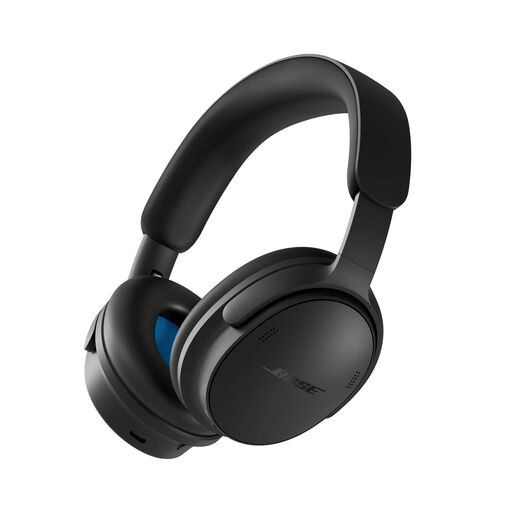 No image available
The audio cable described provides a wired way to play backing tracks.
The product information lists a supplied 3,5mm-to-USB-C audio cable and lossless audio via USB. Check that the connection is compatible with your device.
 No image available
The audio cable described provides a wired listening option for backing tracks.
The product information lists a closed-back over-ear design and listening via the cable when the battery is flat. A closed-back model won’t stop housemates from hearing you sing.
 No image available
The product information lists a closed-back design and a detachable cable for wired listening to backing tracks.
According to the product information, the cable has USB-C and 3,5mm connections. No charger is included. The product information also mentions magnets and advises anyone with a medical implant to consult a doctor.
Check the signal path first. Focusrite says direct monitoring on compatible interfaces lets you hear the input signal with virtually no delay, while the recording software can continue recording the part at the same time. Headphones alone won’t fix delay caused by software.
No. A closed-back design can limit leakage from the backing track you’re playing, but it won’t keep the sound of your singing inside the earcups. Be considerate of others at home.
Compare your device’s headphone output with the supplied plug and any adapter. Check the parts available for the exact model: for example, Sennheiser lists separate cables and ear pads for the HD 480 PRO.
According to the World Health Organization, risks are linked to volume, listening time and how often you’re exposed to loud sound. Keep an eye on the volume and how long you listen; the position of the volume slider doesn’t measure the actual sound level at your ear.
Headphones don’t determine how much of your singing other people can hear. Without information about your local council and living situation, it isn’t possible to specify a permitted evening volume or time. The Dutch government advises neighbours experiencing nuisance to try agreeing a solution together first.