
Listening amid campsite noise
You want to replay passages without constantly turning the volume up, so pay attention to how well the ear cushions fit.


With campsite noise around you, a well-fitting pair of closed-back headphones is the obvious choice for following quieter passages without constantly turning up the volume. If you have a quiet spot to yourself, you could also consider an open-back model if soundstage is important to you. With either type, check the fit, connection and cable are right for your playback device.
You want to replay passages without constantly turning the volume up, so pay attention to how well the ear cushions fit.
You want to assess phrasing and instrument placement, and compare closed-back and open-back models when your listening spot is quiet enough.
You might use a phone or laptop and want to know whether the connection, cable and portability suit your listening spot.
Choose this if: you want to replay passages at a noisy campsite while keeping sound from leaking out.
Bear in mind: how much sound is blocked also depends on the fit; a closed-back design is not automatically moisture-resistant.
Choose this if: you want to assess the spatial placement of instruments in a quiet spot of your own.
Bear in mind: an open-back design is not intended to block campsite noise or stop other people from hearing what you’re listening to.
| What to consider | What should you check? | Who is this most important for? |
|---|---|---|
| Blocking campsite noise | Compare closed-back earcups and check how the cushions fit around your ears. | If I want to follow quieter passages amid campsite noise without constantly turning up the volume, I prioritise noise isolation; around 28% of consumers rank this as their top purchase priority. |
| Musical detail and placement | Compare open-back and closed-back models using the same recording at a controlled volume. | When I want to analyse phrasing and instrument placement, a quiet listening spot matters; around 28% of consumers prioritise musical detail. |
| Connection and portability | Check the audio output, plug and any adapter you need. Also check the cable type and whether the specific model folds. | When using a phone or laptop, I want a compatible connection and a cable that’s easy to manage at my listening spot; around 22% of consumers give connection and portability top priority. |
| Fit for longer listening sessions | If possible, try them on with your own glasses and assess the ear cushions and headband. | If I’m listening to passages repeatedly, I want a fit that stays comfortable; around 22% of consumers prioritise long-wearing comfort. |
The World Health Organization points out that both sound level and listening duration contribute to the risk of hearing damage.
Check the fit first and find a quieter spot if necessary. Don’t try to compensate for inadequate noise isolation by continually turning up the volume.
An open-back design is made to create a spacious listening experience, not to block out noise in a busy place.
Choose an open-back model only if your listening spot is quiet enough. Otherwise, compare closed-back models and their fit first.
The beyerdynamic DT 770 PRO is available with different impedances; the DT 770 PRO X is a separate model with a detachable cable.
Before buying, check the full model name, impedance, plug and included cable.
The closed-back, foldable K371 is a wired option to compare for listening on the go.
The closed-back ATH-M50x is worth comparing if a detachable cable and passive noise isolation matter to you.
The closed-back DT 770 PRO is available in 32, 80 and 250 Ω versions; the DT 770 PRO X is a separate model.
The closed-back HD 280 PRO and open-back HD 490 PRO suit different listening conditions: noise isolation versus an open listening design.
The wired MDR-7506 is worth comparing if weight and cable length are important to you.
This selection focuses on headphones listed as featuring noise cancellation; some models are also described as supporting wired listening. Check that the connection and cable are compatible with your playback device, and that the model suits your preference for open-back or closed-back listening.
 No image available
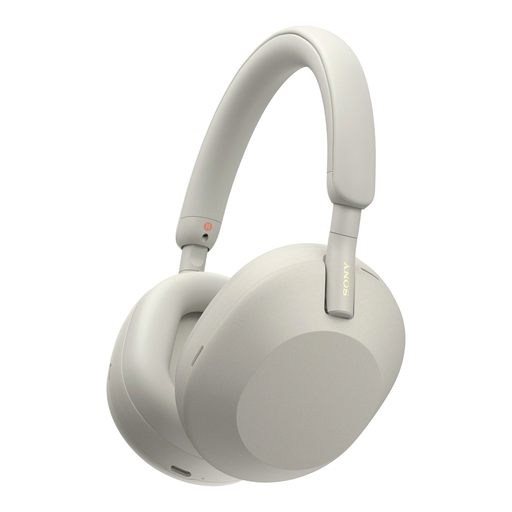
Background noise is worth considering; the product information lists active noise cancellation.
Bluetooth 5.3 and an audio cable are listed. Check that the cable is compatible with your playback device’s output.
 No image available
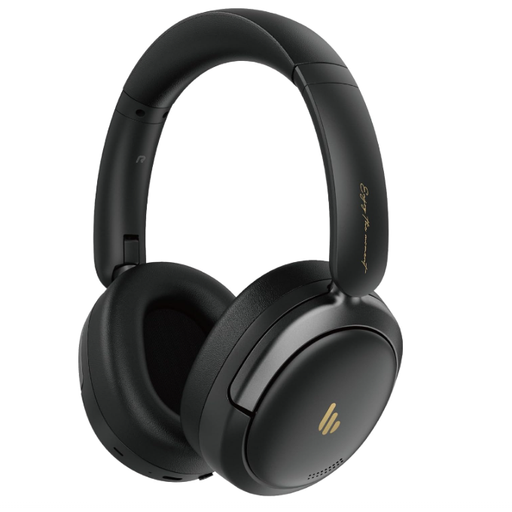
The product information lists noise cancellation for listening with less background noise.
Bluetooth, multipoint pairing and LDAC are listed. The stated battery life is up to 30 hours with noise cancellation on.
 No image available
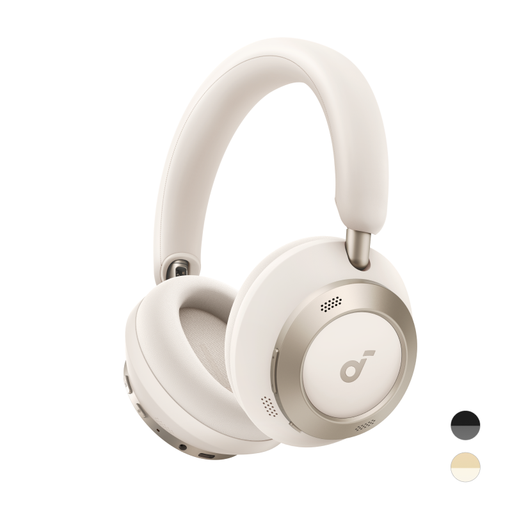
The product information lists hybrid active noise cancellation for listening in noisy surroundings.
Bluetooth 5.4 and a foldable design are listed. Check which connection your playback device supports.
 No image available
The product information lists adaptive active noise cancellation.
LDAC and a foldable design are listed. The stated battery life is up to 40 hours with noise cancellation on.
 No image available
The product information lists active noise cancellation; the listed detachable cable also allows wired listening.
The cable has a 3.5mm connection and Bluetooth 5.4 is listed. The safety information warns against moisture and liquids, so bear this in mind when using them outdoors.
First, check your phone’s audio output and compare it with the exact version of the headphones. beyerdynamic recommends the 32 Ω version of the DT 770 PRO for mobile devices, but that alone doesn’t confirm which connection or volume your device supports.
First, try a good-fitting pair of headphones and find a quieter spot if necessary, rather than continually turning up the volume. The World Health Organization points out that both sound level and listening duration matter.
Put the headphones and cable away carefully, and check them for dirt or damage. A label such as ‘studio’ or ‘closed-back’ doesn’t mean a model can withstand rain. Check the instructions for the exact version before exposing it to moisture.
According to the Dutch government, you generally have a 14-day cooling-off period when buying at a distance; check the terms and conditions for your purchase. You’re also entitled to a product that works properly: if there’s a fault, the seller must provide a solution, even if a manufacturer’s warranty is mentioned.