If you’re recording your guitar or amp with a microphone, start with a well-fitting pair of closed-back wired headphones to help prevent headphone sound bleeding into the recording. For direct-recorded guitar that you’ll listen back to or mix later, an open-back model may suit you, but it will leak sound and offer less isolation. Also check that the connection works with your interface, that the fit is comfortable and that you can store the headphones away from prolonged direct sunlight.
Who is this for?
Guitarist recording with a microphone
You’re recording an acoustic guitar or an amp with a microphone, and want to hear your playing without unnecessary headphone sound getting into the recording. Focusrite covers both recording directly and miking an amp.
Home recorder working beside a bright window
You play for longer sessions in a bright workspace and are considering the fit, warm ears and ear pad care. Beyerdynamic warns that prolonged exposure to sunlight can damage the foam in ear pads.
Guitarist with an audio interface
You’re recording directly and want to check that the plug, headphone output and monitoring route work with your own equipment. Focusrite describes direct monitoring as a way to hear the input signal directly through the interface.
What should you look for when buying?
Closed-back, wired over-ear
A good fit if: you’re recording a guitar or amp with a microphone and want to limit headphone sound leakage.
Bear in mind: how well they seal depends partly on the fit, and they don’t guarantee a leak-free recording.
Open-back over-ear
A good fit if: you’re recording directly without a microphone that could pick up headphone sound, or mainly want to listen and mix.
Bear in mind: an open-back design leaks sound and offers less isolation, so it’s not the obvious choice when recording with a microphone.
Semi-open
A good fit if: you can assess the isolation and any spill in your own recording setup.
Bear in mind: the term ‘semi-open’ alone doesn’t tell you how much sound a particular model lets through.
The percentages show the initial buying priorities for the guitar-monitoring scenario described, in a bright workspace.
| What to consider |
What to look for |
Who might value this most? |
| Spill when recording with a microphone |
Check that the headphones are closed-back, fit well and don’t produce audible leakage during your own recording. |
If I’m recording a guitar or amp with a microphone, I want to limit leakage. Around 36% of consumers give preventing spill top priority. |
| Comfort and storage |
Consider the material and replaceability of the ear pads; store the headphones away from prolonged direct sunlight. |
For longer sessions in a bright workspace, I want to consider the fit and store the pads carefully. Around 29% of consumers prioritise comfort in this setting. |
| Connection and monitoring |
Check that the plug or supplied adapter works with your interface, and test the monitoring settings. |
If I’m recording directly, I want to hear what I’m playing through my own interface. Around 21% of consumers give connection and monitoring top priority. |
| Care and replaceable parts |
Check which ear pads or cables fit the exact model and how replacement parts are sold. |
If I want to use my headphones for a long time, I look for replaceable pads and cables. Around 14% of consumers put care first. |
Common buying mistakes
-
Assuming an open-back or semi-open model isolates as well as a closed-back one
When recording with a microphone, sound from your headphones can be picked up. Open-back designs leak sound; a closed-back design only limits this if it fits well.
For microphone recordings, start with a well-fitting closed-back model and check for audible leakage with your own microphone setup.
-
Mistaking another DT 770 variant for the DT 770 PRO 80 ohm
The beyerdynamic DT 770 PRO 80 ohm and DT 770 PRO X have different specifications, including their impedance and cable design.
Compare the full model name and variant with your equipment’s headphone output.
-
Leaving headphones in direct sunlight for a long time
Beyerdynamic explains that prolonged UV exposure can damage the foam in ear pads.
Store your headphones somewhere away from prolonged direct sunlight, and check the pads for wear and changes in fit.
-
Assuming replacement pads or a new cable are included
Replacement parts may be sold separately. Audio-Technica states that the replacement pad listed for the ATH-M40x is sold individually.
Check which parts are included with the exact version, and how replacement pads or cables are sold.
-
Expecting different headphones to fix latency
Latency, or hearing a dry rather than processed signal, also depends on your interface and the monitoring route you’ve selected.
First, check your interface and recording software’s monitoring settings. Focusrite describes direct monitoring as routing the input signal straight to the outputs with negligible latency.
Brands to compare
beyerdynamic
The closed-back DT 770 PRO 80 ohm is an option for monitoring while recording; the open-back DT 900 PRO X offers a different route for listening and mixing.
- According to beyerdynamic, the DT 770 PRO 80 ohm has replaceable velour ear pads and a 3.5mm plug with a 6.35mm adapter.
- Don’t confuse the 80 ohm version with other impedance variants or the DT 770 PRO X, which has a detachable cable.
Audio-Technica
The closed-back, wired ATH-M40x is worth comparing for recording, especially if you want a detachable cable.
- Audio-Technica lists an impedance of 35 ohms and replaceable cables for this model.
- Check which cables come with the version on offer; the replacement pad is sold individually.
Sennheiser
The closed-back HD 280 PRO is an alternative to compare if monitoring and replaceable ear pads matter to you.
- Sennheiser lists an impedance of 64 ohms, replaceable ear pads and a 3.5mm plug with a 6.3mm adapter.
- A stated level of ambient noise attenuation doesn’t tell you how much sound the model will block on your head.
Sony
The wired MDR-7506 is a foldable studio-style option to compare with other monitoring headphones.
- Sony lists a supplied 3.5/6.3mm adapter and carry case.
- The product information doesn’t support the claim that this model isolates better or is more comfortable than other models.
RØDE
The NTH-100 is worth comparing if you’re considering long-session comfort and a detachable cable.
- RØDE lists a locking, detachable cable and CoolTech gel in the ear pads.
- The cooling effect is a claim made by RØDE and doesn’t prove that direct sunlight is harmless.
Joybuy product selection
The product selected below is a wireless Sony headphone. Check for yourself whether the connection options and monitoring route suit your guitar setup; the product name doesn’t confirm that this version is suitable for your wired monitoring.
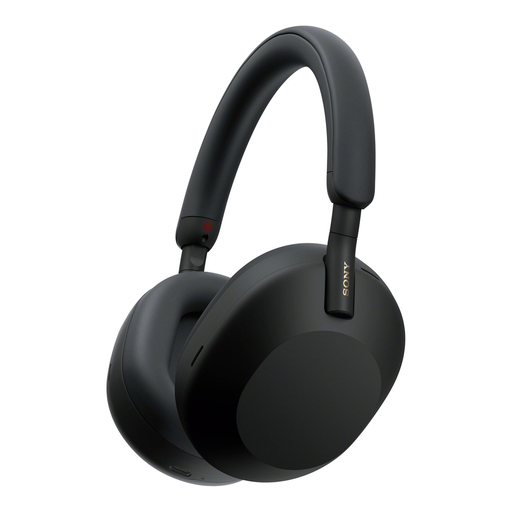 No image available
Sony WH-1000XM5 wireless noise-cancelling headphones – Black
Consider this wireless version only if it suits the way you work; before buying, check how its connection and monitoring route will work with your interface.
The product name specifies wireless connectivity and noise cancelling.
View at Joybuy
Frequently asked questions
Do I need closed-back headphones if I’m recording my guitar with a microphone?
A well-fitting pair of closed-back headphones is a sensible first choice for limiting audible spill. Check the result with your own microphone setup; the seal won’t be absolute.
Why can I hear latency or my dry guitar signal?
First, check the monitoring route in your interface and recording software. Focusrite describes direct monitoring as sending the input signal straight to the outputs with negligible latency; the processed sound you hear depends on the rest of the routing.
How should I care for ear pads in a workspace beside a bright window?
Ideally, store your headphones away from prolonged direct sunlight and check the pads for wear or changes in fit. Beyerdynamic explains that prolonged exposure to UV light can damage the foam.
Are replacement ATH-M40x ear pads included as a pair?
Audio-Technica states that replacement ear pads for the ATH-M40x are sold individually. When buying, check which parts come with the headphones and how many replacement pads you’ll need.
How can I avoid choosing the wrong DT 770 variant?
Compare the full model name and impedance with the version you need. The beyerdynamic DT 770 PRO 80 ohm and DT 770 PRO X differ in several ways, including impedance and cable design.


