If you’re recording guitar with an open microphone, start with wired, closed-back headphones. They help limit sound leakage, but won’t eliminate it completely. For critical listening in a quiet room, open-back headphones may be a good fit, but they’re less suitable during a take when a microphone could pick up sound from your headphones. Also check your audio interface’s output and monitor settings: switching headphones won’t fix latency in the DAW signal path.
Who is this choice relevant to?
Guitarist recording takes
You’re playing while a microphone or audio interface captures your guitar, and you want to hear yourself and previous tracks without headphone sound affecting the recording. RTINGS.com discusses closed-back headphones as a way to limit leakage while recording; Focusrite explains how direct monitoring and DAW playback can both be audible at the same time.
Guitarist mixing recordings
You’re mainly listening back critically and aren’t constantly playing with an open microphone. In a quiet room, you could also consider open-back headphones; Sony positions the MDR-MV1 for mixing and mastering.
Guitarist with a compact dual-screen setup
You move between your guitar, interface and controls during longer sessions. A cable running alongside your instrument or desk, and a comfortable fit, may be important factors. Check the cable and fit of the exact version.
What should you look for when choosing?
First decide whether you’ll mainly use the headphones while recording takes or listening back. Then consider the monitoring route, fit and cable setup.
| Consideration |
What should you check? |
Who is this important for? |
| Leakage and isolation during a take |
Check whether the exact model is closed-back and over-ear. Assess the seal and the listening volume you need with your own microphone setup. |
If I’m playing with an open microphone, I want to reduce the chance of headphone sound getting into the recording. Around 36% of consumers make leakage and isolation their top priority. |
| Latency or hearing the signal twice |
Check whether your interface offers direct monitoring and whether the DAW is also sending the same input signal back to you. |
If I want to hear a usable guitar signal while playing without a delayed duplicate, I’ll check my interface settings first. Around 29% of consumers prioritise the monitoring route. |
| Fit and cable routing |
Check the cable length, plug type, any adapter and whether the cable is replaceable; try the fit during a session. |
If I’m sitting at my dual-screen workstation for a long time, I want a cable that doesn’t get in the way around my guitar or desk, and a fit that stays comfortable. Around 21% of consumers prioritise comfort and cable routing. |
| Critical listening |
Decide whether you’ll mainly be mixing in a quiet room and whether a microphone will be open while you listen. |
If I’m mainly assessing or mixing after a take, open-back headphones could be an option, as long as an open microphone won’t pick up sound from them. Around 14% of consumers make critical listening their top priority. |
Pitfalls to avoid
-
Choosing open-back mixing headphones for every stage
Open-back designs let sound escape and do little to block out ambient noise. This can make them impractical for recording a take with an open microphone.
Choose based on what you’ll mainly use them for: compare closed-back models if you often record with a microphone, and consider open-back headphones for listening back in a quiet room.
-
Blaming the headphones for latency
The DAW playback may arrive later than the direct input signal. Changing headphone models won’t alter that signal path.
Check direct monitoring, DAW monitoring and the monitor mix in your interface’s own manual.
-
Treating the DT 770 PRO and DT 770 PRO X as the same model
beyerdynamic describes differences in cable design and impedance between these models. Their names are not interchangeable.
Before buying, check the full model name and the impedance of the version on offer.
Relevant brands for this choice
Audio-Technica
The wired ATH-M40x is a closed-back option for recording, with a detachable cable.
- According to Audio-Technica, the ATH-M40x has swivelling earcups and comes with a 3 m straight cable and a 1.2–3 m coiled cable.
- These features alone don’t tell you whether the fit will be comfortable for everyone or how the model compares with other headphones in a listening test.
beyerdynamic
The closed-back DT 770 PRO X is designed for recording and monitoring; the open-back DT 900 PRO X is a separate option for critical listening.
- According to beyerdynamic, the DT 770 PRO X has a detachable mini-XLR cable and a nominal impedance of 48 ohms.
- The DT 770 PRO has different impedance versions and a fixed cable. Check the full model name and version before buying.
Sennheiser
The wired HD 280 PRO is a closed-back option for tracking and monitoring.
- Sennheiser lists replaceable ear pads, a coiled cable, a 3.5 mm plug and a 6.3 mm adapter.
- The stated attenuation of up to 32 dB is a manufacturer specification, not a guarantee for every fit or environment.
Sony
The MDR-7506 is a wired recording headphone; the open-back MDR-MV1 is a different model that Sony positions for mixing and mastering.
- Sony Netherlands lists a 3 m cable for the MDR-7506.
- The open-back design of the MDR-MV1 doesn’t automatically make it suitable for recording a take with an open microphone; the two models are designed for different uses.
Joybuy products
This selection includes headphones whose product information also mentions wired listening. That doesn’t automatically make them studio headphones: check that each model’s connection suits your interface, and bear in mind that headphones won’t change the DAW monitoring route.
 No image available
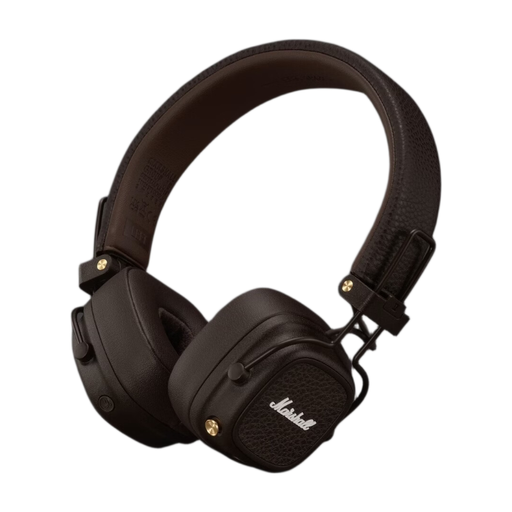
Marshall Major V Wireless On-Ear, brown
If you’re considering these wireless headphones for wired monitoring, check that the supplied 3.5 mm cable is compatible with your interface; Bluetooth alone doesn’t confirm they’re suitable for DAW monitoring.
The product information lists Bluetooth 5.3, multipoint connectivity and a supplied 3.5 mm audio cable for listening when the battery runs out. A foldable design is also mentioned.
Joybuy
 No image available
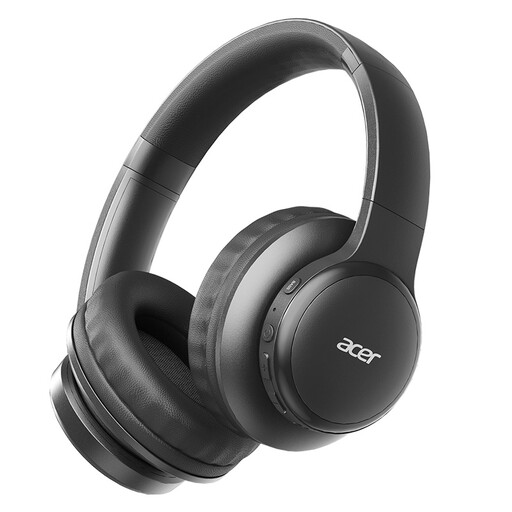
Acer OHR559 OWS Wireless Headphones
Consider this model for guitar monitoring only if its connection and your interface’s monitoring route are suitable; the stated gaming mode doesn’t prove that DAW audio will play without latency.
The title lists Bluetooth 5.3 and a low-latency gaming mode. The product information also mentions a foldable design.
Joybuy
 No image available
Bose QuietComfort Ultra Bluetooth Headphones, black
If you want to monitor using a cable, check that the supplied audio cable connects to your interface; a closed-back design doesn’t automatically make a model suitable for studio work.
The product information lists a closed-back design, active noise cancelling and wired listening via an audio cable. Check the connection on the exact version.
Joybuy
 No image available
Sonos ACE Over-Ear Bluetooth Headset, black
To connect these to an audio interface, check which cable and input you need; the listed wired connections don’t mean they’re compatible with every interface.
The product information lists a closed-back design, a detachable cable with USB-C and 3.5 mm connections, and a foldable design. No charger is included, and PD fast charging isn’t supported.
Joybuy
 No image available
Bose QuietComfort Ultra Headphones (2nd Gen), black
If you want to monitor using a cable, check that the cable and plugs are compatible with your interface and setup.
The product information lists a detachable 1 m cable with 3.5 mm and 2.5 mm connections.
Joybuy
Frequently asked questions
Do I need headphones with two connections for a dual-screen setup?
No, the number of screens doesn’t determine how many connections your headphones need. In a recording setup, DAW signals travel through the audio interface to the headphone output; check your interface’s output and monitor settings.
Why can I hear my guitar twice?
You may be hearing the direct input signal and a delayed return from the DAW at the same time. In the Clarett⁺ setup described, Focusrite recommends muting the recorded DAW channel when monitoring the input directly; check the manual for your own interface.
Are open-back headphones suitable for recording guitar?
It depends on your microphone setup: open-back headphones let sound escape, so they may not be suitable if an open microphone is listening during the take. They can be an option for critical listening in a quiet room.
What should I check about the cable and parts?
For the exact model, check whether the cable and ear pads are replaceable and which plug or adapter is included. Audio-Technica lists a detachable cable for the ATH-M40x; Sennheiser lists replaceable ear pads for the HD 280 PRO.
How can I avoid putting too much strain on my hearing while monitoring?
Keep the volume as low as is practical and be mindful of how long you listen. The World Health Organization gives 80 dB for up to 40 hours a week as an example; you can’t determine the level at your ears from the volume control setting alone.


