
Guitarist in a noisy home
Wants to replay a solo without having to drown out conversations or other household noise by turning up the volume.


A well-fitting, closed-back pair of headphones can reduce background noise without you having to turn up the volume. That makes a wired model a sensible starting point when you want to listen to a solo repeatedly at home. Also compare a familiar passage, wearing comfort and how the headphones connect to your device. If household noise is still distracting, compare active noise cancellation too. None of these features guarantees that you’ll be able to pick out every guitar note in a busy mix.
Wants to replay a solo without having to drown out conversations or other household noise by turning up the volume.
Listens to short passages to assess the sound of a recording. Slowing playback without changing the pitch can be a separate way to help.
Wants to check that the plug, cable and headphone output are compatible, particularly when monitoring their own guitar as well.
A good fit if: you repeatedly listen to recordings at home and use a wired headphone output.
Bear in mind: how much noise they block also depends on the fit. Check the plug too and, if there are versions with different impedance ratings, choose the one that suits your source.
Compare this option: if background noise is still distracting with a well-fitting pair of headphones and you want to listen at a comfortable volume.
Bear in mind: check whether wired listening works with the features you want on each model, and compare the sound with noise cancellation switched on and off.
| What to consider | What to look for when buying | Who is this important for? |
|---|---|---|
| Reducing household noise | Check the fit and compare how well the headphones block noise at a comfortable volume. Consider active noise cancellation separately if passive isolation isn’t enough. | If conversations at home interrupt my listening, I want to hear less background noise without turning up the volume. Around 33% of consumers put reducing household noise at the top of their list when buying. |
| Picking out notes in a solo | Compare the same familiar passage. A stated frequency range doesn’t prove that you’ll be able to pick out more notes in your recording. | If I’m working out short passages by ear, I want to be able to assess the guitar part in my own recording. Around 27% of consumers prioritise picking out notes. |
| Compatibility with your equipment | Check the headphone output you use, the plug or adapter, and the exact impedance version. If you’re monitoring directly, check the interface settings too. | If I listen through my own playback device or audio interface, I want to be sure the connection suits my setup. Around 20% of consumers say compatibility is their main concern when buying. |
| Comfort during repeated listening | Assess the headband pressure and fit, including with your glasses on if you wear them. Check whether the ear cushions are replaceable. | If I’m working out a solo over several sessions, I want headphones that feel comfortable and fit well. Around 20% of consumers prioritise comfort and maintenance. |
How much noise the headphones block also depends on the fit. VeiligheidNL recommends a good fit to reduce the temptation to drown out background noise by turning up the volume.
Check the fit and listen at a comfortable volume. Compare active noise cancellation if passive isolation isn’t enough for where you listen.
beyerdynamic lists 32, 80 and 250 ohm versions and matches them to different sources.
Before buying, check the full version name and the headphone output you’ll actually be using.
Noise cancellation, sound and wearing comfort are separate things to assess. A specification alone can’t tell you how you’ll hear a particular recording.
Compare models using the same familiar passage, and assess the fit and any noise cancellation separately.
The closed-back, wired HD 280 PRO is worth comparing if isolation and replaceable ear cushions matter to you.
The closed-back DT 770 PRO is worth considering if you’re looking for wired studio headphones and want to choose a version that suits your source.
The closed-back ATH-M50x is a wired option worth comparing if you move between listening locations or need different cable lengths.
The closed-back SRH440A is an alternative worth comparing if you’re looking for a detachable straight cable and an over-ear fit.
These products feature active noise cancellation. Check whether the wired connection and features on each model suit the way you want to listen to your guitar recording.
 No image available
Active noise cancellation and wired listening are listed for anyone who wants to listen to recordings at home with background noise around them.
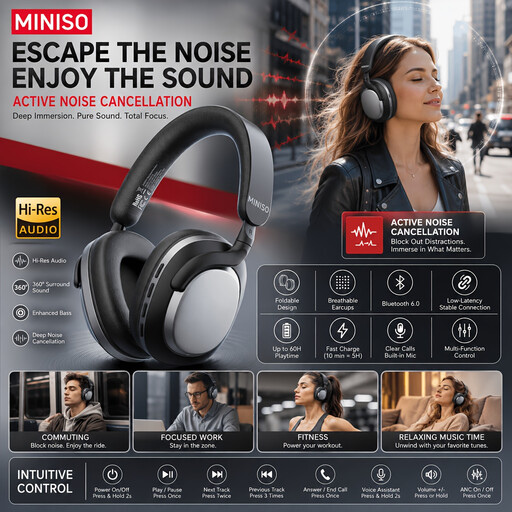
The product name lists a 60-hour battery life, fast charging and 4 microphones. The description mentions a 3.5mm audio cable and passive wired use. Check that the connection suits your device.
 No image available
The product name lists noise cancellation and an over-ear design for listening with background noise around you.
The product name lists a 24-hour battery life. Check whether this wireless model suits the way you want to listen.
 No image available
Active noise cancellation is listed for listening in a noisy home.
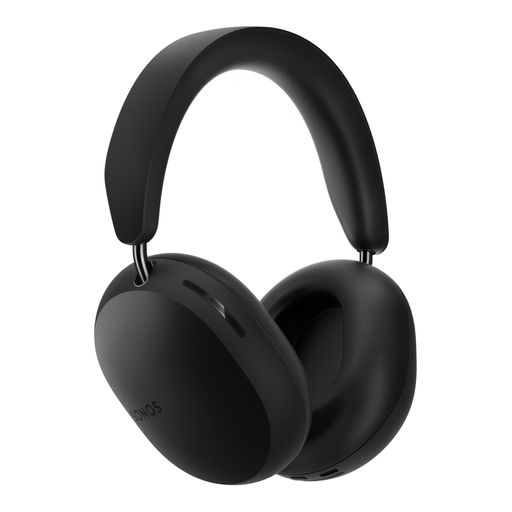
The description lists wired use with an audio cable, even when the battery is flat. Check the connection and the features you need before using them with your playback device.
 No image available
Active noise cancellation and wired audio sources are listed for listening in a noisy environment.
The description mentions USB-C and 3.5mm cables. Check which connection suits your device and listening setup.
 No image available
Active noise cancellation is listed for listening at home with background noise around you.
The description mentions a detachable cable for wired listening. Check the connection on your source device.
Yes, if your playback software supports tempo adjustment without changing the pitch. Audacity describes a feature called Change Tempo for this. It’s a software feature, not a property of the headphones.
This can happen if you monitor directly while also listening to the signal through recording software: you hear both the direct signal and the delayed one. Check which monitoring route is active. Different headphones won’t fix a duplicated signal path.
According to VeiligheidNL, a good fit can help you avoid drowning out background noise by turning up the volume. Check regularly that the cushions still fit well. Sennheiser lists replaceable cushions for the HD 280 PRO, and beyerdynamic does so for the reviewed DT 770 PRO version.
For eligible distance purchases, the Dutch government (Rijksoverheid) says that in many cases you have a 14-day cooling-off period, although there are exceptions. ACM ConsuWijzer also explains that your statutory guarantee depends on what you could reasonably expect from the product under normal use, not just on a stated manufacturer’s warranty period.