
Guitar editor in a quiet room
You mainly edit existing recordings and want to assess passages and stereo placement without distractions. Open-back headphones are an option if sound leakage is not a concern.


If you mainly work in a quiet room editing existing guitar recordings, open-back wired headphones are a natural option to compare. If you also record with a microphone nearby, a closed-back model is better suited to that situation. Then check that the cable can reach your workstation with two screens and that the connection and output are compatible. Neither design, on its own, proves that your guitar tracks will sound better.
You mainly edit existing recordings and want to assess passages and stereo placement without distractions. Open-back headphones are an option if sound leakage is not a concern.
You listen while recording with a microphone and want to stop it picking up sound from your headphones. Closed-back headphones are worth comparing for this situation.
You work between two screens and want to check in advance that the cable routing, plug and fit will suit your workstation.
Choose to compare: if you mainly listen back to existing guitar recordings in a quiet room, with no nearby microphone.
Bear in mind: sound leaks out, and the design offers little isolation from ambient noise.
Choose to compare: if you sit close to a microphone while playing or want to hear less ambient noise.
Bear in mind: closed-back does not mean that no sound will escape at every volume level.
| What to consider | What to look for when buying | Who is this important for? |
|---|---|---|
| Assessing detail | Decide whether you edit in a quiet room or record at the same time; assess the sound using your own guitar recordings. | If you mainly edit existing guitar tracks, you’ll want to assess the detail without distractions. Around 29% of consumers put this listening task first. |
| Monitoring while recording | Check whether you record with a nearby microphone, and listen at your usual safe volume for any sound leakage. | If you also record, you’ll want to stop the microphone picking up monitor sound. Around 24% of consumers prioritise isolation when recording. |
| Cable routing around two screens | Measure the route from the headphone output and check the cable length, whether it is detachable and which plug adapter comes with the exact version. | If the output is further from where you sit, you’ll want to be able to route the cable around your desk. Around 18% of consumers choose mainly based on this cable route. |
| Comfort and maintenance | If possible, try the headphones with your glasses on and during a realistic work session; check which parts can be replaced. | If you often work for long stretches, fit and maintenance can be important factors. Around 17% of consumers put these ahead of other buying considerations. |
| Powering them from your output | Make a note of your computer output or audio interface model and the full headphone specification; check that the combination provides enough volume. | If you want to keep using your existing interface, first check that it is compatible with the version you choose. Around 12% of consumers make this connection their top priority. |
An open-back design lets sound escape. Sound leakage is possible with closed-back headphones too, especially at certain volume levels.
Distinguish between recording and editing afterwards. Listen to a test recording at a safe volume.
If sound from your headphones is audible in the recording, you may need to record it again.
The DT 770 PRO is available in different impedance versions; beyerdynamic also describes differences in driver construction and sound.
Check the full model name, impedance and specifications of your own headphone output.
The position of your computer or interface also determines whether the cable runs across your work surface or around your instrument.
Measure the route around your desk and check which cables and adapters are included with the exact version.
Depending on the connection you choose, you may need a suitable replacement cable or adapter.
The open-back HD 490 PRO is an option to compare if you mainly listen back to recordings and edit in a quiet room.
The closed-back DT 770 PRO is worth comparing for monitoring while recording; check the full impedance version.
The closed-back ATH-M50x is worth considering if recording isolation and a choice of included cables matter to you.
The open-back K702 is an option for critical listening if sound leakage is not a concern.
The MDR-7506 is a wired studio option to compare if a 3 m cable suits your desk.
These Joybuy headphones are worth comparing with studio options. For guitar editing, check that the wired connection, cable and connection to your audio output are suitable for each exact version.
 No image available
Compare this model only if the exact version works with your wired listening setup; check the cable and connection for your interface.
The product name describes wireless over-ear headphones with noise cancellation.
 No image available
Before using these for guitar editing, check that the version you choose and the included connection suit your wired listening setup.
The product name mentions Bluetooth and noise cancellation.
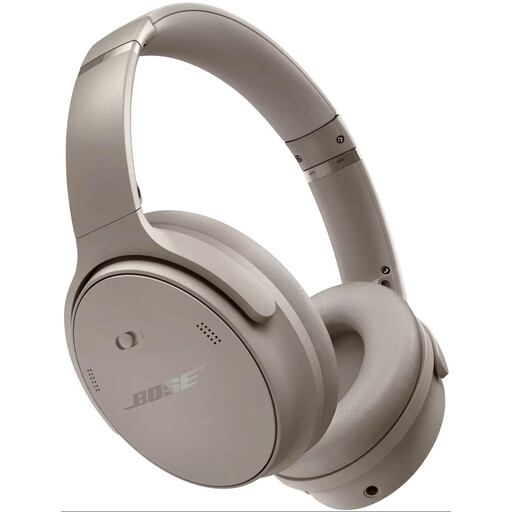 No image available
Before considering this model for studio work, check that the exact version connects to your audio output in the way you need.
Check the product details for information about the connection and included accessories.
 No image available
If you’re considering this version for a desk with two screens, check that the cable route and connection suit your workstation.
Check the product details for the exact wired connection and included cable.
No, not just because you have two screens. Choose based on your listening and recording setup, then check where the audio output is, how the cable will run around your desk and which plug or adapter you need. Audio-Technica lists several included cables with the ATH-M50x; Sennheiser lists connections on both ear cups for the HD 490 PRO.
You can’t tell from the impedance alone. Focusrite explains that higher impedance generally requires more from the headphone output; the volume you can achieve also depends on sensitivity, the source material and your surroundings. Check your interface model and the full version of the headphones.
Check which parts can be replaced on your exact model. beyerdynamic lists replaceable ear pads for the DT 770 PRO; AKG lists a replaceable cable and ear pads for the K702.
Keep the volume low and take breaks. The World Health Organization stresses that both sound level and duration of exposure matter. Its example of 80 dB for up to 40 hours a week is guidance, not a guaranteed safe level for everyone or a value that every pair of headphones displays.