
Film score mixers working in a quiet room
You’re mainly assessing the placement and balance of instruments, and can use open-back headphones without disturbing a recording or anyone nearby.


For mixing in a quiet room, wired open-back headphones are a suitable choice for assessing placement and balance. If you’re recording near microphones, a closed-back model is better suited to reducing sound leakage, as Focusrite explains. Wired headphones don’t need their own power socket, but your computer or audio interface must be able to provide enough volume. So check the output, connector and achievable listening volume before choosing.
You’re mainly assessing the placement and balance of instruments, and can use open-back headphones without disturbing a recording or anyone nearby.
You don’t want to use an additional mains-powered headphone amplifier if your existing computer or audio interface can drive suitable wired headphones.
You work near microphones or with others in the same room, so the isolation of closed-back headphones may be more useful to you.
Suitable when: you’re assessing instrument placement and balance in a quiet room.
Bear in mind: sound may leak to a microphone or someone nearby; also check that your existing output provides enough volume.
Suitable when: you work or record in a shared space and want to reduce sound spill into microphones.
Bear in mind: a closed-back design doesn’t prove that a mix will translate well to every playback system; check the fit and listen on other devices too.
Suitable when: you occasionally want to listen without a cable and can recharge a battery.
Bear in mind: wireless listening requires charging. Apple reports additional Bluetooth latency when input monitoring in Logic Pro; for timing-sensitive recording, have a suitable wired option available.
| Buying concern | What should you check? | Who is this important to? |
|---|---|---|
| Assessing spatial placement | Check that an open-back design suits your quiet mixing space and won’t disturb anyone or a microphone. Also check which connector your existing output requires. | If I want to assess instrument layers and their placement, I look for an open-back design and the right connection. Around 36% of consumers prioritise assessing spatial placement in a mix. |
| No additional power socket | Check the headphone output, impedance and sensitivity alongside the volume your own device can provide; impedance alone isn’t conclusive. | If I don’t want to connect a separate amplifier, I want to know whether my existing computer or interface provides enough volume. Around 29% of consumers prioritise working without an additional power socket. |
| Isolation when recording | Consider whether you work near a microphone or in a shared space, and whether a closed-back design suits the situation. | When I record in the same room, I want to reduce sound leakage into microphones. Around 21% of consumers make isolation their top priority. |
| Comfort and maintenance | Check the fit and whether replacement cables or earpads are available for the exact version. | If I wear the headphones repeatedly or for long periods, I look for a comfortable fit and replaceable parts. Around 14% of consumers prioritise comfort and maintenance. |
Achievable volume also depends on the headphone output, sensitivity, source material and listening environment. Focusrite emphasises that impedance alone doesn’t determine how loud a combination will play.
Check the specifications of your own output and try the combination at a safe volume before buying additional equipment.
If your output proves unsuitable, you may need a different suitable output or amplification.
Sound can leak from an open earcup into a microphone. Focusrite notes that closed-back headphones can help reduce spill from performers.
Decide whether you mix and record in the same room, and choose based on your working situation rather than assuming open-back or closed-back is always better.
Wireless headphones need a battery. Apple also reports Bluetooth latency when input monitoring in Logic Pro.
Consider whether you only play back and mix or also make timing-sensitive recordings, and check how you’ll power your entire listening setup.
You’ll still need to charge them; timing-sensitive monitoring may also require a wired option.
The wired, open-back DT 900 PRO X is a model to consider for mixing and assessing spatial placement.
Sennheiser positions the open-back HD 490 PRO for production and mixing, and describes different earpads supplied for these uses.
The wired, open-back K702 is an option for mixing in a quiet room.
The closed-back ATH-M50x is a model to consider if isolation and a choice of supplied cables matter to you.
The wired, closed-back MDR-7506 is an alternative for monitoring near recording sessions.
The picks below are headphones with wireless listening options; for recording or timing-sensitive monitoring, check the connection and how the exact version works.
 No image available
Could suit you if you want to listen wirelessly but also have the option of a wired connection. The product description mentions an included 3.5 mm audio cable and passive wired use without a battery.
The product name states up to 60 hours of wireless playback; charging is required for wireless use.
 No image available
Could suit you if you want to combine Bluetooth with the option of wired listening. The product description mentions a detachable cable with USB-C and 3.5 mm connections, as well as active noise cancellation.
Charging is recommended for optimum use; according to the product description, no charger is included.
 No image available
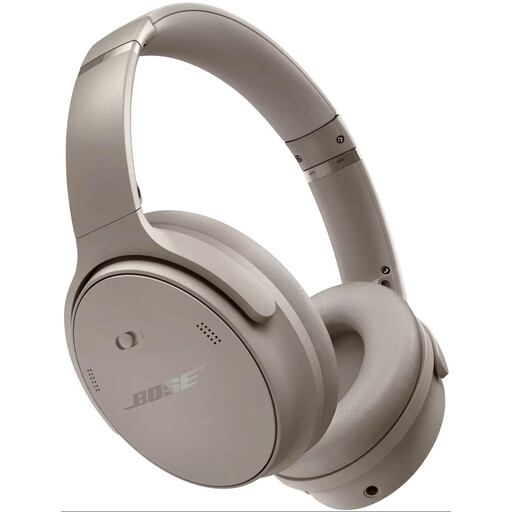
Could suit you if you want to listen without a cable as an additional option. The product description mentions Bluetooth, active noise cancellation and USB-C charging.
If the battery is low, you’ll need to charge it using a USB power source.
Not necessarily. First connect suitable wired headphones to your existing powered computer or audio interface, then check the output and achievable volume. Focusrite emphasises that impedance alone doesn’t determine how loud a combination will play. Without knowing your own equipment, an amplifier isn’t a standard requirement, though it can’t be ruled out either.
That depends on how you work. Apple says Bluetooth in Logic Pro is suitable for mixing or listening, but reports additional latency when monitoring wireless input. For timing-sensitive recording, check that you have a wired monitoring option. This guidance relates to Logic Pro and isn’t a measurement of every wireless headphone or other software.
Check the connection and whether suitable cables and earpads are available for the exact version. Don’t listen unnecessarily loudly for long periods: the World Health Organization links the risk to hearing to sound levels, listening duration and how often you’re exposed to loud sounds.
For a consumer purchase, the Dutch government says you’re entitled to a product that works properly; if there’s a fault, the seller must provide a solution. The Netherlands doesn’t have a fixed statutory warranty period of two years. For applicable online distance purchases, there’s often a 14-day cooling-off period; check the terms of the specific purchase.
That doesn’t follow simply from the term ‘studio headphones’. The Dutch government says CE marking is mandatory for designated product groups and must not be applied arbitrarily. Check the applicable product category and version; don’t draw a legal conclusion about a specific model based on the presence or absence of a logo alone.