
Loop editor in a quiet room
You want to hear changes in instrument placement and fine details, and can work without much sound isolation.


For editing loops in a quiet room, open-back studio headphones are a sensible place to start. If there’s noise at home, you share your space or record near a microphone, it’s worth comparing closed-back models too. beyerdynamic describes open and closed-back models as different listening experiences. Compare the same familiar loops, and check the fit, the exact impedance version and whether it’s compatible with your equipment.
You want to hear changes in instrument placement and fine details, and can work without much sound isolation.
You want to be less distracted by household noise while editing, or avoid your monitoring audio disturbing others or being picked up in recordings.
You want headphones that feel comfortable and work with your laptop or audio interface, so fit, cable and replaceable parts all matter.
A good fit if: you’re in a quiet room and want to assess instrument placement and subtle changes in loops.
Bear in mind: open-back earcups let in ambient noise and allow sound to escape.
A good fit if: household noise distracts you, other people work nearby or you want to reduce sound picked up by a microphone.
Bear in mind: how much sound they block also depends on the fit.
A good fit if: you want to compare a middle-ground option and complete isolation isn’t essential.
Bear in mind: semi-open doesn’t automatically mean a particular level of isolation or better loop reproduction.
| What to consider | What to look for | Who is this important for? |
|---|---|---|
| Detail and placement | Compare the same familiar loops; check whether the design is open-back, semi-open or closed-back. | If I want to assess subtle changes in instrument placement, this comes first. Around 36% of consumers say loop detail is their top buying priority. |
| Ambient noise and sound leakage | Try the fit with typical household noise and, when recording, in your usual microphone position. | If you work in a shared space or record near a microphone, you’ll want to consider disturbance and sound leakage. Around 29% of consumers put isolation first. |
| Comfort and maintenance | Try the headphones during a typical session; check whether the cushions can be replaced. | For long editing sessions, I want a comfortable fit that lasts and parts that are easy to maintain. Around 21% of consumers put long-wearing comfort first. |
| Compatibility with your equipment | Check the impedance, plug, any adapter and cable length for the exact version. | If I want to connect the headphones to my laptop or audio interface, I need to choose a version that’s compatible. Around 14% of consumers put equipment compatibility first. |
beyerdynamic offers versions with impedances of 32, 80 and 250 Ω. The version you choose may therefore matter for your audio source.
Before choosing, check the full product name, impedance, plug and output on your device.
An open-back model lets ambient noise in and sound out. This can make listening or working alongside others more difficult.
First decide how much quiet and isolation you need in your workspace, then compare sound and fit.
A product description can’t determine how you’ll assess specific loops in your own workspace.
Compare the same familiar loop at a sensible volume, and assess detail, fit and disturbance from ambient noise separately.
The closed-back DT 770 PRO and open-back DT 900 PRO X offer different designs to compare.
The open-back HD 490 PRO is designed for production and mixing; the closed-back HD 280 PRO is another monitoring option.
The closed-back ATH-M50x is worth comparing if you’re looking for over-ear headphones with a detachable cable.
The K240 Studio is a semi-open option to consider alongside open-back and closed-back models.
The MDR-7506 is a closed-back professional monitoring option to consider alongside other closed-back models.
The selection at Joybuy below includes headphones with wired listening options and features for reducing ambient noise. Check each model to make sure its connection and controls suit your loop-editing setup and equipment.
 No image available
The supplied cable and passive operation without a battery may be useful if you also want to listen over a wired connection while editing.
Over-ear; supplied 3.5 mm cable; 42 mm transducer system; battery life listed as 60 hours.
 No image available
The product description lists a wired listening option, which may be useful if you want to try editing loops over a cable.
Closed-back design; active noise cancellation; over-ear with leather ear cushions; Bluetooth and audio cable.
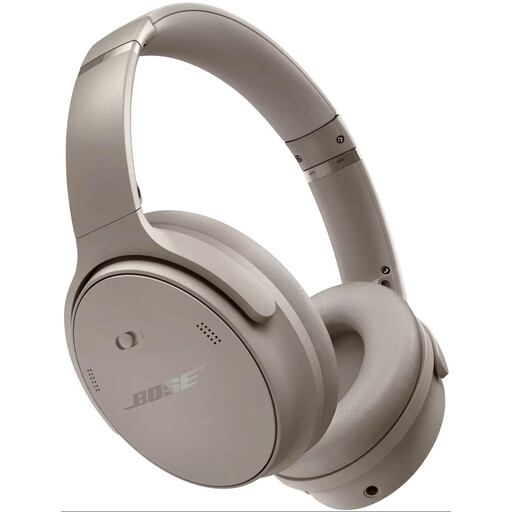 No image available
If you want to reduce ambient noise while listening, the product description lists active noise cancellation; be sure to assess the fit for yourself too.
Bluetooth; transparency mode; ear cushions and a lightweight design are mentioned in the product description.
 No image available
The detachable cable with a 3.5 mm connection may be useful if you want to use these headphones with your equipment over a wired connection.
Bluetooth 5.4; active noise cancellation; detachable cable with a 3.5 mm connection. No charger is supplied; the description recommends a suitable 1.8–2.5 W charger and states that PD fast charging isn’t supported.
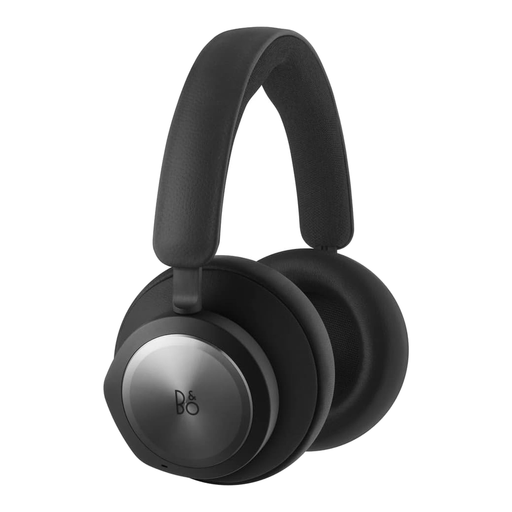 No image available
The listed 3.5 mm connection gives you a wired option; check whether the cable is practical for your workspace.
Bluetooth 5.1; 3.5 mm connection with a 125 cm cable; noise cancellation; memory foam ear cushions and a breathable headband.
No. Open-back headphones are one option for a quiet room; if household noise is distracting or you’re working with a microphone, it’s worth comparing closed-back models too. A semi-open model may suit you if complete isolation isn’t essential.
Keep the volume at a sensible level and take breaks. The World Health Organization gives an average of 80 dB for up to 40 hours a week as a guideline, and cites four hours a week at 90 dB. These are exposure guidelines, not a guarantee that any particular volume setting is safe for an individual.
Check the plug, adapter, cable and version against the output on your device. Also see whether the ear cushions are replaceable: AKG lists this feature for the K240 Studio, and Sennheiser offers replacement cushions for the HD 280 PRO version from 2016 onwards.
For applicable online consumer purchases, you generally have a 14-day cooling-off period, starting the day after you receive the item; there are some exceptions. You’re also covered by the legal guarantee if a product doesn’t meet your reasonable expectations, separately from any additional manufacturer’s warranty. Business.gov.nl explains these Dutch rules; different rules apply to business purchases.
You can’t determine this from the description ‘studio headphones’ alone. Business.gov.nl states that CE marking is mandatory for specific product groups. Wireless equipment may also be subject to radio equipment rules; the exact version and applicable regulations determine what applies.