
Drum editor at a shared desk
Edits recordings near other people and wants to hear the detail without unnecessarily disturbing the person at the next desk. The choice between closed-back and open-back earcups matters here.


For editing drum recordings alongside other people, a wired pair of closed-back over-ear headphones is usually the most practical place to start: a closed-back design generally leaks less sound and blocks out more background noise. An open-back model can also be useful for checking a mix from a different perspective, but it is less suitable if sound escaping from your headphones is a concern. Whichever type you choose, check the fit, connection and sound using your own recordings at your workspace.
Edits recordings near other people and wants to hear the detail without unnecessarily disturbing the person at the next desk. The choice between closed-back and open-back earcups matters here.
After editing, wants to assess things such as the bass and stereo image from more than one listening perspective, while taking into account sound that escapes from open-back earcups.
Looks for a comfortable headband and ear cushions, a practical cable and parts that can be replaced when they wear out.
First decide how much sound leakage is acceptable at your shared desk; then consider fit, mix checks and connectivity. Shure explains that open-back earcups let sound in and out, while RTINGS.com considers open-back models better suited to mixing and mastering, with the trade-off that they leak sound and do little to block out background noise.
| What to consider | What to look for when buying | Who this matters to |
|---|---|---|
| Sound leakage and isolation | Compare the fit of closed-back over-ear models and listen at your normal working volume to see whether sound can be heard at the next desk. A closed-back design does not guarantee silence. | If I work close to colleagues, I want to minimise drum sound leakage and reduce distracting background noise. Around 36% of consumers put isolation first. |
| Assessing drum detail | Listen to your own kick, snare and cymbal recordings at a controlled volume. Where possible, use a second listening system to check important mix decisions. | When I assess balance and stereo image, I don’t want to rely on just one sound signature. Around 29% of consumers prioritise assessing drums. |
| Fit during long sessions | Try the headband and ear cushions during a representative session. Also check the fit if you wear glasses or move your head. | If I edit for long periods, I want headphones that stay comfortably in place and provide a good seal. Around 21% of consumers put long-wearing comfort first. |
| Connectivity and maintenance | Check the output on your computer or audio interface, the plug you need, and whether cables and cushions can be replaced on the exact model. | If I regularly need to change connections or parts, I want to know in advance what is compatible with my headphones. Around 14% of consumers put connectivity and maintenance first. |
Open-back earcups let sound in and out. A different listening perspective does not eliminate the risk of disturbing others or sound bleeding into nearby recordings.
First, work out whether colleagues can hear what you’re listening to. If that would be a problem, use closed-back headphones as your everyday work pair and save open-back headphones for a suitable location.
If sound leakage disturbs others, you may need a second, closed-back pair alongside the open-back model.
A frequency range or description of bass response does not necessarily tell you how a model will fit your head or how your drum mix will sound on other systems.
Compare options using your own recordings and, where possible, check important mix decisions on a second listening system too.
Audio-Technica lists a compatible Mx replacement cable for the wired ATH-M50x, but not for the ATH-M50xBT2.
Check the full model name, what is included with the version you choose and the part number of any replacement parts.
The closed-back HD 480 PRO is suited to isolated studio work; the open-back HD 490 PRO is another option for additional mix checks.
According to the manufacturer’s Dutch product page, the closed-back K371 has a foldable design and three detachable cables, which may be useful if you move between workspaces.
The wired, closed-back ATH-M50x is worth considering if you need different cable lengths or a 6.3 mm adapter.
The closed-back DT 770 PRO 80 Ohm is a wired option for desk work, with replaceable ear cushions.
The MDR-7506 is a wired studio model for anyone looking for relatively lightweight, foldable headphones.
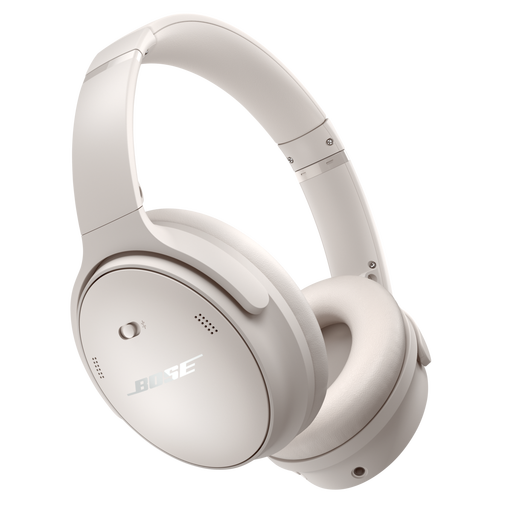
These Joybuy product choices are aimed at anyone looking for closed-back over-ear headphones for wired listening at a desk. Check the connection and product information for your workspace for each version before buying.
 No image available
This version is included for anyone looking for closed-back over-ear headphones for a shared desk; before buying, check that the connections are compatible with your equipment.
 No image available
This version is included for anyone looking for closed-back over-ear headphones for a shared desk; before buying, check that the connections are compatible with your equipment.
Yes, if the sound leakage is acceptable to others. Shure explains that open-back earcups let sound in and out, so closed-back headphones are a more practical starting point when colleagues are sitting nearby. Open-back headphones can be used as an additional option for checking mixes in a suitable location.
Check the plug and any adapter against the output on your computer or audio interface. Audio-Technica lists a 6.3 mm adapter and three cables with the ATH-M50x; beyerdynamic lists a 3.5 mm plug with a 6.35 mm adapter for the DT 770 PRO 80 Ohm. These details alone do not tell you whether every output will provide the volume you need.
Always check the exact model number and the part’s compatibility. Audio-Technica lists the wired ATH-M50x as compatible with the Mx replacement cable mentioned, but excludes the ATH-M50xBT2.
Keep the listening volume under control and pay attention to how long you listen for. The World Health Organization stresses that both sound level and exposure time matter; the actual level depends on your equipment and settings.