If you also record vocals in the same room, a well-fitting pair of closed-back headphones is likely to be the better choice. They can help reduce sound leaking into the microphone and distractions from background noise. If you mainly edit and mix in a quiet room, compare open-back and semi-open models too. MIDI AMSTERDAM explains the difference for recording and mixing; manufacturers position specific models for these uses, but this is not a direct listening comparison.
Who is this choice relevant to?
Demo recording in a shared room
If you record vocals with other people nearby, the headphones’ seal and fit can help reduce the chance of sound being picked up by the microphone. MIDI AMSTERDAM describes closed-back models as an option for recording.
Mixing in a quiet room
If you mainly work with existing tracks in a quiet room, you can compare closed-back, open-back and semi-open designs for playback and assessing your mix. Manufacturers position models such as the Sennheiser HD 490 PRO and AKG K240 Studio for mixing.
Editing on a laptop or audio interface
If you switch between a laptop and an audio interface, check the connection and the full model specification. The specifications listed by beyerdynamic and AKG for different models show why you shouldn’t rely on the model name alone.
What should you look for when choosing?
Closed-back, wired
Best for: recording vocals or working in a shared room when you want to reduce noise around you.
Bear in mind: how well the headphones seal also depends on the fit, so check this before choosing a model.
Open-back, wired
Best for: mainly editing and assessing mixes in a quiet room, without recording through a microphone at the same time.
Bear in mind: sound can leak out, and background noise can disrupt your work.
Semi-open, wired
Best for: mainly mixing and playback, if you also want to compare a semi-open design.
Bear in mind: don’t assume that semi-open headphones will prevent enough sound leakage when recording vocals.
| What to consider |
What to look for |
Who should prioritise it? |
| Isolation when recording |
Choose a closed-back design if you’re recording vocals at the same time; also check how well it fits around your ears. |
If you’re working with other people in the room, you’ll want to reduce the chance of sound being picked up by the microphone. Around 36% of consumers prioritise isolation when recording. |
| Detail when editing and mixing |
Compare open-back or semi-open designs if you’re working in a quiet room and aren’t recording at the same time. |
When editing existing tracks, assessing edits and the mix may matter more than isolation. Around 29% of consumers prioritise this need. |
| Connection and model specification |
Check the output and plug. According to beyerdynamic, the DT 770 PRO comes in 32, 80 and 250 ohm versions; for the DT 900 PRO X, the manufacturer lists a 3.5 mm plug and 6.35 mm adapter. |
If you switch between a laptop and an interface, you’ll want the version you choose to work with your connections. For around 21% of consumers, the connection is the top priority. |
| Fit and maintenance |
Check the fit for longer sessions and find out whether parts are replaceable on the exact model. |
For long editing sessions, you’ll want headphones that feel comfortable and to know which parts can be replaced. Around 14% of consumers prioritise fit and maintenance. |
Common buying mistakes
-
Choosing an open-back model when you also want to record vocals with it
An open-back design can let sound leak out. If your microphone picks it up, it can get in the way while you’re recording.
First, decide whether you’ll be recording with the same headphones. If so, compare well-fitting closed-back models too.
Sound from your headphones getting into the microphone could mean having to record a take again.
-
Assuming all DT 770 PRO versions are the same purchase
beyerdynamic lists versions with 32, 80 and 250 ohms. The full model specification therefore matters when choosing and connecting your headphones.
Check which version you’re looking at and whether it’s suitable for the output you plan to use.
-
Assuming every model comes with the same cable and adapter
Cable details vary by model. For example, beyerdynamic lists a detachable cable with a 3.5 mm plug and 6.35 mm adapter for the DT 900 PRO X; AKG lists a 3-metre cable for the K240 Studio.
Check which cable and plug come with the exact version, and whether they’ll work for your desk setup.
Brands to compare
Audio-Technica
Audio-Technica positions the wired ATH-M40x for recording and mixing. This makes it worth considering if you want to use one pair of headphones for both.
- The manufacturer lists sound isolation and swivelling earcups for this model.
- These model descriptions aren’t an independent comparison, so check the fit for yourself.
beyerdynamic
The manufacturer positions the closed-back DT 770 PRO for recording and the open-back DT 900 PRO X for mixing in a quiet room.
- According to beyerdynamic, the DT 770 PRO comes in 32, 80 and 250 ohm versions; the DT 900 PRO X has a detachable cable.
- Compare the full model specification and connection; the model name alone doesn’t tell you which version you’re choosing.
Sennheiser
Sennheiser describes the open-back HD 490 PRO as a model for producing and mixing, for situations where isolation isn’t a top priority.
- Sennheiser lists different sets of ear pads for producing and mixing.
- The sound accuracy and comfort claimed by the manufacturer aren’t independent measurements for your use.
Sony
Sony lists the MDR-7506 on its Dutch product page for recording and studio use.
- Sony lists a 3-metre cable and a weight of 230 grams for this model.
- Check whether the cable length is practical for your desk; these specifications don’t prove a sound advantage.
AKG
AKG describes the semi-open K240 Studio for uses such as mixing and playback.
- According to AKG, the K240 Studio has a mini-XLR connection and comes with a 3-metre cable.
- The manufacturer’s information doesn’t show whether sound leakage will be sufficiently reduced with your vocal microphone.
Headphones at Joybuy
This Joybuy selection features over-ear headphones with wired listening options. Check that the connection on each version is suitable for your laptop or audio interface; the product information alone doesn’t mean a model is designed specifically for studio editing.
 No image available
Sennheiser MOMENTUM 4 Wireless, black
The wired listening option may suit you if you want to listen back to your demo using a cable.
The product information lists Bluetooth, an included 3.5 mm audio cable and passive use without battery power. The product name mentions 60 hours of battery life and fast charging.
View at Joybuy
 No image available
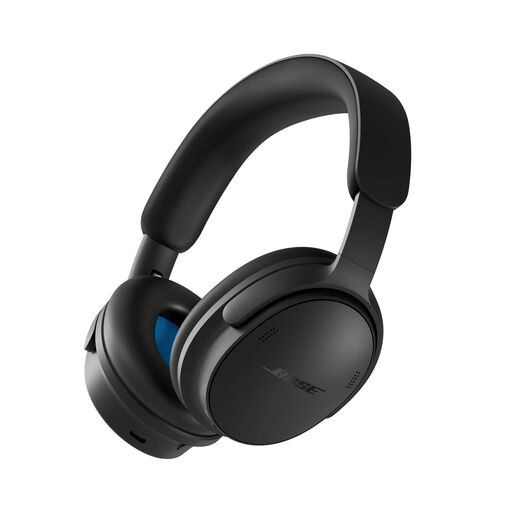
Bose QuietComfort Headphones (2nd Gen), black
The wired listening option may be useful if you want to play back demos using a cable.
The product information lists Bluetooth, audio via USB and a 3.5 mm-to-USB-C audio cable.
View at Joybuy
 No image available
Bose QuietComfort Ultra Bluetooth Headphones, black
The listed closed-back design and wired listening option may suit anyone looking for closed-back over-ear headphones for listening.
The product information lists active noise cancellation, Bluetooth and an included audio cable.
View at Joybuy
 No image available
Bose QuietComfort Ultra Headphones (2nd Gen), black
The wired connection options may suit you if you want to connect the headphones to different playback devices.
The product information lists Bluetooth 5.4, active noise cancellation and a detachable cable with USB-C and 3.5 mm connections.
View at Joybuy
Frequently asked questions
Can you record vocals with open-back headphones?
If your microphone can pick up sound from your headphones, a well-fitting closed-back version is likely to be the better choice. If you aren’t recording at the same time and the room is quiet, you can compare open-back models for editing.
What should you check when connecting to a laptop or audio interface?
Check the output, plug and any adapter for the full model version. For the DT 900 PRO X, beyerdynamic lists a 3.5 mm plug with a 6.35 mm adapter; for the DT 770 PRO, you’ll also need to check the impedance version.
How can you reduce listening risks during long editing sessions?
Keep the volume low and take regular breaks. The World Health Organization gives a maximum exposure example of 40 hours per week at an average of 80 dB, compared with four hours at 90 dB. These are examples of exposure duration, not settings you can read directly from a volume control.
What returns and warranty rights apply to online purchases in the Netherlands?
According to the ACM, online consumer purchases generally come with a statutory cooling-off period of up to 14 days after delivery, with some exceptions. You’re also entitled to a statutory guarantee for as long as the product should last, based on what you can reasonably expect; if there’s a problem, contact the seller.
Does every pair of studio headphones need a CE marking?
No. A CE marking is only required when the applicable harmonised EU rules require it for that product. According to the European Commission, if no such rules apply, the general product safety rules apply instead. Check the rules for the specific version and don’t treat a CE logo as a universal buying criterion.


