Who is this guide for?

Mixing in a quiet home office

You want to assess stereo placement and the balance between the kick, bass and other elements of your mix without isolation being the main concern. RTINGS.com and manufacturers Sennheiser and beyerdynamic describe open-back models as options for critical mixing.

Producing with background noise at home

You mix or record while other people are making noise nearby, and want to compare a closed-back model that lets less sound escape or helps keep background noise out. RTINGS.com, beyerdynamic and Audio-Technica describe the characteristics of open- and closed-back designs.

Producing during long sessions

Consider the fit, ear pads, cable and connection to see whether the headphones suit your workspace and listening sessions. Sennheiser, beyerdynamic and AKG list model-specific features such as cables and ear pads.

What should you look for when choosing?

Open-back, wired

Best for: mixing in a quiet room when you want to assess stereo placement and individual elements of your mix.

Bear in mind: open-back models let sound escape and offer limited isolation, as RTINGS.com explains.

Closed-back, wired

Best for: a home office with recurring background noise, or recording next to a microphone.

Bear in mind: the fit affects isolation; a closed-back design doesn’t guarantee silence or a sound that suits your mix.

Semi-open, wired

Best for: anyone who wants to compare a semi-open model and doesn’t need strong isolation.

Bear in mind: ‘semi-open’ doesn’t prove that headphones provide enough isolation in a noisy room.

What to consider What to look for Who should focus on this?
Mix balance and stereo image Compare familiar tracks and your mix at a moderate volume; check the mix on another playback system too. If I want to assess the kick, bass and stereo placement critically, this matters most. Around 36% of consumers give mix balance and stereo image top priority.
Isolation and sound leakage Try a closed-back model in a similar environment and, when recording, check whether sound from the headphones reaches the microphone. If I’m working with audible background noise at home or recording next to a microphone, I’m mainly looking for the right level of isolation. Around 29% of consumers put this first.
Comfort during long sessions Try the fit during a realistic session, with glasses if you wear them, and check which ear pads or cables can be replaced. For anyone mixing for long stretches, pressure, heat and cable placement all matter. Around 21% of consumers put wearing comfort first.
Connection and drive requirements Check the plug size, any adapter you may need, cable routing and the specifications of the headphone output. If I want to use the headphones with my laptop or audio interface, they need to connect conveniently and deliver a usable level. Around 14% of consumers start with the connection.

Common buying mistakes

  • Choosing an open-back model to block out noise at home

    Open-back models let sound escape and offer limited protection from background noise. This can be distracting when you’re mixing or recording in a noisy room.

    First, consider how quiet your workspace usually is. If you’re regularly disturbed, compare a closed-back model too and assess the fit in your own environment.

  • Assuming all DT 770 PRO versions are the same product

    The DT 770 PRO is available in different impedance variants. Whether a particular combination will work well depends on more than impedance alone; the output and sensitivity matter too.

    Check the full model name and impedance of the version, as well as the headphone output specifications of your equipment. Focusrite provides different guidance for each interface range.

  • Taking a manufacturer’s claim of accurate bass as a guarantee for your mix

    A description of one model’s sound doesn’t prove how your kick and bass will sound on other playback systems.

    Compare your mix with familiar reference tracks and listen to it on another playback system too.

Brands to compare

beyerdynamic

The closed-back DT 770 PRO 80 Ohm and open-back DT 900 PRO X offer different designs, so you can weigh up isolation against critical mixing.

  • beyerdynamic lists replaceable ear pads and a fixed cable with a 3.5mm plug plus a 6.35mm adapter for the DT 770 PRO 80 Ohm.
  • For the DT 900 PRO X, beyerdynamic lists 48 Ω and a detachable cable.
  • Manufacturer claims about accuracy aren’t independent measurements. Check the exact DT 770 PRO variant.

Sennheiser

Sennheiser designed the open-back HD 490 PRO for producing and mixing in a quiet environment.

  • According to Sennheiser, the HD 490 PRO comes with two sets of ear pads for producing or mixing, plus a detachable cable.
  • The open-back design doesn’t block out background noise at home; claims about sound precision come from the manufacturer.

Audio-Technica

The closed-back ATH-M50x is an option to compare if isolation and a detachable cable are important to you.

  • Audio-Technica lists passive isolation and a detachable cable.
  • These features don’t prove that the model is suitable for every producer who wants to assess bass balance.

AKG

The semi-open K240 Studio adds another design to the mix of options for comparison.

  • For the K240 Studio, AKG lists a nominal impedance of 55 Ω, a detachable cable and replaceable ear pads.
  • A semi-open design doesn’t guarantee sufficient isolation in a noisy room. AKG’s descriptions of the sound are manufacturer claims.

Sony

The wired MDR-7506 is an option to compare if cable length and weight matter for your set-up.

  • Sony Netherlands lists a 3 m cable and a weight of 230 g for the MDR7506.EU version.
  • Sony’s description of it as a reference headphone is no substitute for comparing it with your own mix.

Joybuy products

This selection includes headphones and headsets with features such as noise cancelling, Bluetooth or a wired listening option. Don’t automatically treat them as studio references: check how your mix sounds on other playback systems.

Sennheiser MOMENTUM 4 Wireless, black wireless over-ear headphones

Sennheiser MOMENTUM 4 Wireless, Black

An option if you want noise cancelling and the ability to listen in wired mode; assess the mix separately on other systems.

Product information lists an included 3.5mm audio cable, noise cancelling and up to 60 hours of playback time.

View at Joybuy

Bose QuietComfort Ultra Bluetooth headphones, black

Bose QuietComfort Ultra Bluetooth Headphones, Black

A closed-back model to compare if you’re looking for isolation; a closed-back design alone doesn’t determine how your mix will sound.

Product information lists noise cancelling and an audio cable for wired listening without the battery.

View at Joybuy
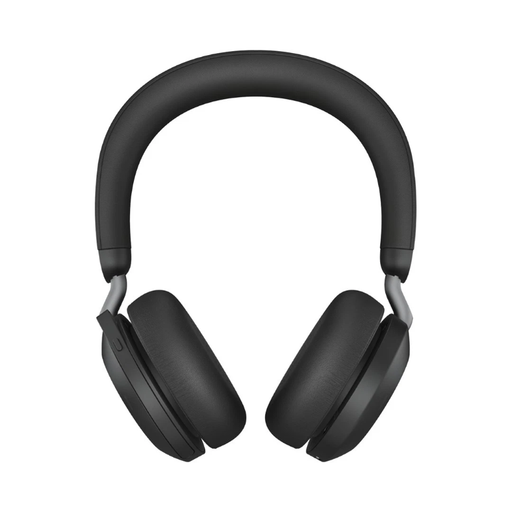
Jabra Evolve2 75 headset

Jabra Evolve2 75

A headset to consider if noise cancelling matters when listening in an office; decide for yourself whether its sound is suitable for your mix.

Product information lists Bluetooth and active noise cancelling.

View at Joybuy
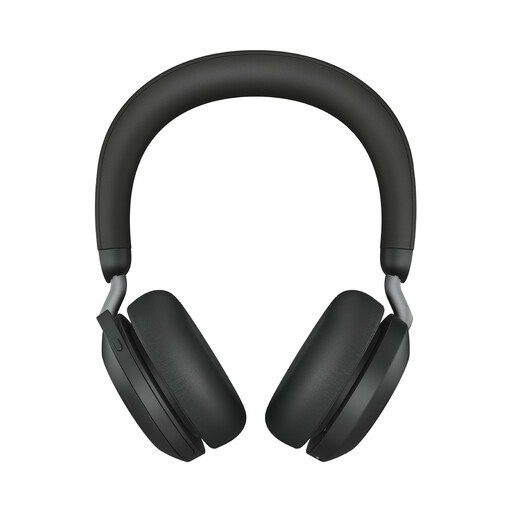
Jabra Evolve2 75 USB-A MS Teams headset, black

Jabra Evolve2 75 USB-A MS Teams, Black

The USB-A version may suit your set-up if the connection and listed headset features are right for it; check your own equipment.

Product information lists Bluetooth, adjustable active noise cancelling and up to 36 hours of battery life.

View at Joybuy
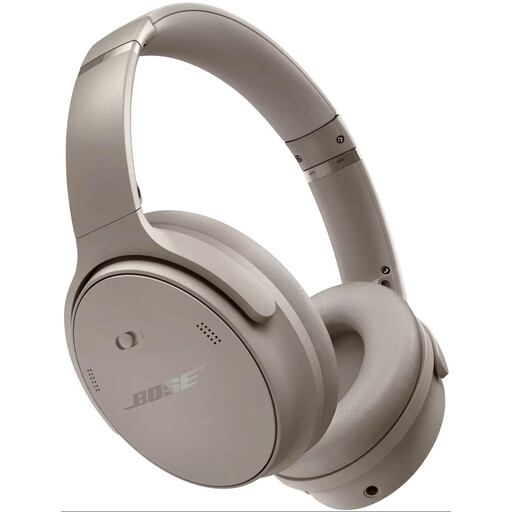
Bose QuietComfort headphones, Sandstone

Bose QuietComfort Headphones, Sandstone

An option to compare if you want noise cancelling and a transparency mode; check your mix on other playback systems.

Product information lists Bluetooth, active noise cancelling and a transparency mode.

View at Joybuy

Frequently asked questions

Are open-back or closed-back headphones better if I also record vocals or other parts?

A closed-back model is generally the more logical option to compare when recording with a microphone, as open-back models let more sound escape. If you mix later in a quiet room, an open-back model remains a separate option for critical listening.

Can I connect 250 Ω headphones to my audio interface without checking anything else?

No. Don’t judge suitability on impedance alone. Check the exact interface model and its headphone output, and take the headphones’ sensitivity and usable volume level into account too. Focusrite provides different guidance for each interface range.

How can I use studio headphones safely during long mixing sessions?

The World Health Organization recommends limiting the volume, taking regular breaks and keeping an eye on your exposure to loud sound. The example of 80 dB for up to 40 hours a week is listening guidance; it doesn’t prove that a particular volume setting on your equipment produces 80 dB.

What are my rights when buying online in the Netherlands?

For an online purchase, you generally have up to 14 days after delivery to change your mind, according to ACM ConsuWijzer; check whether a legal exception applies. You’re also entitled to a product that meets acceptable standards. The Dutch government explains that the Netherlands has no general fixed statutory guarantee period; if there’s a fault, contact the seller.
