If you work in a quiet room and mainly want to assess balance and stereo positioning, compare open-back studio headphones. If household noise is distracting or you’re recording at the same time, closed-back headphones are likely to be a better fit. Also check that the connection works with your equipment and that the fit, cable and ear pads suit how you’ll use them: the design alone won’t guarantee a good mix.
Who are these headphones for?
Choir editor working in a quiet room
You mainly want to assess balance, subtle details and stereo positioning while editing, and don’t need much isolation. Open-back models are worth comparing; model specifications are not the same as an independent listening test.
Editor dealing with household noise
You need to listen back to quiet passages while noise from home or your home office could be distracting. Fit and seal are also factors when choosing closed-back headphones.
Editor who also records
You sometimes listen while a microphone is active and want to minimise sound leakage. You’ll also need to check that your chosen headphones and connection work with your audio interface.
What should you look for when choosing?
Open-back, wired
Choose this option if: you edit existing choir recordings in a quiet room and stereo positioning is important to you.
Bear in mind: sound can travel in and out through the ear cups, so this design is less suitable if you need isolation or listen beside an active microphone. Shure describes this as a design feature of open-back headphones.
Closed-back, wired
Choose this option if: household noise makes quiet passages hard to hear, or you monitor through headphones while recording with a microphone. Shure lists closed-back headphones as an option for monitoring during recording.
Bear in mind: isolation also depends on the fit. Check that the exact model works with your headphone output.
| What to consider |
What should you check? |
Who is this important for? |
| Choir balance and positioning |
Compare familiar choir passages and assess whether background noise affects your listening judgement. |
In a quiet room, I mainly want to assess subtle choir details and stereo positioning. That’s why around 36% of consumers give balance and positioning top priority. |
| Isolation |
Compare closed-back models and check the seal around your ears. |
If other people at home or an active microphone could disrupt my listening, I focus on isolation and sound leakage. Around 29% of consumers prioritise isolation. |
| Fit and maintenance |
Consider the fit during longer sessions and check whether the ear pads or cable can be replaced. |
When listening repeatedly, I want a comfortable fit and parts I can maintain. This is the top priority for around 21% of consumers. |
| Connection and variant |
Check the output, plug, adapter required and full model name. For the DT 770 PRO, also check the impedance variant. |
Before buying, I want to make sure the headphones connect to my computer or audio interface. Around 14% of consumers give compatibility top priority. |
Common buying mistakes
-
Choosing open-back headphones when you need isolation
Open-back ear cups let sound in and out. They won’t meet your need for isolation, and sound from the headphones could be picked up by an active microphone.
Decide in advance whether you’ll only edit recordings afterwards in a quiet room, or whether you’ll also listen with distracting background noise or monitor during recording.
-
Assuming models with very similar names are interchangeable
The beyerdynamic DT 770 PRO is available in 32-, 80- and 250-ohm versions; the DT 900 PRO X is a different, open-back model.
Compare the full model name and impedance with the headphone output, plug and cable you plan to use.
-
Taking a wide frequency range as proof of neutral sound
A frequency range figure alone doesn’t prove how choir vocals or stereo balance will sound. Claims about accuracy on product pages are not an independent listening test of choir recordings.
Compare familiar recordings and use specifications to help narrow down your choices, not as a substitute for listening.
Brands to compare
beyerdynamic
The closed-back DT 770 PRO and open-back DT 900 PRO X offer different design options for editing at home; the models are not interchangeable.
- beyerdynamic specifies replaceable ear pads for the DT 770 PRO and a detachable cable for the DT 900 PRO X.
- According to beyerdynamic, the DT 770 PRO is available in 32-, 80- and 250-ohm versions. Check the exact variant and don’t treat claims about precision as an independent assessment of choir recordings.
Sennheiser
The open-back HD 490 PRO is a model worth comparing for editing and mixing in a quiet room.
- Sennheiser lists two types of replaceable ear pads and a detachable cable.
- The open-back design is less suitable when isolation is your main priority. Claims about precision come from the manufacturer and are not based on an independent choir test.
Audio-Technica
The closed-back ATH-M40x is worth comparing if you need isolation or monitoring during recording as well as editing.
- Audio-Technica specifies an impedance of 35 ohms and includes two detachable cables.
- The description “tuned flat” is a manufacturer claim, not an independent assessment of its suitability for choir music.
Sony
The MDR-7506 is a wired headphone that Sony describes as being for recording and studio use.
- Sony lists a 3 m cable and a weight of 230 g.
- Check that the cable length suits your desk setup. Sony’s description of it as a reference headphone is a brand claim, not a comparison with other models.
Shure
The closed-back SRH440A is another option to compare for recording and editing at home when isolation matters.
- Shure lists a detachable cable and a closed, over-ear design.
- The product information is for the US version; check the version and availability separately before buying.
Joybuy products
The Joybuy selection below includes headphones and a headset. Check each model’s connection and sound reproduction to see whether they suit editing choir recordings.
 Image unavailable
Sennheiser MOMENTUM 4 Wireless, black
Compare this model if you want to listen wirelessly, and check that the wired option works with your editing equipment.
The product name lists wireless over-ear headphones, noise cancelling, 60 hours of battery life and a black finish. The product information also mentions an included 3.5mm audio cable.
View on Joybuy
 Image unavailable
Bose QuietComfort Ultra Bluetooth Headphones, black
Before choosing these for choir recordings, check that this Bluetooth headphone’s connection works with your editing equipment.
The product name lists Bluetooth and a black finish.
View on Joybuy
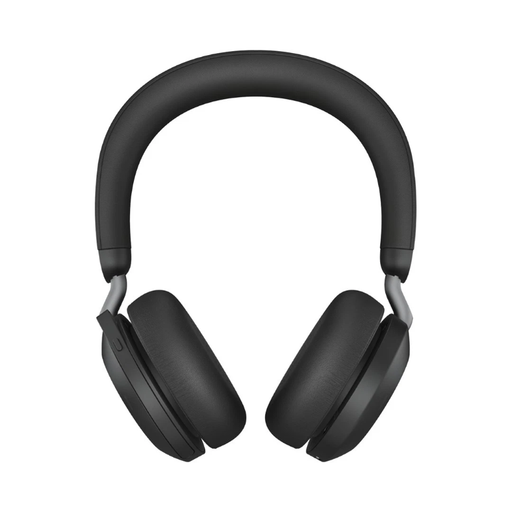 Image unavailable
Jabra Evolve2 75 headset
This headset is worth comparing if you also use your workspace for calls. Assess separately whether it’s suitable for checking choir balance.
The product information lists Bluetooth and connection to two devices.
View on Joybuy
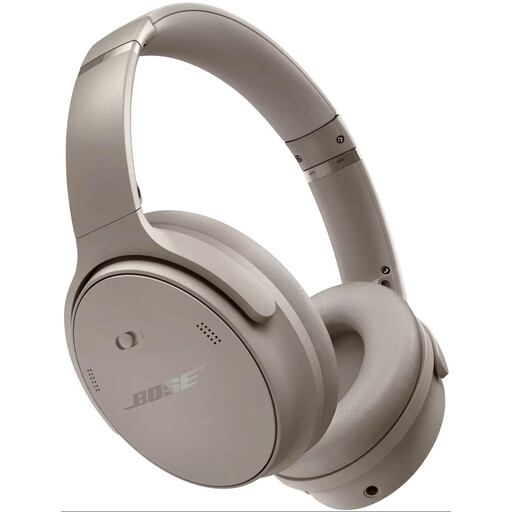 Image unavailable
Bose QuietComfort Headphones, Sandstone
Before choosing this model for editing, compare its connection with your computer or audio interface.
The product name lists the colour Sandstone.
View on Joybuy
 Image unavailable
Bose QuietComfort Ultra Headphones (2nd Gen), black
Check that this version’s connection works with your equipment and that it meets your needs for editing choir recordings.
The product name lists the second generation and a black finish.
View on Joybuy
Frequently asked questions
Can I use open-back headphones while recording a choir?
An active microphone may pick up sound from open-back ear cups. For monitoring while recording, a well-fitting pair of closed-back headphones is usually a better choice. For editing afterwards in a quiet room, you can also compare open-back models.
How do I connect studio headphones to my setup?
Check the headphone output on your computer or audio interface and compare it with the plug and adapter for the exact version. beyerdynamic specifies a 3.5mm plug and a 6.35mm adapter for the DT 900 PRO X; the DT 770 PRO is also available in several impedance variants.
How can I reduce wear and risk during long editing sessions?
Check whether replacement ear pads and cables are available for the exact model. Keep the volume moderate and take breaks: the World Health Organization links hearing risk to both sound level and exposure time. This risk information does not guarantee that a particular volume is safe for everyone.
What rights do I have when buying online in the Netherlands?
For eligible distance sales to consumers, the Dutch government generally provides a 14-day cooling-off period. The Netherlands has no fixed statutory warranty period; if a product is faulty, contact the seller. Normal wear and tear, or damage you cause yourself, is not automatically covered by free repairs.


