
Someone transferring tapes in a shared space
You want to pick out quiet details without constantly turning up the volume to drown out background noise. So look for good isolation, a comfortable fit and a manageable listening level.


If you work at a small desk or in a shared space, start with wired, closed-back headphones whose connection, cable and fit suit your setup. In a quiet room, semi-open or open-back headphones may be suitable if you also want to listen back critically. Always check the stereo monitoring on your recorder or interface: headphones can’t correct a mono monitoring path or incorrectly adjusted cassette playback.
You want to pick out quiet details without constantly turning up the volume to drown out background noise. So look for good isolation, a comfortable fit and a manageable listening level.
Your cassette player and computer are close together. The connection, cable length and how you store your headphones all affect how practical your workspace is.
You also check the left and right channels after transferring a tape. Having a correct stereo monitoring path matters more than a manufacturer’s claim about sound quality alone.
Choose this if: background noise gets in the way of monitoring or you work close to other people.
Consider: check the fit, cable length and whether your output provides enough level; these can vary by model and setup.
Choose this if: you also want to listen back carefully in a quiet workspace.
Consider: don’t expect the same isolation as with a closed-back model, and bear in mind that sound can leak out.
Choose this if: you mainly want to listen critically to a recording in a quiet room of your own.
Consider: open-back headphones aren’t an obvious first choice if isolation is your main priority, and they won’t fix errors in cassette playback.
| What to consider | What should you check? | Who should pay particular attention? |
|---|---|---|
| Isolation and fit | Check the design, how the headphones fit around your ears and whether you can listen at a comfortable volume. | If I want to pick out quiet details in a shared space without turning up the volume, I look at isolation and fit first. Consumers who prioritise isolation are estimated to account for around 36%. |
| Connection and cable | Compare the output on your cassette deck, interface or recorder with the plug, any adapter and the cable routing. | At a small desk, I want the cable to stay clear of equipment and controls, and the plug to fit. Among consumers who prioritise the cable and workspace, the share is around 29%. |
| Stereo monitoring | Test whether your specific recorder or interface settings play the left and right channels separately. Focusrite explains that direct monitoring on certain Scarlett models can send two mono inputs to both ears. | When I check a two-channel recording, I want to be able to hear differences between channels and test the monitoring path beforehand. Consumers who put stereo monitoring first are estimated to account for around 21%. |
| Comfort and maintenance | If possible, try the exact model and check which parts, such as cables or ear pads, can be replaced. | When working through several tapes, I want my headphones to stay comfortable and be easy to maintain. Consumers who prioritise comfort and maintenance are estimated to account for around 14%. |
A monitoring setting can still play two inputs as mono in both ears. Focusrite describes this for direct monitoring on certain Scarlett models; it doesn’t automatically apply to other interfaces.
Test the left and right channels using your own interface and the setting you plan to use during the transfer.
If you only notice a channel problem after transferring the tape, you may need to do the transfer again.
The International Association of Sound and Audiovisual Archives explains that an azimuth error during playback can affect high frequencies and the phase relationship between channels. Headphones can’t restore that information.
Check the playback chain first, and have delicate or unfamiliar equipment assessed by a specialist if necessary.
An undetected fault can cost you time if you have to repeat a transfer.
The beyerdynamic DT 770 PRO is available in 32, 80 and 250 ohm variants. For the classic DT 770 PRO, the manufacturer recommends having the cable replaced by an authorised service centre or qualified personnel.
Check the full model name and variant, your device’s output and the cable routing before you choose.
The closed-back, foldable ATH-M40x is worth considering if cable management matters at your small desk.
The closed-back DT 770 PRO is a studio-focused model available in several impedance variants.
The closed-back, foldable HD 280 PRO is worth comparing for monitoring and storage.
The semi-open K240 Studio is an option to compare if isolation isn’t your first priority.
The MDR-7506 is a wired model that Sony positions for recording and studio environments.
These wired over-ear models may be suitable for listening back if their connection is compatible with your equipment. Also check that your recorder or computer actually provides a stereo monitoring path.
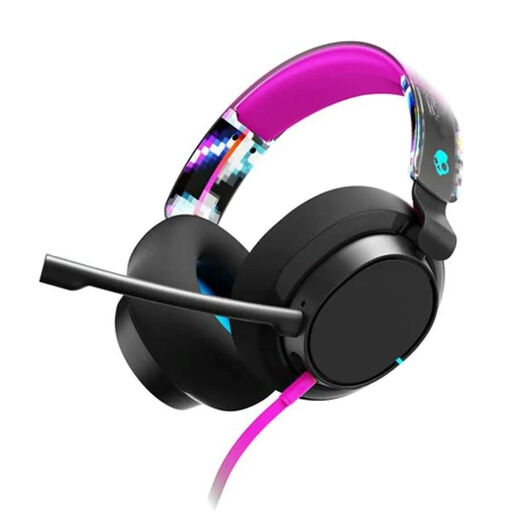 Image unavailable
The wired over-ear version may be suitable for listening back via a compatible connection; check that it matches your monitoring output.
The product description lists USB-C and 3.5 mm connections. Check which connection you can use with your cassette setup and whether that path carries stereo.
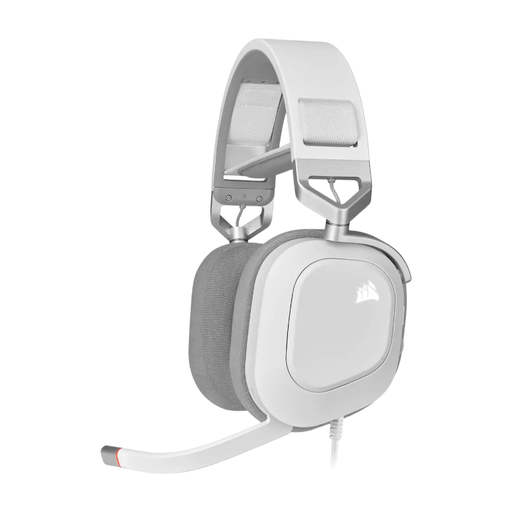 Image unavailable
This wired USB headset may suit a computer-based listening setup if the computer provides the right stereo monitoring path.
The product description lists USB-only connectivity, 32 Ω and stereo sound. Check whether your equipment monitors stereo over USB; the connection alone doesn’t confirm how direct monitoring is set up.
Test the left and right channels with a familiar stereo source and the monitoring setting you’ll use during the transfer. Focusrite says that direct monitoring on certain Scarlett models can play two mono inputs in both ears; this doesn’t automatically apply to other interfaces.
Not if information has already been lost because of an incorrect playback setting. The International Association of Sound and Audiovisual Archives explains that an azimuth error can affect high frequencies and the phase relationship between channels. So check the playback chain rather than expecting headphones to fix the problem.
Keep the volume low and take listening breaks. The World Health Organization gives the example of a maximum of 40 hours a week at an average of 80 dB, with considerably less time at a higher level. This isn’t a measurement of your headphones’ sound level.
The Dutch Government says you can make a private copy for your own use, but you can’t distribute it or make it available to the public. Buying headphones doesn’t give you permission to use the recording in other ways.
For a qualifying distance purchase, the Dutch Government generally states that you have 14 days to change your mind. Check who the seller is and what information they provide about the cancellation period and any exceptions before you buy.