Who is this buying guide for?

Students who record as well

If you record vocals or instruments while monitoring through the same headphones, isolation and limited sound leakage are important considerations. Audio-Technica describes the closed-back ATH-M40x as providing isolation; beyerdynamic positions the closed-back DT 770 PRO for recording and monitoring.

Students in a shared room

If your housemates make noise, or could be disturbed by sound from your headphones, first consider which design suits your room and recording setup. beyerdynamic notes that the open-back DT 990 PRO lets in ambient noise and leaks sound out.

Students who mainly edit

If you compare takes without recording at the same time, and your room is quiet, you can look at open-back or semi-open designs as well as closed-back models. beyerdynamic positions the DT 990 PRO for editing and mixing; AKG describes the semi-open K240 Studio as suitable for mixing and playback.

What should you look for when buying?

What to consider What should you check? Who is this important for?
Isolation when recording Compare closed-back, open-back and semi-open designs, and check whether sound from the headphones is audible in your microphone setup. When monitoring during a recording, I want to prevent sound from unintentionally reaching the microphone. Around 36% of consumers prioritise isolation when recording.
Differences between takes Compare the same takes at the same volume setting; don’t treat terms such as ‘flat’ or ‘accurate’ as proof of an independent comparison. When I want to assess takes, I look for a quiet room and want to compare differences without relying solely on marketing terms. Around 29% of consumers give comparing takes top priority.
Connection to your equipment Check the plug size, whether you need an adapter, and whether your own laptop or audio interface provides a suitable listening volume. If I want to use my headphones with my own laptop or interface, the connection needs to match that output. Around 21% of consumers prioritise device compatibility.
Fit and replaceable parts Check the fit, and look up whether the ear pads or cable can be replaced for the exact model. For longer listening sessions, I want to know whether the headphones are comfortable and how to replace worn parts. Around 14% of consumers give long-term use and maintenance top priority.

Common buying mistakes

  • Choosing an open-back model for both listening and microphone recording

    beyerdynamic notes that sound escapes from the open-back DT 990 PRO. Whether it reaches your recording also depends on your microphone and setup.

    First decide whether you’ll monitor through headphones while recording with a microphone. If you’re unsure, test whether your microphone picks up sound from the headphones.

  • Treating all impedance versions as the same model

    The specifications for the DT 770 PRO 80 ohm apply to that version and don’t automatically apply to every DT 770 PRO.

    Check the full model name, impedance version and connection, and make sure the headphones are compatible with the output on your own equipment.

  • Mistaking manufacturer claims for an independent listening comparison

    Descriptions such as ‘flat’ or ‘accurate’ reflect how a particular model is positioned; on their own, they don’t compare models under the same conditions.

    Use these descriptions as one factor in your decision and compare your own takes at the same controlled volume. Check the fit too.

Brands to consider

Audio-Technica

The closed-back ATH-M40x is an option if you want to combine recording and comparing takes with a single pair of headphones.

  • Audio-Technica describes this model as having swivelling ear cups and a sound profile tuned for flat reproduction.
  • These are the manufacturer’s descriptions, not independent measurements comparing the model with open-back headphones.

beyerdynamic

The DT 770 PRO and DT 990 PRO illustrate the difference between a closed-back design for recording and an open-back design for listening in a quiet room.

  • According to beyerdynamic, the closed-back DT 770 PRO is designed for recording and monitoring, while the open-back DT 990 PRO is for editing and mixing.
  • According to the brand, the DT 990 PRO lets in ambient noise and leaks sound out. Check the impedance version of the DT 770 PRO separately.

AKG

The semi-open K240 Studio is an option for mainly listening, comparing and mixing.

  • AKG lists a detachable cable, replaceable ear pads and a 3.5mm plug with a 6.3mm adapter for the K240 Studio.
  • Don’t assume a semi-open design offers the same isolation as closed-back headphones when recording with a microphone; check this for yourself.

Sennheiser

The closed-back HD 280 PRO is an option if isolation while recording and monitoring is important.

  • Sennheiser lists a foldable design and replaceable ear pads for this model.
  • The manufacturer quotes ambient noise attenuation of up to 32 dB. This isn’t a measurement taken under the same conditions as those for the other models mentioned.

Sony

Sony describes the MDR-7506 as reference headphones for recording and studio use.

  • Sony lists a weight of 230 g and a 3 m cable for this model; these details may matter when considering your workspace and wearing preferences.
  • Weight and cable length alone don’t tell you how comfortable the model will feel or how it will sound to you.

Joybuy products

These Joybuy products are closed-back over-ear headphones with wired listening options. Check that the connection and features suit your recording setup.
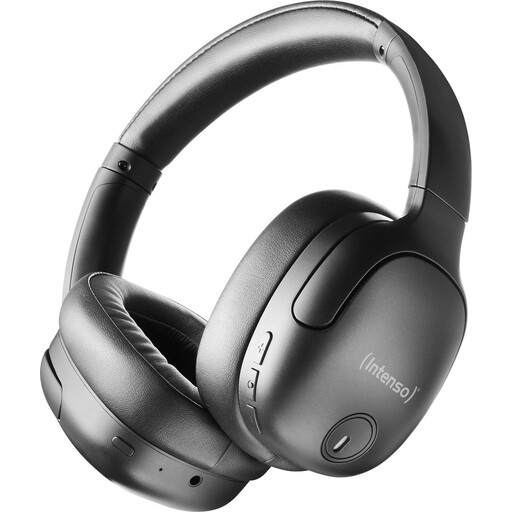
Intenso O400HA over-ear headphones, black

Intenso O400HA over-ear headphones – black

Could suit you if you’re looking for closed-back over-ear headphones and want the option of listening wirelessly too; check which connection you’ll use for your recording setup.

The product information lists Bluetooth, a detachable cable and passive listening via a 3.5mm connection.

The product information also mentions a foldable design and a weight of 248 g.

Joybuy
CMF by Nothing Headphone Pro Light Green

CMF by Nothing Headphone Pro Light Green

Could suit you if you’re looking for a closed-back over-ear model with wired and wireless listening options; check that the wired connection is compatible with your recording equipment.

The product information lists LDAC, 40mm drivers, wired audio and Bluetooth, as well as support for wired Hi-Res audio.

The product information also mentions replaceable ear pads and a weight of 283 g.

Joybuy

Frequently asked questions

Can I use open-back headphones when recording with a microphone?

You can, but first check whether sound from the headphones gets into your recording. beyerdynamic notes sound leakage from the open-back DT 990 PRO and positions the closed-back DT 770 PRO for recording. So if you’re monitoring with a microphone, closed-back headphones are a more practical first choice.

Which plug do I need for my laptop or audio interface?

Check the output on your own device and the plug or adapter supplied with the exact model. For the DT 770 PRO 80 ohm, beyerdynamic lists a 3.5mm plug with a 6.35mm adapter; for the K240 Studio, AKG lists a 3.5mm plug with a 6.3mm adapter. Also check that your audio source provides a suitable listening volume.

What can I do if the ear pads wear out or my headphones break?

Check which parts can be replaced for the exact model. beyerdynamic and AKG list replaceable ear pads for the models mentioned here. If a product doesn’t meet expectations under normal use, you may also have statutory rights against the seller in the Netherlands. ACM ConsuWijzer explains that the legal guarantee isn’t limited to a fixed period of just two years.

Can I return headphones bought online in the Netherlands?

For online consumer purchases, you generally have a statutory cooling-off period of up to 14 days after delivery, with some exceptions. ACM ConsuWijzer explains this cooling-off period. Check which rules apply to your purchase, and don’t assume that breaking a seal is always treated in the same way.

Do I need to turn the volume up high to hear differences between takes?

No. Compare takes at the same controlled volume and take breaks during long listening sessions. The World Health Organization emphasises that both sound level and listening time matter; an example listening exposure value doesn’t guarantee a safe volume setting for every device.
